
Dental X-ray Machines: Types, Specifications, and Choosing Between Portable and Stationary Models
Such equipment is used in
private practices, dental clinics, and diagnostic centers.
A dental X-ray is essential for root canal treatments, implant placement, tooth
extractions, and planning other dental procedures.
Technical Specifications of a Dental X-ray Machine
When choosing a dental X-ray machine it is necessary
to consider parameters that affect image quality, operating speed, and
operational safety.
Voltage and current
are measured in kilovolts and milliamperes. These indicators determine the penetrating
power of the radiation and affect image detail. The ability to
adjust parameters allows the machine to be adapted to different examination
areas and patient characteristics.
Exposure time
indicates the duration of the X-ray pulse. Precise adjustment helps
obtain an informative image while avoiding unnecessary radiation exposure.
It is also important to consider the type of image receptor.
The machine can operate with film, a digital sensor, or phosphor plates.
Digital systems allow for faster image acquisition, processing, and storage
in the patient's electronic record.
Special attention should be paid to the protection class, the accidental start-up lockout system, and compliance with radiation safety requirements. For digital dentistry, compatibility of the equipment with the clinic's software and image storage formats is also important.
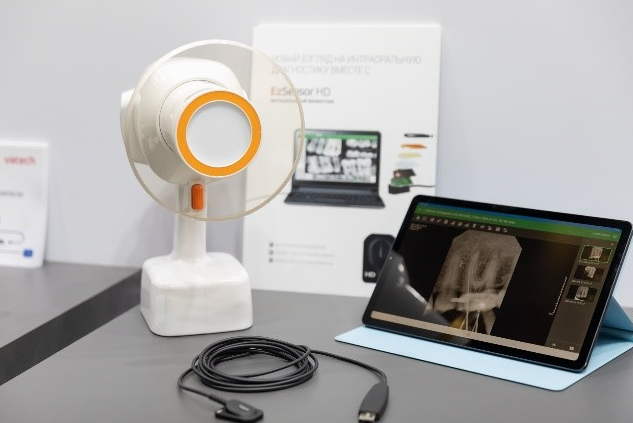
Types of Dental X-ray Machines
Dental X-ray machines differ in design,
installation method, and operating conditions. The main options are portable,
stationary, and combined systems.
Portable
dental machines feature a compact body and light weight. They can be
moved between rooms, used next to the dental chair, or
during mobile appointments. These models are suitable for small clinics and
specialists who value equipment mobility.
Stationary X-ray machines are mounted on a wall, stand, or ceiling system. They
are designed for regular use and ensure a stable position of the
emitter during image capture. This is a common option for dental
offices with a consistent flow of patients.
Combined and wall-mounted systems may feature an adjustable arm, a digital sensor, and connection to
software. Their configuration is chosen based on the office size,
required equipment mobility, and expected workload.
Portable Dental X-ray Machine: Pros and Cons
A portable dental X-ray machine
stands out for its compact size and mobility. It is convenient to use in
small offices, move between work areas, and utilize during
mobile appointments. Such equipment does not require complex installation and allows for
quick X-ray diagnostics right next to the patient.
Advantages also include simple operation and space saving. However, portable models may be inferior to stationary machines in power, battery life, and performance under high daily workloads. Additionally, it is crucial to strictly follow positioning and radiation safety rules, as image quality largely depends on the machine's stability and the operator's actions.

Stationary Dental X-ray Machine: Pros and Cons
A stationary dental X-ray machine is installed
in a specific area of the office and is designed for regular use. Rigid
mounting and an adjustable arm help precisely position the emitter,
reducing the risk of movement during image capture. Such models are suitable for dental
clinics and offices with high daily workloads.
The main advantages of stationary equipment are stable
operation, convenient positioning, and predictable image quality. Many
machines are compatible with digital sensors and image processing
software.
Disadvantages include the need for professional
installation, allocation of permanent space, and more complex relocation of the equipment.
The final cost may also be higher due to installation and additional
accessories.
How to Choose: Portable or Stationary Machine
The choice of a dental X-ray machine depends on the
clinic's workflow, patient volume, and available space. For a small
private practice or mobile services, a portable model may be suitable. It
takes up little space, is easy to transport, and does not require complex installation.
A stationary machine is advisable for clinics and hospitals with
a consistent flow of patients. It provides stable positioning of the
emitter, is convenient for routine diagnostics, and is designed for more intensive
use.
Before purchasing, you should also evaluate image quality,
compatibility with digital sensors and software, service and
maintenance conditions, and radiation safety requirements. The final
choice should be made taking into account the specific needs of the office, rather than just the cost of the equipment.