
7 mistakes when feeding plants that reduce yield
Why does improper fertilizing harm plants?
Many gardeners believe that the more fertilizer, the better the result. In fact, an excess of nutrients often harms plants no less than their deficiency.
An imbalance of microelements can lead to poor fruiting, deterioration of vegetable taste, and even the development of diseases. Moreover, some mistakes accumulate gradually, so the problem becomes noticeable only after several seasons.
Mistake #1: Excessive application of nitrogen
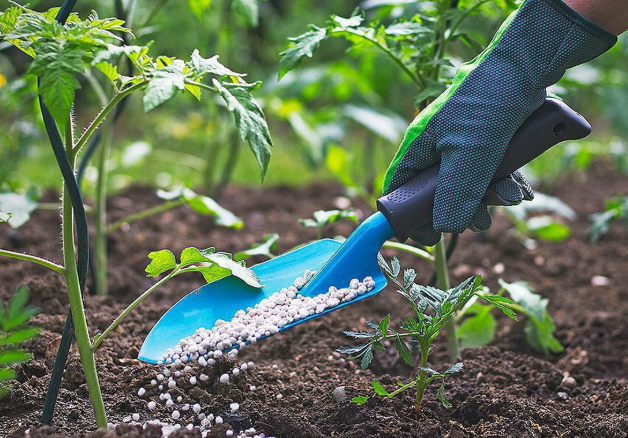
Nitrogen is needed by plants for the growth of green mass, but its excess often causes a decrease in yield.
With excessive fertilizing, plants begin to actively grow leaves and shoots, but fruit formation slows down. This is especially noticeable in tomatoes, peppers, and cucumbers.
In addition, excess nitrogen makes plants more vulnerable to fungal diseases.
Mistake #2: Ignoring soil acidity
Why pH matters
Even high-quality fertilizers may not give results if the soil has the wrong acidity level.
In too acidic or alkaline environments, some elements simply cease to be absorbed normally by the root system. Because of this, plants may suffer from nutrient deficiency even with regular fertilizing.
How to avoid the problem
Before applying fertilizers, it is advisable to at least periodically check the soil pH. This helps to select fertilizing more accurately and avoid imbalance.
Mistake #3: Fertilizing at the wrong time
The timing of fertilizer application is very important. For example, fertilizing in extreme heat or under direct sunlight can damage plants.
It is also undesirable to apply some fertilizers before heavy rains, as nutrients can simply be washed out of the soil.
The optimal option is to fertilize in the morning or evening at moderate temperatures.
Mistake #4: Using the same fertilizers for all crops
Different plants have different nutrient needs. What works well for greens may be ineffective for root crops or fruit crops.
For example, cabbage requires a lot of nitrogen, while tomatoes need a balance of potassium and phosphorus during fruit formation.
That is why universal fertilizing schemes do not always work equally well for all beds.
Mistake #5: Lack of organic components
Why mineral fertilizers alone are not enough
Mineral fertilizers quickly replenish elemental deficiencies, but they do not improve soil structure.
Without organics, the soil gradually compacts, retains moisture worse, and loses the activity of beneficial microorganisms.
What helps maintain balance
Compost, humus, green manure, and mulching help maintain soil fertility and create more stable conditions for plant growth.
Mistake #6: Fertilizing dry soil
Applying fertilizers to overdried soil can damage plant roots. This is especially true for concentrated mineral mixtures.
Before fertilizing, it is advisable to slightly moisten the soil. This helps distribute nutrients more evenly and reduces the risk of root system burns.
Mistake #7: Lack of crop rotation
Even proper fertilizing does not compensate for problems if the same crop grows in the same place for years.
Crop rotation helps:
- reduce soil depletion;
- reduce the number of pests;
- reduce the risk of fungal diseases;
- improve the nutrient balance.
Due to the constant cultivation of the same plants, the soil quickly loses necessary elements, and fertilizers have to be used more and more actively.
How to make fertilizing more effective?
The main rule is not to use fertilizers haphazardly. It is better to take into account the soil type, crop characteristics, and weather conditions.
It is also important to combine organic and mineral fertilizing methods, monitor the condition of plants, and not exceed the recommended application rates.
Proper fertilizing helps not only to increase the yield but also to improve the quality of fruits and the overall condition of plants. And you can find various types of fertilizers, technical products, and components for household needs on the website of the First Ukrainian Chemical Raw Material Market.