
Monstera: care, propagation and secrets of luxurious leaves
Monstera deliciosa: why it has won the hearts of gardeners
Monstera deliciosa is one of the most recognizable indoor plants. Its large carved leaves create a tropical atmosphere, and its unpretentious nature makes it ideal even for beginners. In nature, this liana grows in the jungles of Central and South America, where it reaches enormous sizes, but at home its growth can be controlled.
The popularity of the monstera is explained not only by its spectacular appearance, but also by its adaptability. It puts up with a lack of light, rarely gets sick and at the same time grows quickly, delighting the owner with new leaves. And its aerial roots and powerful stems give the interior a wild, but well-groomed look - this is why designers love it so much.
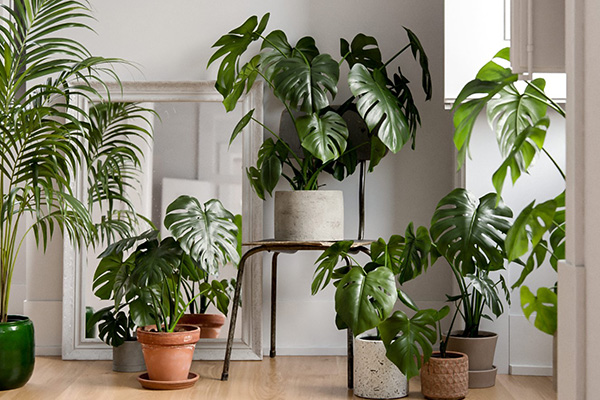
Types of monstera: which one is right for you?
Although Monstera deliciosa is the most popular species, there are other interesting varieties in nature and home gardening. Each of them has unique features, allowing you to choose a plant for every taste.
-
Monstera adansonii (pierced monstera) – has smaller leaves with numerous holes, ideal for hanging pots.
-
Monstera obliqua (oblique monstera) – a rare species with thin, almost openwork leaves, requiring special maintenance conditions.
-
Monstera variegata (variegated) – is valued for the unusual color of the leaves with white or cream spots, but is more capricious in care.
-
Monstera dubia (dubia monstera) – young leaves have a heart shape and a silvery pattern, changing their appearance with age.
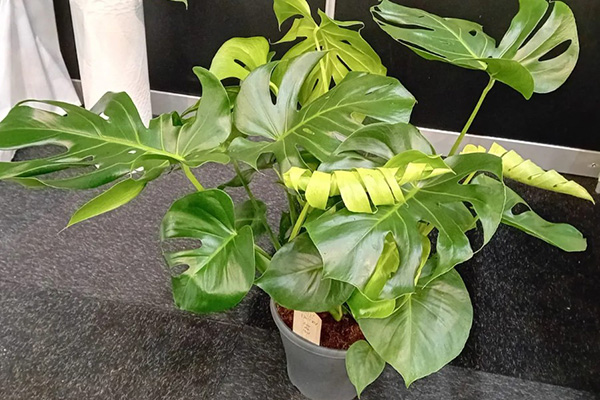
The choice of a specific species depends on your preferences and willingness to devote time to care. While the classic deliciosa will forgive some mistakes, more exotic varieties will require more attention.
Monstera in the interior: why designers and bloggers adore it
Monstera deliciosa has long been a must-have element of a modern interior, and there are good reasons for this. Its huge perforated leaves create a spectacular accent in any space, be it a minimalist loft or a cozy living room in a Scandinavian style. Designers value this plant for its ability to visually increase space and create a tropical forest atmosphere.
The secret of monstera's popularity lies in its versatility:
-
Aerial roots and powerful stems add dynamics and naturalness to the composition
-
Large leaves with characteristic slits create a beautiful play of light and shadow
-
The plant fits perfectly into both modern and classic interiors
-
Monstera goes well with other popular indoor plants
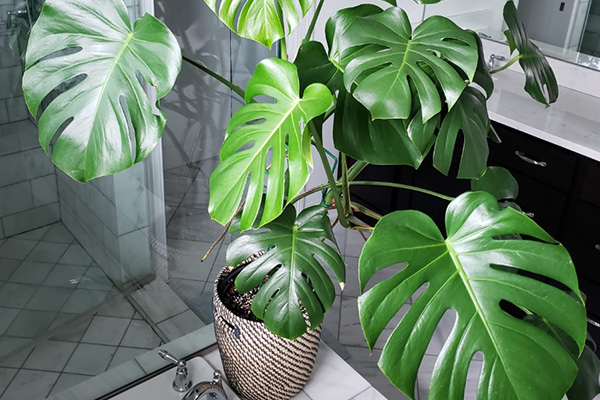
It is interesting that the "delicacy" monstera got its name thanks to the edible fruits that form in natural conditions. Although it is extremely difficult to achieve flowering and fruiting in an apartment, the liana itself looks so impressive that it fully justifies its popularity in design circles.
Ideal conditions for monstera: creating tropics in an apartment
Although the monstera is considered an unpretentious plant, it achieves maximum decorativeness only in comfortable conditions. By recreating a microclimate close to its natural habitat, you will get a luxurious plant with large carved leaves.
Lighting should be bright, but diffused - eastern or western windows are ideal. On the south side, shading will be required, and on the north side, growth will slow down. Maintain the temperature within 18-25 ° C, avoiding drafts and sudden changes.
Humidity is preferably kept at 60-70%. This can be achieved by:
-
Regular spraying with soft water
-
Installing a humidifier
-
A tray with wet expanded clay
Watering in the summer is abundant (2-3 times a week), in the winter moderate (once every 7-10 days). Use soil for aroids or make a mixture of leaf soil, peat, perlite and bark (2:1:1:1). Pot choose a stable one, with drainage holes, 2-3 cm wider than the previous one.
Propagation of monstera: simple ways to get new plants
Monstera is easily propagated in several ways, which allows you to expand without much expenseto build your own collection or share the plant with friends. The most popular methods are cuttings and air layering, which give good results even for novice gardeners.

Cuttings- is the easiest option. It is enough to cut a stem cutting with 1-2 leaves and aerial roots, put it in water or immediately plant it in a moist substrate. Rooting occurs in 2-4 weeks at a temperature of 22-25 ° C. For air layering select a shoot with aerial roots, wrap it in damp moss and film, and after the roots appear, separate it from the mother plant.
When replanting young plants, use light soil and small pots, gradually increasing their size. Do the first feeding no earlier than a month after rooting, using complex fertilizers for decorative foliage plants in half the dosage.
Caring for a monstera: how to grow a luxurious vine
Monstera does not require complex care, but proper care will make it truly spectacular. Key points to pay attention to:
Growth and formation
To stimulate the growth of large carved leaves, provide the plant with bright diffused light and support. Monstera is a liana, so it needs vertical support: moss poles, trellises or bamboo poles are ideal. If you want to achieve a more lush shape, you can periodically pinch the tops of the shoots.
Watering and humidity
Water the monstera when the top layer of soil dries out by 2-3 cm. In winter, reduce the frequency of watering, but do not allow the earthen lump to dry out completely. The leaves like regular spraying, especially during the heating season.
Pruning and hygiene
Remove old or damaged leaves at the base of the stem - this stimulates the growth of new ones. Wipe large leaves with a damp soft cloth to remove dust. Do not cut the aerial roots - direct them to the soil or support, they help the plant to receive additional nutrition.
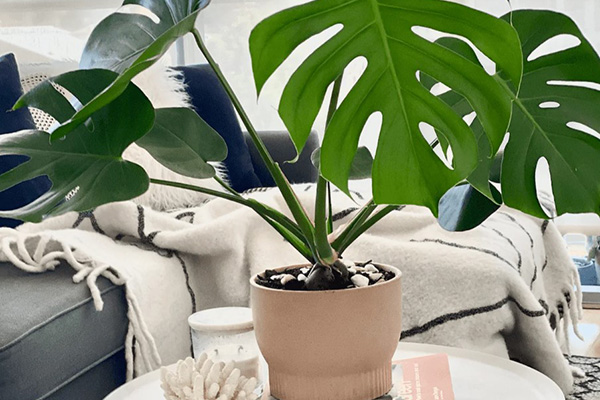
By following these simple rules, you will get a healthy monstera with large, patterned leaves, which will become the main decoration of the interior.
Flowering and fruiting of the monstera: a rare phenomenon at home
In nature, the deliciosa monstera blooms regularly, forming unusual creamy cobs with a cover resembling a sail. However, in indoor culture, flowering is an exceptional rarity, requiring ideal conditions of maintenance and the patience of the owner. Even in greenhouses, the monstera does not bloom until it is 5-7 years old.
After flowering, if pollination is successful, a fruit is formed - a juicy fruit, for which the plant received the name "delicacy". In the tropics, its pulp is eaten, noting the taste, reminiscent of a mixture of pineapple and banana. However, it is important to know:
-
Unripe fruits contain calcium oxalate crystals, which irritate the mucous membranes
-
Ripening lasts 10-14 months, readiness is determined by the fall of scales
-
At home, the fruits usually do not reach full maturity and remain inedible
For those who dream of seeing the monstera bloom, experts recommend:
-
Provide conditions as close to natural as possible
-
Use additional lighting in winter
-
Maintain high air humidity (70-80%)
-
Regularly apply phosphorus-potassium fertilizers during the growing season
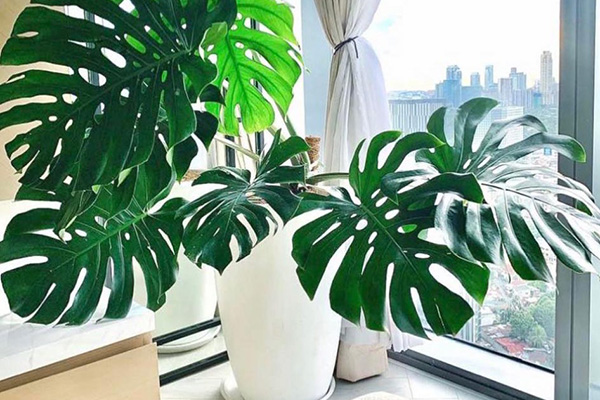
But even without flowering, the monstera remains a spectacular decorative foliage plant that can decorate any interior with its luxurious carved leaves.
Problems in growing monstera and their solution
Even such an unpretentious plant as a monstera can face difficulties with improper care. Most problems can be easily eliminated if you notice the symptoms in time and take action. Let's look at the most common problems:
Yellowing of leaves:
-
Causes: overwatering, lack of light, nutrient deficiency
-
Solution: adjust watering, move to a brighter place, add fertilizer
The appearance of dry brown spots:
-
Causes: sunburn, low air humidity
-
Solution: shade the plant, increase humidity by spraying
Small pale leaves without cuts:
-
Causes: lack of lighting
-
Solution: Providingbright diffused light
Root rot:
-
Causes: overwatering, heavy soil
-
Solution: emergency replanting with removal of damaged roots
Pests (spider mites, scale insects, mealybugs):
-
Causes: dry air, contact with infected plants
-
Solution: insecticide treatment, increased humidity
Slow growth:
-
Causes: lack of nutrition, cramped pot
-
Solution: replanting, regular fertilizing
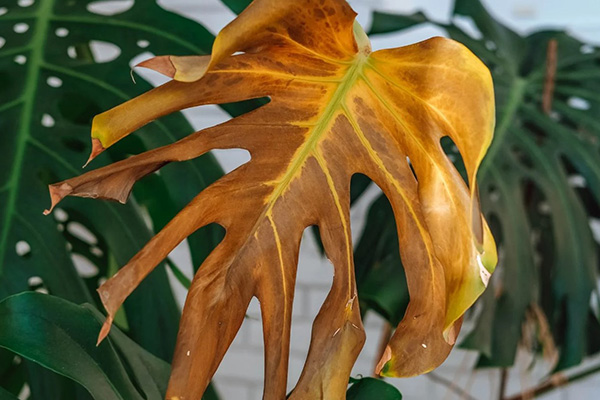
To prevent problems, it is enough to follow the basic rules of care: maintain optimal humidity, avoid overwatering, regularly wipe the leaves and inspect the plant. With timely response, the monstera can easily be returned to a healthy state.
| Problem | Possible causes | Solution |
|---|---|---|
| Leaves turn yellow | Overwatering, lack of light, nutritional deficiency | Adjust watering, move to a brighter place, feed |
| Dry brown spots | Sunburn, low humidity | Shade, increase humidity by spraying |
| Small pale leaves | Disadvantage lighting | Move to a place with bright, diffused light |
| Rotting of stem/roots | Overwatering, heavy soil | Emergency replanting with removal of rotten parts, replacement of soil |
| Leaves without slits | Plant age (young leaves), not enough light | Provide sufficient lighting, wait until leaves mature |
| "Crying" (guttation) | Overwatering | Reduce watering, allow soil to dry out between waterings |
| Spiderweb mite | Dry air | Treat with acaricide, increase humidity |
| Scale insect, mealybug | Infection from other plants | Mechanical cleaning, insecticide treatment (Aktara, Fitoverm) |
| Slow growth | Tight pot, lack of nutrition | Transplant into a larger pot, start regular fertilizing |
| Dropping leaves | Overdrying soil, drafts | Normalize watering, move to a place protected from drafts place |
Problem prevention:
- Inspect the plant regularly
- Follow the watering regime (more abundantly in summer, less frequently in winter)
- Maintain humidity of 60-70%
- Clean leaves from dust in a timely manner
- Use suitable soil and drainage
Typical mistakes of beginners when growing monstera
Beginner gardeners often make the same mistakes in caring for monstera, which can slow down its growth or worsen its decorative effect. Let's look at the most common mistakes and how to avoid them.
1. Overwatering
Many people think that a tropical plant requires constant soil moisture. In fact, overwatering is the main cause of root rot. Water only when the top layer of soil dries out by 2-3 cm, reduce the frequency in winter.
2. Incorrect location
Putting a monstera in a dark corner or, conversely, under direct sunlight is equally bad. The ideal place is near an eastern or western window with diffused light.
3. Neglecting support
Without support, the monstera loses its decorative effect - the stems become curved, the leaves become smaller. Install support immediately when planting a young plant.
4. Refusal of hygiene procedures
Dust on large leaves complicates photosynthesis. Regularly wipe them with a damp soft cloth or arrange a warm shower (covering the soil with a film).
5. Untimely transplant
A cramped pot inhibits growth, and too spacious can lead to soil acidification. Replant the monstera every 2-3 years, increasing the pot by 2-3 cm.
6. Trimming aerial roots
These formations help the plant receive additional moisture and nutrition. Do not trim them - it is better to direct them to the support or soil.
7. Excessive fertilizing
Excessive fertilizers can cause root burn. From spring to autumn, feed 1-2 times a month, in winter - no more than once every 1.5 months.
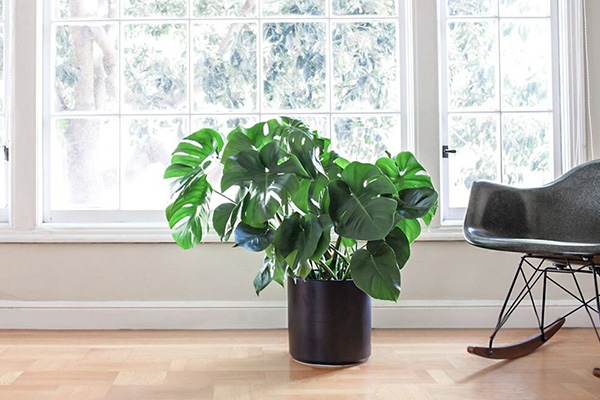
Remember that the monstera is quite patient and will forgive some mistakes, but to get a luxurious plant with large carved leaves, it is better to immediatelyorganize proper care. Watch your green beauty - it will tell you what it needs.
Monstera in your home: living beauty and tropical mood
Monstera is not just a houseplant, but a real living sculpture that can transform any space. Its luxurious carved leaves create the atmosphere of a tropical forest, and its rapid growth allows you to quickly get a spectacular green accent in the interior. With proper care, this tropical beauty will delight you for decades, becoming more magnificent every year.
Don't be afraid to get a monstera, even if you are a novice gardener. This is an amazingly grateful plant that will forgive small mistakes in care and generously repay for attention with lush greenery. Watch your monstera, learn to understand its signals, and you will find not just an interior decoration, but a real green friend. Let its luxurious leaves fill your home with life, beauty and special comfort!
FAQ: Answers to the most popular questions about monstera
Is it possible to get monstera fruits at home?
Fruiting in an apartment is an extremely rare phenomenon. To do this, you need to create ideal conditions close to the tropics, and be patient (the plant should be 5-7 years old). Even when the fruit appears, its ripening lasts almost a year.
How does a monstera bloom?
The flower is a creamy spadix surrounded by a white cover, similar to a spathiphyllum flower, but larger. At home, flowering occurs extremely rarely.
How to get more carved leaves?
Slits appear on adult leaves in good light. To stimulate their formation:
-
Provide bright, diffused light
-
Use support for vertical growth
-
Maintain high humidity
-
Fertilize the plant regularly
Why is the monstera called a "crybaby"?
This is due to guttation - the release of water droplets on the leaves when overwatered. This is normal, but it signals the need to reduce watering.
How to clean large leaves?
Gently wipe with a damp soft cloth (you can add a mild soap solution if there is heavy dirt). Once a month, give a warm shower, after covering the soil with a film.
Is monstera safe for animals?
The plant juice contains irritants. If a cat chews the leaves, put the plant in an inaccessible place or use special repellent sprays.
How often should you replant?
Young plants - annually, adults - every 2-3 years. The signal for replanting is roots appearing from the drainage holes.
Why do new leaves appear without slits?
This is normal for young leaves. Slits form as they grow. If adult leaves are also whole, the plant does not have enough light.
Can you keep a monstera in the bedroom?
Yes, but consider its size. An adult plant takes up a lot of space. The myth about "toxicity" is exaggerated - just do not allow children and animals to come into contact with the plant juice.