How to Grow Lavender at Home in a Pot: Care, Varieties, and Secrets of Fragrant Blooming
Lavender in the house - beauty and benefits
Fragrant, delicate and refined lavender is not only a symbol of Provence, but also a beautiful houseplant that can transform your interior. Growing lavender in a pot is a fascinating process that will give you not only aesthetic pleasure, but also practical benefits.
Benefits of lavender for home and health
-
The calming aromaof lavender essential oils helps relieve stress, improves sleep and creates an atmosphere of harmony in the home.
-
Natural antiseptic—the plant cleans the air of bacteria and viruses.
-
Medicinal properties: dried flowers are used in teas, aromatherapy and home cosmetics.
Lavender as a stylish decor
Silver-green foliage and delicate purple inflorescences will fit perfectly into any interior - from Provence to minimalism. A pot of lavender will decorate a windowsill, balcony or desktop, and dried twigs will become part of bouquets, sachets or even handmade crafts.
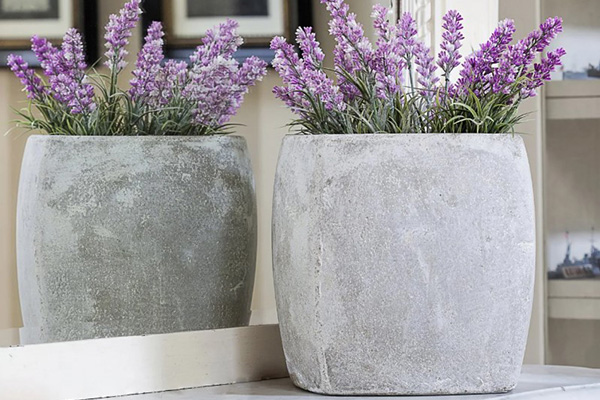
Growing lavender at home is easy if you know a few secrets. Let's figure out how to choose a variety, plant and care for this wonderful plant!
Choosing a lavender variety for home cultivation
Not all lavender feels equally good in a pot - some varieties are too large for indoor conditions, while others need a lot of sun and a cool winter. In order for the plant to delight with lush flowering and aroma, it is important to choose the right variety.
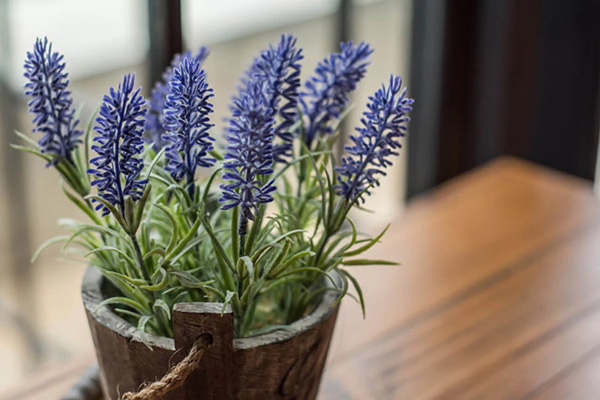
The best lavender varieties for the home
-
Lavender angustifolia (English) (Lavandula angustifolia)
-
Compact bushes (30–50 cm), ideal for a pot.
-
Frost-resistant, but adapts well to indoor conditions.
-
Popular varieties:Hidcote(dark purple flowers),Munstead(delicate purple),Little Lottie(dwarf, up to 30 cm).
-
-
French lavender (Lavandula stoechas)
-
Bright inflorescences with "ears" (bracts).
-
Heat-loving, suitable for southern windows.
-
Varieties:Ballerina(white-pink flowers),Regal Splendour(dark purple).
-
-
Lavender dentate (Lavandula dentata)
-
Soft carved leaves and delicate aroma.
-
Well tolerates dry air of apartments.
-
-
Lavender hybrid (Lavandula x intermedia)
-
Larger narrow-leaved, but is distinguished by abundant flowering.
-
Varieties:Grosso(powerful aroma),Phenomenal(resistant to heat and cold).
-
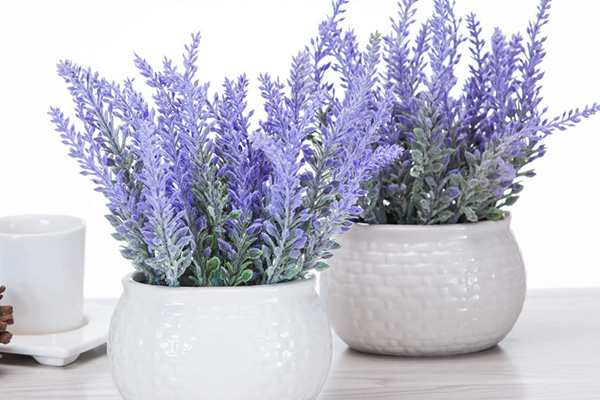
Which variety to choose?
-
For for beginners: Hidcote or Munstead — unpretentious, bloom even in small pots.
-
For aromatherapy: Grosso — maximum essential oils.
-
For decoration: Ballerina — unusual flowers resembling butterflies.
Important! When buying seeds or seedlings, check the height of the plant — for a windowsill, it is better to choose dwarf forms (up to 40 cm).
Planting lavender in a pot: step by step instructions
Choosing a variety is just the beginning. In order for lavender to take root and delight you with fragrant flowering, it is important to plant it correctly. We will tell you how to prepare ideal conditions for the Mediterranean guest.
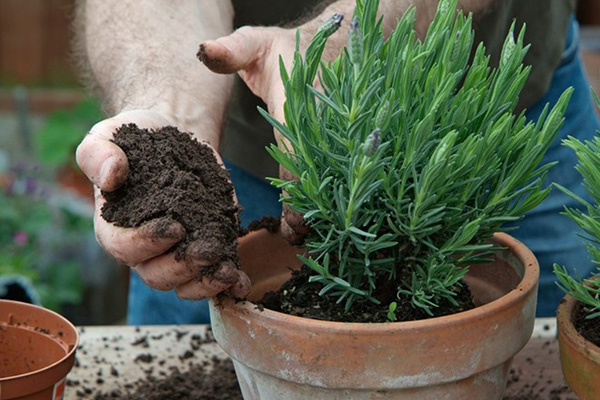
Choosing a pot
-
Material: Ceramics or clay are best - they provide air exchange and prevent moisture stagnation.
-
Size: For a young plant - a pot with a diameter of 25-30 cm with drainage holes. Mature lavender needs a container 2-3 cm wider than the root system.
-
Shape: Wide and shallow, as lavender roots grow in width.
Preparing the soil
Lavender does not tolerate heavy and acidic soils. The ideal mixture:
-
2 parts universal soil,
-
1 part coarse sand or perlite,
-
1 part fine gravel (for drainage),
-
a pinch of wood ash (reduces acidity).
Important! Before planting, pour the soil with a weak solution of potassium permanganate for disinfection.
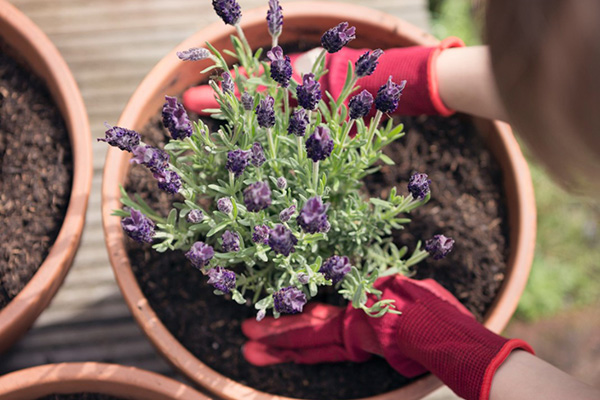
Methods planting
-
From seeds (long, but interesting):
-
Stratify the seeds for 3-4 weeks in the refrigerator.
-
Sow on top of the soil, without deepening (lavender germinates in the light).
-
Cover with film and keep at +18...+22°C. Seedlings will appear in 14-30 days.
-
-
Cuttings (quick method):
-
Cut a lignified shoot 8-10 cm, remove the lower leaves.
-
Dip in rooting agent and plant in wet sand under a cap (jar).
-
Roots will form in 3-4 weeks.
-
-
Ready seedling:
-
Carefully transfer from the store pot, without destroying the soil com.
-
Choosing a location
-
Lighting: South or west windowsill. Lavender needs 8-10 hours of sun per day. In winter, additional lighting may be required.
-
Temperature: In summer — +20...+25°C, in winter — +10...+15°C (coolness stimulates flowering).
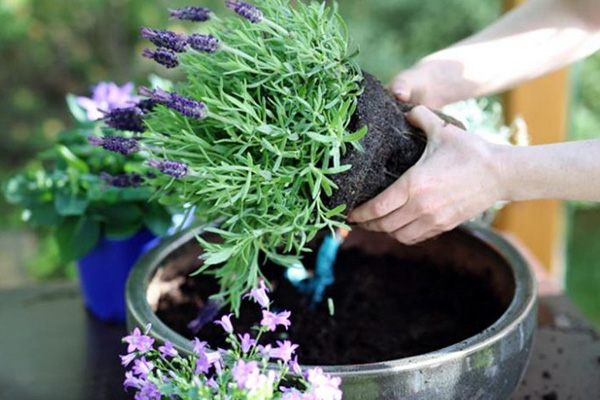
Advice: If the air is too dry, place a tray with wet expanded clay nearby, but do not spray the leaves!
After planting, water the lavender moderately and give it 1–2 weeks to adapt. Next — proper care!
Lavender care at home: creating the perfect microclimate
Lavender is a plant of the Mediterranean climate, accustomed to the sun, moderate humidity and light soils. In an apartment, it needs to recreate similar conditions. We tell you how to care for this fragrant beauty so that it blooms lushly and fills the house with fragrance.
1. Watering and humidity
-
Frequency: Water only when the top layer of soil (2–3 cm) is completely dry. In summer - 1-2 times a week, in winter - once every 10-14 days.
-
Method: Pour water along the edge of the pot or into the tray, avoiding the leaves.
-
Water: Only settled, room temperature. Preferably soft (you can add 2-3 drops of lemon juice per 1 liter of water).
-
Important! Lavender is afraid of overwatering - this will quickly cause its roots to rot. It is better to underwater than to overwater!
2. Lighting and temperature
-
Light: Maximum sun! A southern or southwestern windowsill is ideal. If there is not enough light, the shoots stretch out, flowering is sparse. In winter, use a phytolamp (12-14 hours of light per day).
-
Temperature:
-
In summer: +20...+25°C (can be taken out to the balcony).
-
In winter: +10...+15°C — coolness is necessary for the dormant period. Avoid drafts!
-
3. Top dressing
-
When: From March to September, once every 3-4 weeks.
-
What:
-
In spring — nitrogen fertilizers (for green growth).
-
In summer — potassium-phosphorus (for flowering), for example, for succulents or roses.
-
-
Important! Do not overfeed — lavender naturally grows on poor soils.
4. Pruning
-
Formative: In spring, shorten the shoots by 1/3 so that the bush is lush.
-
After flowering: Cut off faded inflorescences to the first leaves - this stimulates a new wave of flowering.
-
Rejuvenating: Once every 3-4 years, cut old woody stems almost to the base.
5. Transplantation
-
When: Young plants - annually (in spring), adults - once every 2-3 years, when the roots appear from the drainage holes.
-
How: By transshipment, carefully preserving the soil lump. The new pot is 2-3 cm wider than the previous one.
6. Wintering
-
Conditions: From October to February - cool (+10 ... +15 °C), rare watering and lack of fertilizing.
-
If there is no cold place: Place it on the windowsill near the glass, separating it from the radiator with a film.
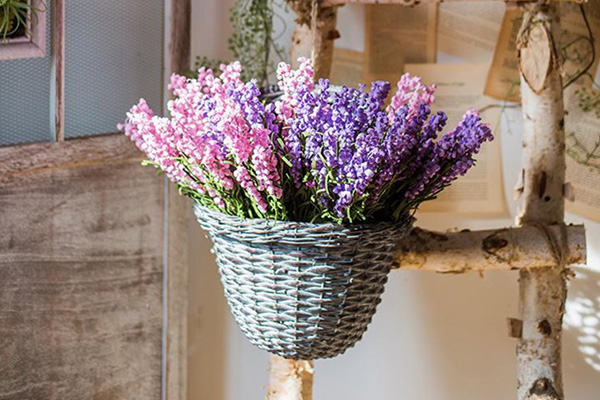
The secret of lush flowering: Lavender loves "Spartan" conditions - a cramped pot, a minimum of water and a lot of sun. The more comfortable it lives, the less it blooms!
Lavender blooming at home: how to achieve lush, fragrant buds
Blooming lavender is a magical sight: delicate purple, lilac or pink inflorescences envelop the room with a soothing aroma. But for the plant to reveal its full potential, it is important to know a few secrets.
How to stimulate flowering
-
Sufficient lighting. Lavender blooms only with 8-10 hours of bright sun per day. If there is not enough natural light, add a phytolamp.
-
Proper wintering. A cool dormant period (+10...+15°C) is necessary for the formation of flower buds. Without this, flowering will be sparse.
-
Moderate watering. A slight "drought" before flowering (in spring) stimulates the plant to release buds.
-
Timely pruning. Spring formative pruning and removal of faded inflorescences prolong flowering.
-
A cramped pot. In a spacious container, lavender grows roots, not flowers. It is best when the roots are a little cramped.
Drying and using flowers
-
When to cut: At the beginning of flowering, when 50-70% of the buds have opened (at this time the aroma is the strongest).
-
How to dry:
-
Collect the shoots in bunches, hang them upside down in a dry, dark place (for example, in a pantry).
-
After 2-3 weeks, the flowers are ready for use.
-
-
Ideas for use:
-
Fragrant sachet for a closet or pillow.
-
Homemade tea (1 teaspoon of dried flowers per glass of boiling water).
-
Interior decoration — bouquets, wreaths, potpourri.
-
Natural air freshener — mix with rose petals and mint.
-
Why doesn't lavender bloom?
-
Too nutritious soil or excess fertilizer.
-
Lack of light or warm winter period.
-
The plant is too young (it blooms from seeds in 2–3 years).
Important! After flowering, be sure to cut the stems by 1/3 - this will help the lavender save its strength for the new season.
Lavender in the house - mood all year round
Growing lavender in a pot is a fascinating experiment that will bring not only beauty but also benefit to your home. This plant has character: it will not tolerate overwatering, lack of sun or stuffy air, but will generously thank you with fragrant flowering for proper care.

The main advantages of indoor lavender:
- Natural anti-stress— the aroma calms the nerves and improves sleep
- Provencal style aesthetics— delicate inflorescences will decorate any interior
- Practical benefits— dried flowers can be used in cooking, cosmetology and home first aid kit
What difficulties can you encounter?
-
The need for a cool winter
-
Lighting requirements
-
Risk of root overwatering
But all these nuances are easy to overcome if you follow simple rules of care. Start with easy-to-grow varieties (like Hidcote), provide the plant with plenty of sun and good drainage, and in just a year you'll be able to harvest your first crop of fragrant flowers.
Lavender isn't just a plant, it's a little piece of the south on your windowsill. It will teach you attention to detail and give you an incomparable joy when a fluffy purple bush emerges from a small seed or cutting.
Frequently asked questions about growing lavender in a pot
Can lavender be grown as a houseplant?
Yes, lavender can be successfully grown indoors, but it's important to choose compact varieties (like Lavandula angustifolia 'Hidcote' or 'Munstead') and provide it with maximum sunlight.
Can lavender be grown in a pot at home?
Of course! The main thing is to choose a suitable pot with drainage holes, light soil and a sunny place. Lavender blooms even more readily in a tight pot.
How to grow lavender on a windowsill from seeds?
Lavender seeds require preliminary stratification (keep them in the refrigerator for 3-4 weeks). Sow superficially in light soil, cover with film and place in the light. Seedlings appear in 2-4 weeks.
Can lavender flowers be kept in the house?
Not only can you, but it is also useful! Lavender purifies the air, calms the nervous system and creates a pleasant atmosphere. The main thing is not to put it in the bedroom if you find the aroma too intense.
How often does lavender bloom in a pot?
With proper care, lavender blooms once a year (in the summer), but some varieties can bloom again in the fall. Young plants from seeds bloom in the 2-3 year.
How does lavender overwinter in a pot?
In winter, lavender needs a dormant period: coolness (+10 ... +15 ° C), rare watering and good lighting. You can put it near a cold window or on an insulated balcony.
What does lavender not like?
Lavender does not tolerate over-watering, shade, drafts, acidic soils and too nutritious fertilizers. Spraying on the leaves also harms it.
What kind of pot do you need for lavender?
The ideal option is a shallow ceramic pot with a diameter of 25-30 cm with drainage holes. Be sure to put a layer of expanded clay on the bottom.