Types of pots for indoor plants and flowers
The container for the plant plays an important role not only for creating a certain accent in your interior. It is equally important to choose for your green pet exactly the pot in which the plant will feel most comfortable, grow and not get sick.
Now in stores and on the Internet there is a huge selection of all kinds of pots, vases, flowerpots, containers from a variety of materials. The cost can also vary greatly. With such abundance, it is quite difficult to make a choice.

Let's try to figure out how to choose the right container so that it matches your taste and the needs of the plant.
What types of containers are there for plants?
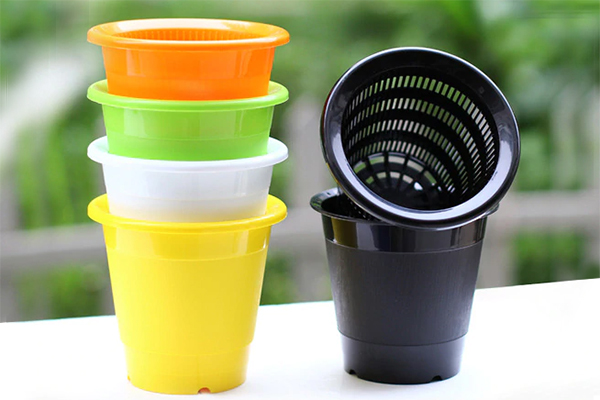
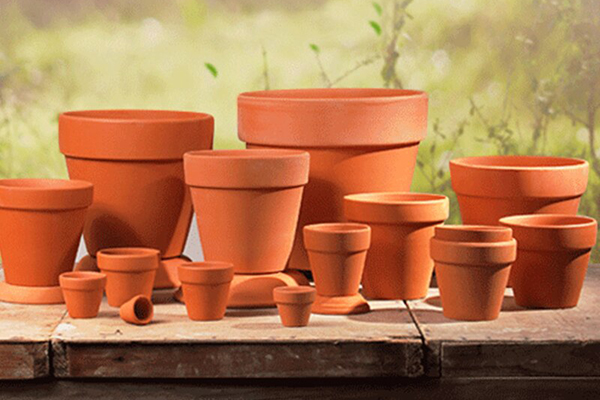
- A pot is the most common container for growing plants at home. The pot is equipped with drainage holes at the bottom, which prevent root rot and provide oxygen access. Plants are usually planted directly into the pot.
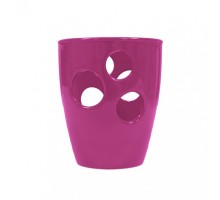
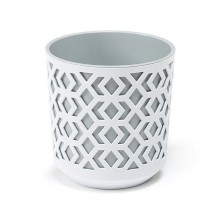
- The planter does not have drainage holes and performs a decorative function. The name of the planter comes from the French cacher - "to hide" and pot - "pot". Often, an inconspicuous pot with a plant is placed inside the planter. In this way, two goals are achieved - the root system is provided with oxygen and does not suffer from over-watering, and the beautiful flowerpot decorates the interior and pleases the eye.

A flowerpot is a very convenient and functional container. You do not need pallets, the surfaces on which the plants are placed will not be flooded with water, you can easily change the inner pot with the plant without changing the flowerpot, matched to the interior. Today Saintpaulia is blooming here, and tomorrow crocuses will delight the eye. What can we say about the variety of shapes and colors of flowerpots - cubes, cones, bowls, diamonds - for every taste and color.

- Hanging flowerpots are used both in apartments and in open spaces. They are perfect for ampelous plants, flowering petunias and other flowers are often planted in them to decorate balconies and terraces.
Indoors, hanging pots are used for plants with drooping leaves (chlorophytum) or vines (scindapsus).
Hanging pots are a great space saver – they can be attached directly to the walls, they will not take up space on the windowsill or floor.
When choosing a hanging pot, keep in mind that the container will be placed above eye level, so the view will be and the bottom of the flowerpot, among other things, which means that the bottom should also look decoratively attractive.
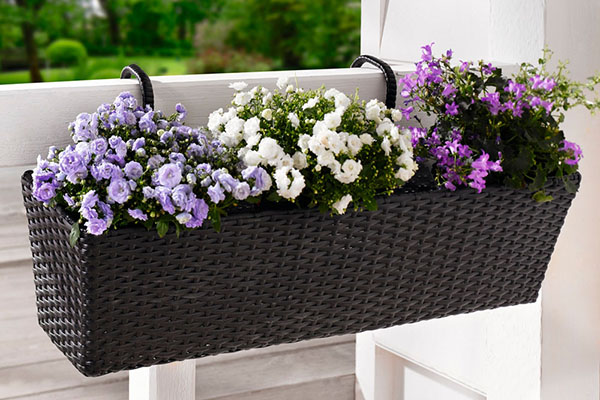
- Balcony boxes are usually placed outside the house. A blooming balcony decorates not only the interior of your apartment, but also the general view of the entire building from the street. Remember that plants in balcony outdoor boxes are exposed to natural conditions, so they must be provided with sufficient drainage holes to drain excess rainwater.
Make sure that the containers are securely fastened to the outside railings of the balcony and will not fall from strong wind or rain.
If the area of the balcony or terrace allows, balcony boxes can be placed inside on the floor or on the walls, secured with brackets. Partitions made of balcony boxes also look elegant - with their help you can zone the space, separating the recreation area from the work area. azalea or begonia.
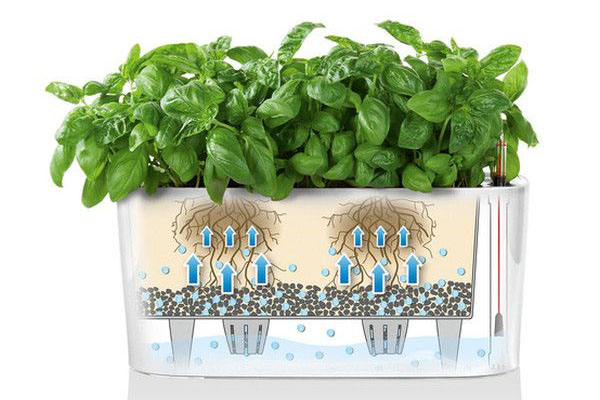
- Smart flowerpots or planters with automatic watering are designed for those who do not have enough time or skill to care for plants. The automatic watering system supplies the plant with the necessary amount of moisture for up to 12 weeks. The optimal solution for those who often leaves home for a long time or simply forgets to water the flowers :-)
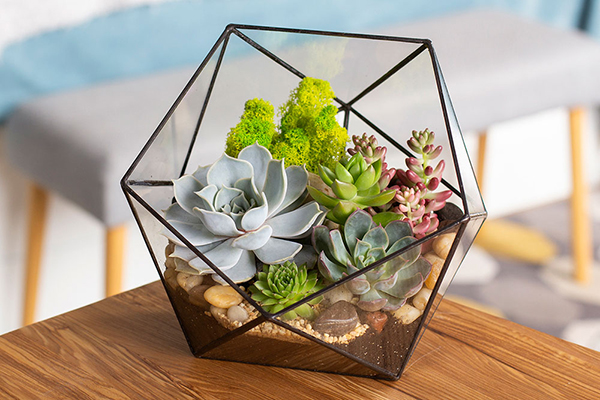
- Florariums allow you to create unique compositions of plants. Phytodesigners call florariums "gardens in a bottle", such compositions often imitate the natural landscape. To create compositions, they use cacti, succulents, fill them with sand, shells and other decorative elements. Such a composition can become a real highlight of your interior.
What is the difference between a pot and a planter?
A pot and a planter are two different types of containers that are used to grow plants. The main difference between them is the presence of drainage holes.
Pot
- Has drainage holes at the bottom that allow excess water to flow out of the soil. This prevents plant roots from rotting.
- Usually made of clay, plastic or ceramics.
- Designed for direct planting of plants.
Flowerpot
- Does not have drainage holes.
- Used to install a pot with a plant in it.
- Performs a decorative function, hiding an ordinary pot.
- Can be made of various materials, such as ceramics, metal, wood, plastic, etc.
What is better plastic or clay for flower pots?
Plant containers are made of plastic, ceramics, glass and even natural stone. Each material has its advantages and disadvantages.
Clay pots are a classic, proven over the years. In such a container, the plant breathes, the walls do not allow overheating or overcooling, remove excess moisture. Disadvantages - the standard red terracotta evokes associations with grandma's geranium, the decorativeness is questionable, the clay pot is easy to break, it is heavy, it is difficult to find a large size.
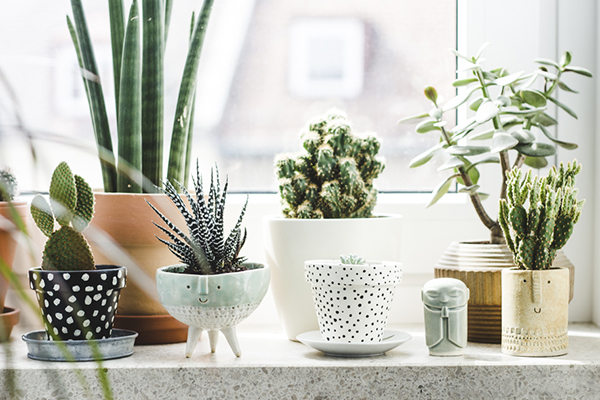
Plastic flowerpots are used much more often - they are more beautiful, the choice of shapes and sizes allows you to choose a flowerpot for any interior, due to their light weight you can place them on literally any nail, large floor vases are easy to move. In addition, modern flowerpots often have holes in the bottom or marks so that you can easily make them if you wish. Of the possible disadvantages - only the danger of overflow or overheating in the open sun.

Pots made of natural stone are not often used due to their impressive cost and difficulty of transportation, although, of course, they look very presentable.
Glass containers are mainly used to create flower arrangements. Glass has excellent decorative properties, but at the same time it is dangerously fragile.
Which pots are best for flowers and houseplants

Some plants require special containers. For example, orchids need transparent pots, since the roots take part in the process of photosynthesis. Without a transparent pot, this is impossible to ensure. Orchid pots are usually transparent and equipped with a sufficient number of drainage holes, sometimes not only at the bottom, but also in the walls of the container.
The choice of a pot for a flower or houseplant depends on several factors, such as the size of the plant, its type, growing conditions and your personal preferences.
For flowers:
- Size: The pot should be large enough to accommodate the root system of the flower. It is usually recommended to choose a pot 2-3 cm larger in diameter than the previous one.
- Material: For flowers, it is best toclay or ceramic pots are suitable. They allow air and moisture to pass through well, which prevents root rot.
- Shape: The shape of the pot can be any, the main thing is that it matches the size and type of flower. For example, tall flowers should use narrow and tall pots, while short flowers should use wide and low pots.
- Drainage: The pot must have drainage holes to drain excess water.
For houseplants:
- Size: The size of the pot for a houseplant also depends on the size of its root system. However, unlike flowers, you don’t always need to choose a pot that’s too big for houseplants.
- Material: You can use both clay and plastic pots for houseplants. Plastic pots are lighter and cheaper, but they do not allow air to pass through as well as clay ones.
- Shape: The shape of a pot for a house plant can be any, the main thing is that it matches your interior.
- Drainage: Drainage holes are as important for house plants as they are for flowers.
How to determine the right volume of a flower pot
The opinion that a large plant needs a large pot is not always correct. The volume of the pot should, first of all, correspond to the size of the root system of the plant. Some plants, for example, dracaena, can have impressive sizes and very small roots, so there is no need for a large container. And vice versa, if the plant has a small above-ground part and massive roots, you need a larger pot.
Size of the root system
- The diameter of the pot should be 2-3 cm larger than the diameter of the root system of the plant. This will provide enough room for the roots to grow and prevent them from becoming entangled.
- For plants with long roots, choose deeper pots. This is especially important for plants like palms and orchids.
- Consider the type of root system. Some plants have shallow roots, while others have deep roots. Choose a pot that matches the type of root system your plant has.
Plant size
- Small pots are suitable for small plants. You should not plant a small plant in a pot that is too large, as this can lead to root rot.
- For large plants, choose larger pots. This will provide enough room for the plant and its root system to grow.
- Consider the rate of growth of the plant. If the plant grows quickly, choose a pot with some extra space so that you don’t have to repot it often.
How to choose a pot for a houseplant
- Transparent plastic pots with lots of drainage holes are best for orchids. Transparency allows you to monitor the condition of the roots, and drainage provides the necessary ventilation and prevents rotting.
- Spathiphyllum prefers small pots that correspond to the size of the root system. It is better to choose plastic pots with good drainage.
- Shallow and wide plastic or ceramic pots are suitable for violets. It is important to ensure good drainage and avoid over-watering the soil.
- Ficus grows well in stable ceramic or plastic pots. The size of the pot should correspond to the size of the plant.
- Petunias can be grown in various types of pots, including hanging pots, balcony boxes, and regular pots. The main thing is that the pot is roomy enough and has good drainage.
- Schefflera prefers spacious ceramic or plastic pots. It is important to ensure good drainage and avoid stagnant water.
- Tall and narrow ceramic or plastic pots are suitable for dracaena. The size of the pot should correspond to the size of the plant.
More about plant transplantation
Frequency of transplanting indoor plants
Young plants need to be transplanted more often than adults, because they simply "outgrow" their pots, like children outgrow their clothes. In cramped conditions, the plant slows down its growth, can get sick and lose its decorative effect. The new pot should be slightly larger than the old one - about 1.5-2 cm in diameter. Unless, of course, the roots have grown too much and do not require more space.
A properly selected flower pot will not only decorate the interior, but will also allow your plant to please the eye with a healthy and blooming appearance for a long time.