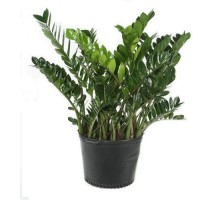
Reproduction of indoor plants

Beautiful and carefully grown indoor plants at the peak of their decorativeness can always be purchased at a flower shop. This is a ready-made solution, but propagation of indoor plants is not just a budget option to get new plants, but also an exciting experiment, even an adventure.
An adult plant, as a rule, slows down its growth and changes little. Watching a new plant grow is very interesting, and plant propagation is not such a difficult process.

You will not only increase the number of plants in your indoor garden, but also get a chance to rejuvenate the plant, start all over again with a smaller copy of your old green friend. And this is also a great opportunity to share young plants with friends.
Basic rules for propagating indoor plants
Before you start propagating your plants, you should consider the following:
- Be prepared to pay more attention to new plants than to grown ones
- The plant you want to propagate should be healthy
- Monitor the soil moisture carefully
- Always use only fresh soil for rooting
- Root stimulants increase the chances of success, but do not provide a 100% guarantee
- Always use clean, sterilized tools
- It is better to use new pots for cuttings
- The best time to propagate most plants is spring
Rooting methods
In order for your plant to be able to grow on its own, it needs a root system. You can root cuttings in two ways - water and soil.

Water method - cuttings are placed in a small container with clean water, which must be renewed once a week. The water method is easier, but in the end, when the roots appear, you will have to transplant the plant into the soil and you risk damaging the tender young roots.
Soil method - cuttings are placed directly into the soil, this reduces the number of steps, but deprives you of the opportunity to observe the emergence of roots. In addition, the soil method requires special attention to watering - overwatering, like underwatering, is destructive for a young plant.
Which method is better to use is up to you to decide. Alternatively, you can try both methods on cuttings of the same plant and determine which is more effective for the plant and more convenient for you.
Methods of plant propagation

Different types of plants require different methods of propagation. Some plants reproduce in several ways at once, while others, on the contrary, can only be bought.
Reproduction by layering
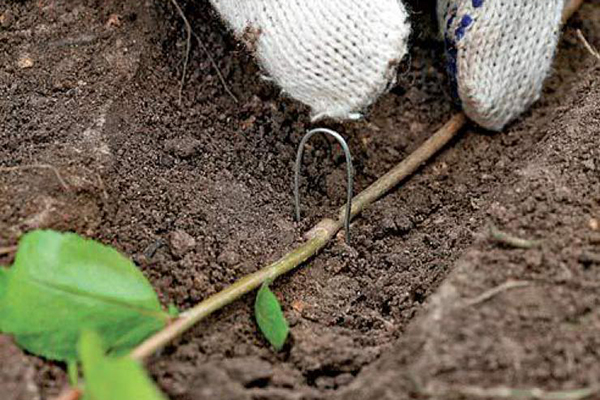
Many climbing plants produce shoots that are ready to take root if given the chance. The least traumatic method of reproduction - you do not need to prune, it is enough to strengthen the shoot in a separate pot with a pin or wire. Make sure that the stem is slightly immersed in the soil - this is necessary for the formation of the root system. The parent plant will feed the young one until it develops enough for independent growth. When you see that the young shoot has taken root, it can be separated from the parent plant.
You can propagate by layering chlorophytum, syngonium, hedera and other climbing plants.
Propagation by cuttings

Many indoor plants can be propagated by stem or leaf cuttings. The cut cuttings are placed in water or a nutrient substrate until roots appear. The optimal method of propagation for palms that have lost their lower leaves and have lost their decorative effect. By cutting off the main trunk, you can achieve the appearance of new shoots lower down. The cut trunk is placed vertically in the substrate, making sure thatthat the plant remains directed upwards.
This method is used to rejuvenate dracaena, yucca, dieffenbachia. Also, you can propagate by cuttings: rose, lavender, hydrangea, boxwood, chrysanthemum, begonia, orchid, barberry, geranium, ficus, dracaena.
Propagation by leaves

You can propagate Saintpaulia, sansevieria, zamioculcas and other plants. You need to carefully cut the leaf from the stem, let the raw edge dry a little, then place it in a compost mixture.
The leaves of some plants are too massive, they can be cut into several parts. Most of the leaf should remain above ground to ensure photosynthesis and prevent rotting.
Reproduction by displacement

Some plant species form lateral shoots or branches around the base of the plant. Such shoots should be separated very carefully, trying to provide as many roots as possible for the young plant. If there are not enough roots, the shoot will not survive. The branch should be cut with a very sharp knife to minimize injury to the plant. The cut shoot is placed in a separate pot and further cared for as an adult parent plant. tillandsia, aloe, echeveria and other plants are propagated in this way.
Propagation by division

Sometimes plants grow too big and become unkempt. You can create new plants and restore the decorative qualities of an old plant by simply dividing it. It is enough to simply take the plant out of the pot and divide it into several parts along with the roots. It is important to determine that each future plant has its own root ball. The roots need to be divided by hand, carefully, trying not to damage them.
Suitable for plants with a developed root system that form a bush (for example, chlorophytum, sansevieria).
The plant is carefully dug out of the pot and divided into several parts, each of which should have roots and a growth point.
The divided plants are planted in separate pots.
calathea, cambria orchid, spathiphyllum reproduce well by division. The following plants can be propagated by dividing the bush: chrysanthemums, sage, orchids, roses, phlox, primroses, hydrangeas
Propagation by seedlings

Some plants form "babies" at the ends of stems. When the leaves and roots of the offspring are formed, they are ready to live independently. Simply separate the new small plant from the parent and transplant it into a separate pot. Most often, this method is used to propagate chlorophytum, tradescantia, scindapsus, hydrangea, lavender, barberry, clematis, roses, spirea, etc.
The babies can be carefully separated from the mother plant and planted separately.
Air layering is great for orchids
Propagation by sowing seeds

The most cost-effective, but the longest method of propagation. It will take patience to wait for the seeds to sprout and then grow a plant of normal size. It is also worth considering that not all seeds are viable. However, if you are patient, you can achieve success. Florists grow chrysanthemum, gerbera and even strelitzia from seeds.
Reproduction by seeds is possible for many plant species, but it is a longer and more labor-intensive process.
Seeds are sowninto the soil or a special substrate, providing them with the necessary conditions for germination (temperature, humidity, lighting).
Sprouts need care and picking.
Bulbs and tubers
Plants with bulbs or tubers (for example, amaryllis, hyacinth) can be propagated by dividing the bulbs or tubers. Each part is planted separately.
Tissue culture (microcloning)
This is a modern method of plant propagation in laboratory conditions. New plants are grown from plant cells, which are genetically identical to the mother plant.
This method is used to propagate rare and valuable plant varieties.
Conclusions
Propagating indoor plants is not such a difficult task. You can create new plants and rejuvenate old ones yourself, you just need to follow some of the above recommendations. Health and prosperity to you and your home garden!