Edible trees

Nature is amazing! The diversity of plant forms is amazing.
The plants we grow for our table - cereals, vegetables, fruits, legumes and melons - make up our main diet. It is difficult to imagine our usual table without bread, potatoes, vegetables, fruits. Even tea and coffee, as everyone knows - plants.
But in the wild, amazing plants of the most bizarre shapes grow, the fruits of which are very similar to the food products we are used to.
Are you sure that sausage does not grow on trees? ;-)
Sausage tree

Kigelia Africana belongs to the Begoniaceae family and grows in southeastern Africa and Madagascar. European travelers The plant was nicknamed the Sausage Tree for the external resemblance of its fruits to sausages.
The tree with a spreading crown reaches 12-15 meters in height and bears brownish fruits about half a meter long hanging on long stalks.
Despite its gastronomic name, the fruits of the sausage tree are bitter in taste and inedible, and in their raw form can even be poisonous. But locals add dried fruits to some dishes and use them to make low-alcohol drinks.
Kigelia has anti-inflammatory properties, so its fruits are used for local potions, wound-healing ointments and remedies for snake bites.
The fruits of the sausage tree are actively used in cosmetology. The protein kigelin, which is part of their composition, promotes the production of collagen, hyaluronic acid and elastin.
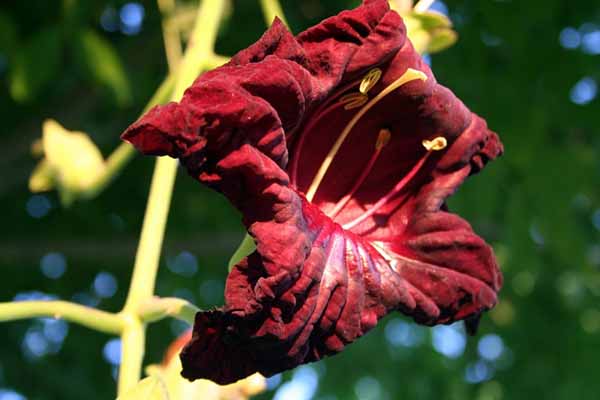
Kigelia is a large tree. In natural conditions, kigelia can reach a height of up to 20 meters, but at home its dimensions will be much more modest.
Sausage tree at home
To successfully grow a sausage tree at home, you need to provide it with the following conditions:
- Lighting: Kigelia prefers bright sunlight, so southern or southeastern windows are suitable for its placement.
- Temperature: The optimal temperature for growing kigelia is 20-25 degrees Celsius.
- Watering: The plant needs regular watering, especially during the period of active growth. However, stagnant water in the pot should be avoided to prevent root rot.
- Soil: Loose and fertile soil is suitable for growing kigelia. You can use a ready-made mixture for tropical plants or prepare it yourself by mixing garden soil with sand and humus.
- Feeding: During the period of active growth (spring-summer), it is recommended to feed the plant with a complex fertilizer for tropical plants once every 2-3 weeks.
Kigelia can be grown from seeds or cuttings. It is recommended to soak the seeds in warm water for several hours before planting. Cuttings can be placed in water or planted in wet sand for rooting.
Kigelia should be replanted as needed, when the plant roots fill the entire volume of the pot.
Growing kigelia at home can be associated with some difficulties. The plant can grow slowly, and may not bloom or bear fruit indoors.
Interesting fact.
Kigelia flowers are bright red and have a disgusting aroma that does not attract pollinators. However, even this specific aroma has its fans - bats find it attractive and happily pollinate the sausage tree.
Breadfruit

What is a breadfruit? A plant of the mulberry family, a species of the genus Artocarpus. The name Artocaraus comes from the ancient Greek (arto - bread, carpus - fruit).
Close relatives of the breadfruit tree are jackfruit, cempedak and marang.
The homeland of this tree is considered to be New Guinea. It grows on all the islands of Oceania.
The breadfruit tree, unlike the sausage tree, does not look like bread at all. And the taste has nothing in common with bakery products.
Why is the breadfruit tree called that? This plant got its name for its incredible productivity and nutritiousness. In terms of caloric content, the fruits of the breadfruit treeva surpass bananas, and in many tropical countries are the main food, literally replacing bread for local residents.
Breadfruit trees grow very quickly and produce an abundant harvest. The fruits are round in shape and have an impressive weight - from 15 to 30 kg.
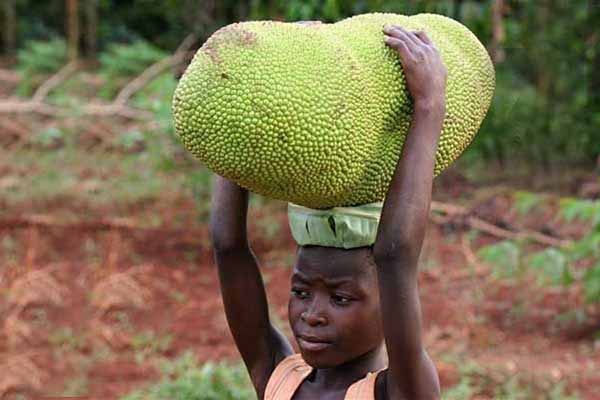
Jackfruit has the largest fruits and is considered the largest fruit on Earth growing on a tree.
Tasty and healthy breadfruit is eaten both ripe and unripe. Ripe fruits are eaten as a dessert, baked, boiled, dried. Unripe fruits are used to make all kinds of drinks.
Breadfruit (Artocarpus altilis) is a large tropical tree, and growing it at home is possible, but it is associated with some difficulties. At home, breadfruit can begin to bear fruit several years after planting.
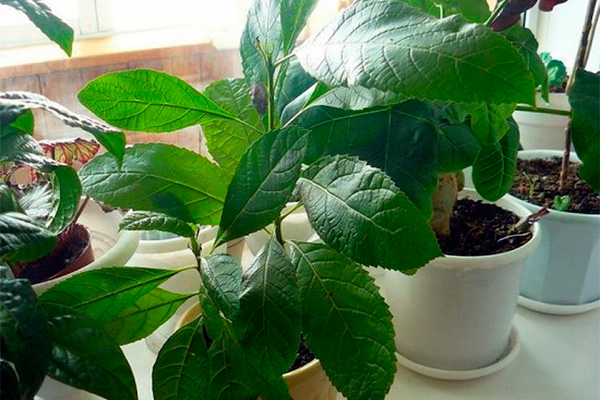
Breadfruit as a houseplant
Home care:
- Watering: Breadfruit needs regular watering, especially during the period of active growth.
- Feeding: During the growing season, it is recommended to feed the tree with complex fertilizers.
- Pruning: To form the crown and restrain growth, pruning can be carried out.
- Transplanting: Young trees are transplanted every few years, adults — as needed.
Difficulties of cultivation:
- Size: breadfruit grows quite large, so it needs a lot of space.
- Climate: it can be difficult to provide the necessary temperature and humidity at home.
- Lighting: breadfruit needs a lot of light, so additional lighting may be required.
- Fruiting: there is no guarantee that the breadfruit will bear fruit at home.
Interesting fact.
In tropical latitudes with pronounced seasonality, breadfruit sheds its leaves during the dormant period, and in equatorial latitudes it grows as an evergreen form.
Milk tree
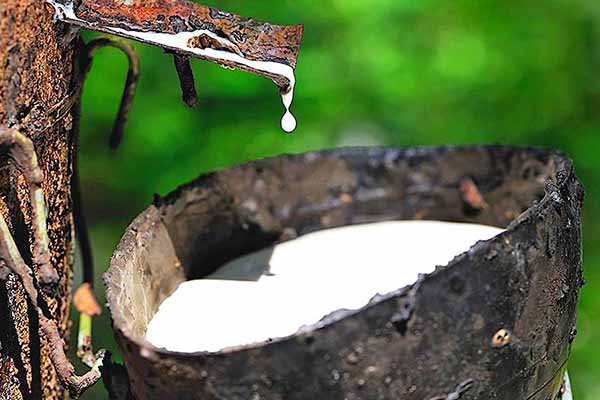
Latin name Brosimum salubris, or Milk tree, or Cow tree.
This edible tree grows in Central and South America, is actively cultivated in Asia.
Belongs to the mulberry family. Like all mulberries, it secretes milky juice, but not poisonous, but quite edible and even very tasty!
In composition, the juice is close to cow's milk and resembles cream with sugar. When boiled, it curdles and forms a delicious curd mass. The wax that collects on the surface during boiling is used to make candles and chewing gum.
The local population enjoys drinking milk tree juice as a substitute for cow's milk. The popularity of this drink is also explained by the fact that milk tree juice does not spoil for a week, even in tropical climates.
Cucumber tree

This exotic plant is grown in India, Singapore, Malaysia and other countries. Another name is – Sorrel tree or Averrhoa bilimbi.
Cucumber tree fruits
The fruits are very similar to cucumbers, but, unlike the latter, they are collected in clusters, like bananas. The fruits are very sour to taste, they are used mainly for making sauces and desserts. Lemonade is made from fresh juice. Unripe fruits are even canned, like regular cucumbers.
Bilimbi fruits are very rich in vitamin C. Decoctions and infusions are used in traditional medicine for the prevention and treatment of scurvy.
Cucumber tree as a houseplant
Cucumber tree, or bilimbi (Averrhoa bilimbi), is a tropical plant that can grow up to 1.5-2 meters in height at home. It has beautiful feathery leaves and produces fruits that look like small cucumbers.
Some tips for growing a cucumber tree at home:
- The cucumber tree loves bright but diffused light. It is best to place it on an east or west window.
- The soil for the cucumber tree should be fertile and well-drained. You can use a mixture of garden soil, humus and sand.
- Pruning the plant. In order for the cucumber tree to have a beautiful shape, it must be pruned regularly.
Candy tree

Another name for this unique plant is the Raisin Tree or Japanese Raisin.
This tree grows in India, Tibet, and China.
Unlike most other plants, the Candy Tree isn't the fruits that are edible, but their stalks, which makes it a unique representative of the flora.
The edible parts of the branches contain a large amount of sugar, which is why their taste resembles candy, raisins, or dates.
The "fruits" of the candy tree look very unusual - they are strongly curved, covered with tubercles. Ripe the stalks are reddish – brown, slightly wrinkled.

The tree blooms very beautifully, it is often grown for decorative purposes. Indoors it reaches a height of about one and a half meters, in the natural environment it can be gigantic in size – up to 25 meters.
Sweet stalks are used to make candies, jams, pastilles, compotes, syrups, sauces, wine and even beer. But traditionally they are eaten without any processing – such healthy candies straight from the branch!
There are other sweet plants. For example, in West Africa there is a shrub called Ketemph, which is 100,000 times sweeter than sugar!
Sago Palm
Sago Palm (Metroxylon sagu) is a genus of palm trees that grow in the tropical forests of Southeast Asia and Oceania. These palms are known for the starchy product sago that is obtained from their heartwood, which is an important food source for many peoples in the region.
Why is the sago palm considered edible?
- A rich source of carbohydrates: Sago is composed almost entirely of carbohydrates, which are the main source of energy for the human body.
- Easily digestible: Sago starch is easily digestible, making it suitable for people with digestive problems.
- Neutral taste: Sago has a neutral taste, which allows it to be used in a variety of dishes, both sweet and savory.
- Long shelf life: Sago can be stored for a long time, making it an important product in areas where access to food may be limited.
How is it obtained sago?
The process of obtaining sago is quite labor-intensive. First, an adult palm tree is cut down, then the core is extracted and crushed. The resulting mass is washed several times to separate the starch from the fibers. The starch is then dried to produce sago, which can be in the form of cereal, flour, or flakes.
How is sago used in food?
- Sago is used in a variety of dishes, including:
- Porridge: Sago is cooked in water or milk, with fruits, nuts, or spices added.
- Flatbread: Sago is made into flatbread, which can be eaten on its own or used as a base for other dishes.
- Desserts: Sago is added to puddings, jelly, and other desserts.
- Drinks: Refreshing drinks are made from sago.
Summary
List amazing edible trees could go on - in this article we introduced you to the most interesting representatives of edible flora.
Nature amazes with the diversity and bizarreness of plant forms. Of course, some exotic trees can only be found in their natural habitat, but you can also get closer to the beautiful world of flora by growing indoor analogues of tropical exotics at home - date, agave, banana and others.