Petunia: Secrets of Growing at Home and in the Garden
Petunia is a bright and unpretentious plant that has long won the love of gardeners and florists. Its correct scientific name isPetunia, and it belongs to the Solanaceae family. Petunia is native to South America, where it grows in a warm climate.
Petunia's popularity is due to its amazing beauty and diversity. It pleases the eye with lush flowers that can be of a wide variety of shades: from delicate pastel tones to rich, bright colors. In addition, petunia has a long flowering period, making it an ideal choice for decorating gardens, balconies, and home interiors.
This plant adapts perfectly to various growing conditions, which allows it to be used both in open ground and in pots or planters. Due to its unpretentiousness and decorativeness, petunia has become one of the most popular flowers for creating bright compositions in landscape design and home gardening.

Where is the best place to grow petunia?
Petunia is a universal plant that can be successfully grown both indoors and outdoors. However, the choice of planting location depends on your goals and capabilities.
Features of growing at home
Growing petunias at home is a great option for those who want to decorate an apartment or balcony. Compact varieties such as multi-flowered (multiflora) or miniature petunias are suitable for this. They feel good in pots and flowerpots, not requiring much space. Growing at home allows you to control the conditions: lighting, watering and temperature, which is especially important in the cold season.

Advantages of planting in open ground
Petunia planted in the garden or in a flowerbed reveals its full potential. In open ground, the plant gets more space for growth, which contributes to the development of a powerful root system and abundant flowering. In addition, petunia goes well with other flowers, creating bright compositions. For the garden, it is better to choose large-flowered (grandiflora) or ampelous varieties, which look spectacular in hanging pots or on alpine slides.

Which varieties are suitable for the house, and which for the street
-
For the house: miniature varieties, multiflora, cascading petunias. They are compact, adapt well to limited space and delight with abundant flowering.
-
For the street: ampelous, grandiflora, surfinias. These varieties are distinguished by large flowers and long shoots, which are ideal for decorating gardens, terraces and balconies.
Choosing a place to grow petunias depends on your preferences and conditions. Regardless of where you decide to plant it, this plant is sure to become a bright accent in your home or garden.
Choosing a pot or planter for petunias
Choosing the right pot or planter for petunias plays an important role in its successful cultivation. The plant has a developed root system and needs enough space to grow, so it is important to consider several factors when choosing a container.
Which pots to choose for your home
Pots and planters with drainage holes are suitable for growing petunias at home to avoid stagnant water. The optimal container volume is from 3 to 5 liters per plant. If you plan to create a composition of several petunias, choose wide pots so that the roots do not compete for nutrients. The pot can be any material: plastic, ceramics or wood. The main thing is to provide good drainage and stability.

Vases for the balcony
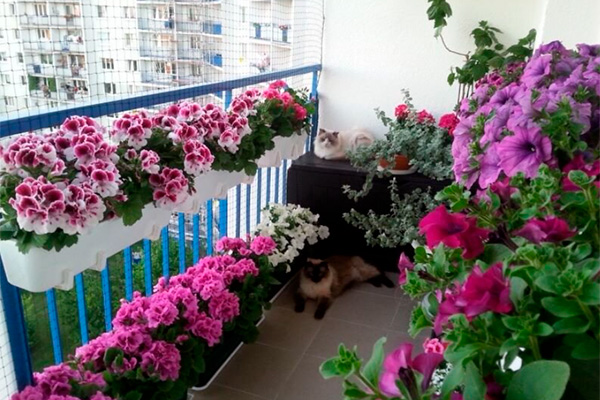
Hanging pots or floor pots are ideal for balcony landscaping. Ampelous and cascading varieties of petunias look especially impressive in hanging structures, creating picturesque "waterfalls" of flowers. Choose a pot with a volume of at least 5 liters so that the plant feels comfortable. Make sure the pots are wind-resistant, especially if the balcony is on the upper floors.
How many petunias to plant in one pot
The number of plants in one pot depends on its volume and the variety of petunia. For compact varieties, you can plant 2-3 plants in a potvolume of 5-7 liters. For ampelous and large-flowered petunias, it is better to limit yourself to one plant per pot to avoid competition for resources. If you want to create a dense composition, choose wide and shallow containers, but make sure that the plants are not planted too closely.
What kind of soil does petunia need?
Petunia has certain requirements for the soil, and the right choice of soil is the key to its healthy growth and lush flowering. The plant prefers light, loose and nutritious soil with good air and water permeability.
Basic soil requirements
-
Lightness and looseness: The soil should be well drained so that the roots of the petunia receive enough oxygen and do not suffer from stagnant water.
-
Nutrition: Petunia actively grows and blooms, so it needs soil rich in organic and mineral substances.
-
Neutral or slightly acidic reaction: The optimal pH level for petunia is 5.5–6.5.

Soil composition
For petunias, you can use ready-made soil mixtures for flowering plants, which are sold in garden stores. They already contain all the necessary components in the correct proportions. If you prepare the soil yourself, mix the following components:
-
Turf soil (soil base) — 2 parts;
-
Peat (for lightness and looseness) — 1 part;
-
Humus (source of nutrients) — 1 part;
-
Sand (to improve drainage) — 1 part.
Before planting, add a little wood ash or dolomite flour to the soil to reduce acidity.
To improve the structure of the soil, you can add perlite or vermiculite.
Be sure to disinfect the soil before use, especially if you prepared it yourself. To do this, you can heat it in the oven or pour a solution of potassium permanganate over it.
What does petunia like: sun or shade?
Petunia is a light-loving plant that prefers bright and long-lasting lighting. However, it can also adapt to light shading, but it is important to maintain a balance so as not to harm flowering.
Sun or shade?
-
Sun: Petunia feels best in well-lit areas where it receives at least 6-8 hours of direct sunlight per day. In the sun, the plant actively develops, forms more buds and pleases with lush and bright flowering.
-
Shadow: Petunia can also grow in light partial shade, but its flowering will be less abundant, and the shoots can stretch out in search of light. Full shade is not suitable for this plant, as it stops flowering and loses its decorative effect.
Placement features
-
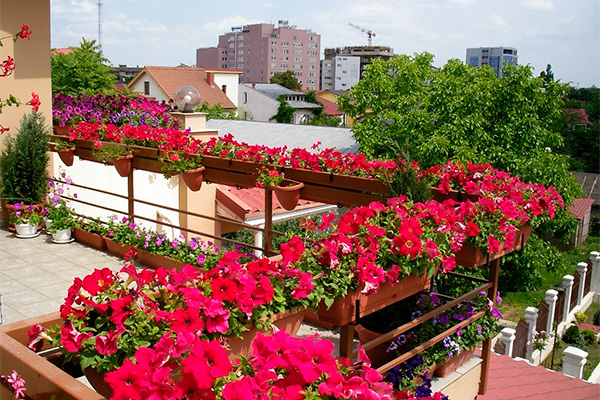
In the garden: Choose open areas for petunia, protected from strong winds. The southern or southwestern sides of the garden are suitable.
-
On the balcony: If you are growing petunia on the balcony, preference should be given to the southern or western directions. On hot days, you can slightly shade the plant to avoid leaf burns.
-
At home: When growing petunia at home, place it on windowsills on the southern or western side. If there is not enough light, use phytolamps for additional lighting.
How to grow petunia
Growing petunia is a fascinating process that requires attention to detail, but with the right approach, it will certainly bear fruit in the form of lush flowering. Let's look at the main stages of growing petunias: from sowing seeds to planting in open ground.

When is it better to plant petunias
Planting times depend on the growing method:
-
For seedlings: Seeds are sown in late February - early March so that the plants have time to get stronger by the time they are planted in open ground.
-
In open ground: Seeds or seedlings are planted in May, when the threat of frost has passed and the soil has warmed up to +10–15 °C.
Petunia seedlings
-
Sowing seeds: Petunia seeds are very small, so they are sown superficially, without deepening into the soil. For convenience, you can mix the seedson with sand. After sowing, the soil is moistened with a spray bottle and covered with film or glass to create a greenhouse effect.
-
Picking: When the seedlings have 2-3 true leaves, they are carefully transplanted into separate containers. This helps to strengthen the root system.
-
Hardening off seedlings: 1-2 weeks before planting in open ground, seedlings begin to harden off by taking them out into the fresh air for several hours a day. This helps plants adapt to outdoor conditions.
-
Transplanting into open ground: Seedlings are planted in prepared areas, keeping a distance of 20-30 cm between plants (depending on the variety).
Planting seeds in open ground
If you decide to sow seeds directly into open ground, do it in May, when the soil has warmed up. Keep in mind that this method requires more time for seedlings to appear and flowering to begin. After sowing, cover the bed with a film to retain moisture and heat.
Use high-quality seeds from trusted manufacturers.
Maintain moderate soil moisture, preventing drying out or over-watering.
Provide seedlings with sufficient lighting, especially in the first weeks of growth.
How to care for petunias for lush flowering
In order for petunias to delight you with abundant and long-lasting flowering, it is important to provide them with proper care. This plant cannot be called too capricious, but following the basic rules of watering, feeding and pruning will help to reveal its full potential.
Petunia loves moderate humidity, but does not tolerate stagnant water. Water the plant regularly, especially in hot weather, but make sure that the soil has time to dry out between waterings. In open ground, watering is required 2-3 times a week, depending on the weather. For petunias growing in pots, watering is needed more often, as the soil in containers dries out faster. Check the soil daily.
Petunias need regular feeding, especially during the period of active growth and flowering. Use complex fertilizers with a high content of potassium and phosphorus, which promote the formation of buds. Feed the plant once every 7-10 days, applying fertilizer both under the root and by spraying the leaves.
Pruning and pinching help to form a lush bush and stimulate the formation of new buds. When the plant reaches a height of 10-15 cm, pinch the top of the main shoot. This stimulates the growth of lateral branches. Regularly remove faded flowers and dry leaves so that the plant does not waste energy on seed formation.

Petunia blooming
Petunia blooming is a real feast of colors that can last for several months. To enjoy this spectacle as long as possible, it is important to understand how and how much petunia blooms, as well as know how to extend the flowering period.
How and how much petunia blooms
Petunia begins to bloom 70-90 days after sowing the seeds, depending on the variety and growing conditions. The flowering period lasts from late spring until the first frost, making it one of the longest flowering plants.
-
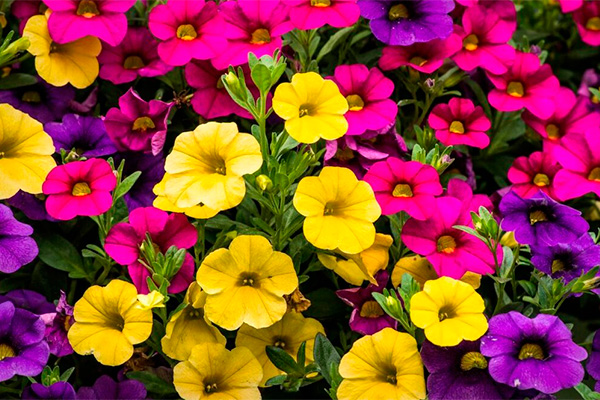
Features of flowering: Petunia flowers can be simple or double, with smooth or wavy edges. They have a wide range of shades: from white and soft pink to deep purple and red.
-
Lifespan of one flower: Each flower lives about 5-7 days, but thanks to the constant formation of new buds, the plant remains decorative throughout the season.
How to extend the flowering period
-
Regular care: Timely watering, fertilizing and removing wilted flowers help maintain active flowering.
-
Pruning: If the petunia begins to lose its decorative effect, carry out radical pruning, shortening the shoots by 1/3. This stimulates the growth of new branches and the formation of buds.
-
Feeding: Use fertilizers with a high content of potassium and phosphorus, which support flowering. Apply them every 7-10 days.
-
Protection from stress:Avoid sudden changes in temperature, drying out of the soil and over-watering, as this can negatively affect flowering
Additional information
Petunia is not only a beautiful, but also a versatile plant that can be used to create bright decorative compositions. In addition, many people ask questions about winter storage of petunia and the possibility of growing it at home. Let's consider theseaspects in more detail.
Ideas for decorating with petunia
Petunia is perfect for decorating gardens, balconies, terraces and even interiors. Here are some ideas for inspiration:
-
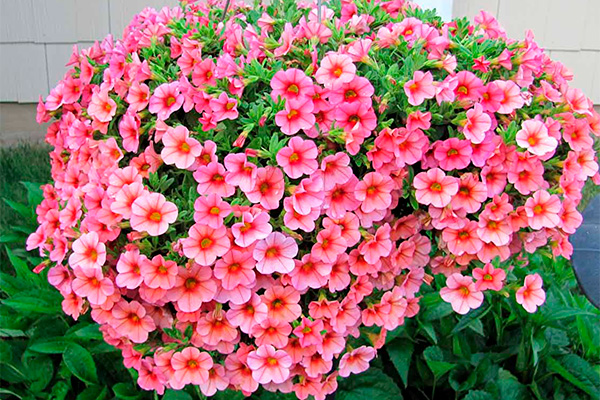
Hanging planters: Tramp and cascading petunia varieties look perfect in hanging baskets, creating spectacular flower waterfalls.
-
Flowerbeds and borders: Combine petunias with other flowers, such as lobelia, balsam or cineraria, to create bright and contrasting compositions.
-
Vertical gardening: Use petunias to decorate vertical walls or screens, combining them with ornamental grasses and vines.
-
Home decor: Small pots with miniature petunias will become stylish decorating windowsills or tables.
How to save petunia in winter
Petunia is a perennial plant, but in cold climates it is often grown as an annual. However, if desired, you can save petunia until the next season:
-
Transplanting into a pot: Before the onset of frost, carefully dig up the plant and transplant it into a pot.
-
Storage conditions: Place the petunia in a light and cool room with a temperature of +10–15 °C. Reduce watering and stop fertilizing.
-
Pruning: Shorten shoots by 1/3 to stimulate new growth in the spring.
-
Returning to the garden: In late spring, when the threat of frost has passed, petunias can be planted outdoors again.
Can petunias be kept indoors?
Petunias feel great indoors if they are provided with sufficient lighting and care. For indoor growing, it is better to choose compact varieties, such as multiflora or miniature petunias. Place the pots on southern or western windowsills, and in winter use phytolamps for additional lighting.
What to plant instead of petunia
If you are looking for an alternative to petunia or want to diversify your garden with other plants, there are many options that can be a worthy replacement or addition. Here are some ideas:
- Surfinia. Surfinia is a petunia hybrid that is characterized by more abundant flowering and resistance to adverse conditions. It is ideal for hanging planters and balcony boxes.
- Calibrachoa. Calibrachoa looks like petunia, but has smaller flowers and a compact size. This plant is great for small pots and planters.
- Lobelia. Lobelia is a delicate plant with small blue, white or purple flowers. It looks great in hanging baskets and combines with other flowers in flower beds.
- Begonia semperflorens. Begonia is unpretentious and has a long flowering period. It grows well in both shade and sun, making it a versatile choice for the garden.
- Balsam. Balsam, or "touch-me-not," is a colorful plant that blooms almost all season. It prefers partial shade and moist soil, making it ideal for shady areas.
- Verbena. Verbena is a drought-resistant plant with small flowers collected in lush inflorescences. It is suitable for flowerbeds, borders, and hanging pots.
- Pelargonium (geranium). Pelargonium is a classic plant for balconies and gardens. It has bright flowers and a pleasant aroma, as well as being easy to care for.
- Nasturtium.Nasturtium is not only a beautiful plant, but also a useful one. Its flowers are edible and can be used in cooking. It grows well in poor soils and does not require complex care.
- Alyssum.Alyssum is a low-growing plant with small flowers that exude a pleasant honey aroma. It is ideal for borders and alpine slides.
- Diascia.Diascia is a compact plant with abundant flowering. It looks great in hanging planters and pots, and also combines with other flowers in flower beds.
Why petunia is an ideal plant for home and garden
Petunia is deservedly considered one of the most popular plants for home and garden. Its bright flowers, variety of varieties and unpretentiousness make it an ideal choice for both experienced gardeners and beginners.
Advantages of petunia
-
Decorative: Petunia pleases the eye with lush flowers of various shades that can decorate any corner of the garden, balcony or interior.
-
Long flowering: With proper care, petunia blooms from late spring until the first frost, creating a festive atmosphere throughout the season.
-
Versatility: Petunia is suitable for growing in open ground, pots, planters and hanging baskets, which allows it to be used in a variety of landscape and design solutions.
-
Unpretentiousness: This plant does not require complex care, but at the same time responds well to care, delighting with abundant flowering.
Why choose petunia
-
It is suitable for any climatic conditions, easily adapts to different conditions cultivation.
-
Petunia combines with most other plants, which allows you to create unique flower arrangements.
-
This is an affordable plant that can be grown from both seeds and seedlings.
Petunia is not just a flower, it is an opportunity to realize your creative ideas and enjoy the beauty of nature every day. Regardless of whether you grow it in the garden or at home, it will definitely become a bright accent and a source of inspiration.