
Tulips at home in a pot: growing, care and tips for lush flowering
Tulips are one of the most popular flowers in the world, symbolizing spring, freshness and beauty. Their bright petals and variety of shapes attract the attention of both gardeners and indoor plant lovers. Although tulips are traditionally associated with gardens and flower beds, they can be successfully grown at home. Growing tulips in a pot is a fascinating process that allows you to enjoy their flowering even in a city apartment. This is a great way to add color to the interior and create a spring mood at any time of the year. In this article, you will find all the necessary tips on planting, caring for and creating ideal conditions for lush flowering of tulips at home.

Types and varieties of tulips for home cultivation
For growing tulips at home, it is better to choose low-growing and compact varieties that adapt well to the limited space of the pot. Here are some popular options:
-
Botanical tulips: for example, Tulipa humilis or Tulipa tarda. They are distinguished by their small size and early flowering.
-
Kaufman tulips: ideal for the home due to their decorative qualities and resistance to temperature changes.
-
Greig tulips: known for their bright flowers and beautiful patterned leaves.
-
Double early tulips: for example, the Monte Carlo variety. Their lush flowers will decorate any interior.
When choosing bulbs, pay attention to their quality: they should be dense, without damage, mold or signs of rot. It is better to buy bulbs in trusted stores or nurseries to be sure of their varietal characteristics and health.

Remember that not all varieties are suitable for home growing. Choose those that are less demanding to conditions and tolerate indoor microclimate well.
Preparing for planting
Before planting tulips in a pot, it is important to properly prepare the bulbs and create suitable conditions for their growth.
Preparing the bulbs
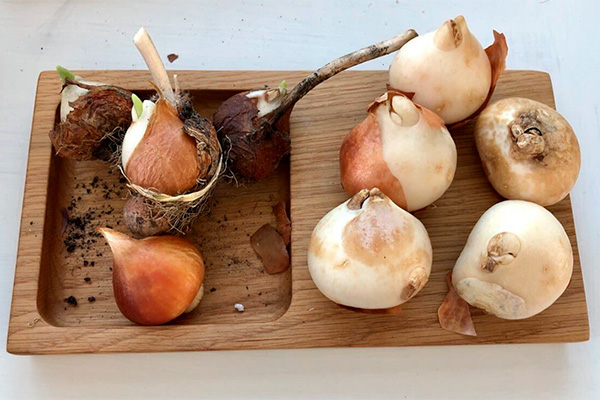
Before planting, the bulbs must be carefully inspected. Choose healthy, dense specimens without damage, mold or soft areas. If the bulbs are purchased in advance, store them in a cool, dry place until planting. To improve germination, you can treat the bulbs with a weak solution of potassium permanganate or a special fungicide to protect against fungal diseases.
Choosing a pot
The pot for tulips should be deep enough - at least 15-20 cm, so that the root system can develop freely. The diameter of the pot depends on the number of bulbs: for 3-5 bulbs, a container with a diameter of 15-20 cm is suitable. Drainage holes are required to remove excess moisture.
Preparing the soil
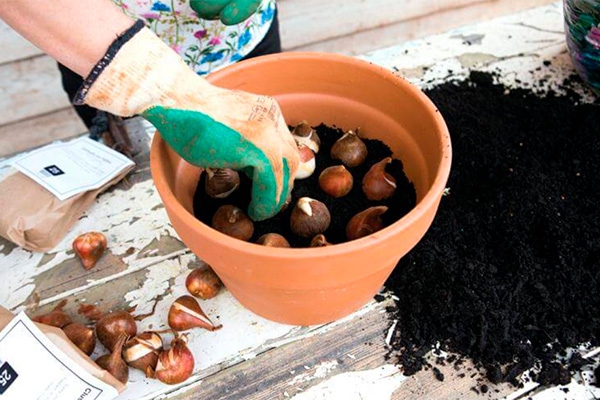
Tulips prefer light, loose and nutritious soil with neutral acidity. You can use ready-made soil for bulbous plants or prepare the mixture yourself by mixing garden soil, peat and sand in a ratio of 2:1:1. Place a drainage layer (expanded clay or fine gravel) at the bottom of the pot to prevent water stagnation.
Growth times and number of flowers
Tulips in a pot grow on average 2-3 months from planting to flowering. One bulb usually produces one flower, but some varieties can produce several flower stalks. To achieve lush flowering, it is important to follow all stages of preparation and care.

Now that the bulbs and pot are ready, you can proceed to planting.
Step-by-step instructions on how to plant tulips in pots at home
Planting tulips in pots is a simple process if you follow the step-by-step instructions. Here's how to do it right:
-
Prepare the pot:
-
Place a 2-3 cm layer of drainage (expanded clay or fine gravel) at the bottom of the pot.
-
Fill the pot with the prepared soil mixture, leaving about 5-7 cm to the edge.
-
-
Place the bulbs:
-
Plant the bulbs with the sprout facing up, lightly pressing them into the soil.
-
DistanceThere should be 2-3 cm between the bulbs so that they do not interfere with each other's growth.
-
-
Fill with soil:
-
Carefully sprinkle the bulbs with soil, leaving the tops slightly visible.
-
Make sure that the soil layer above the bulbs is about 2-3 cm.
-
-
Water the plantings:
-
After planting, water the soil moderately so that it is moist, but not waterlogged.
-
Excess water from the tray must be drain.
-
-
Create conditions for rooting:
-
Place the pot in a cool, dark place with a temperature of +5–10 °C (for example, in the refrigerator or on the balcony) for 6–8 weeks. This simulates the winter period and promotes rooting.
-
Check the soil moisture periodically so that it does not dry out.
-
-
Move the pot to a warm place:
-
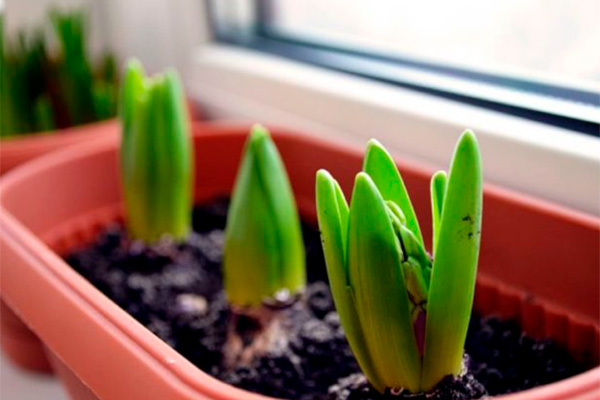
After the sprouts reach a height of 5–7 cm, move the pot to a bright room with a temperature of +15–20 °C.
-
Gradually accustom the plants to light, avoiding direct sunlight in the first days.
-
How to care for tulips in a pot
To ensure that tulips in a pot delight you with lush and long flowering, it is important to provide them with proper care. Here are the main recommendations:
Watering
-
Tulips need moderate watering. The soil should be slightly moist, but not waterlogged.
-
Water the plants when the top layer of soil dries out by 1–2 cm.
-
Avoid stagnant water in the pan — this can lead to rotting of the bulbs.
Lighting
-
Tulips love bright but diffused light. Place the pot on the eastern or western windowsill.
-
If there is not enough natural light, use phytolamps for additional lighting.
-
Avoid direct sunlight, especially at midday, to avoid burning the leaves.
Temperature
-
The optimal temperature for tulips is +15–20 °C.
-
Avoid sudden temperature changes and drafts.
-
If the room is too hot, flowering may be short-lived, so try to maintain a cool atmosphere.
Feeding
-
Feed tulips 2-3 times during the growth period:
-
When sprouts appear — nitrogen fertilizer to stimulate leaf growth.
-
During the period of bud formation — complex fertilizer for flowering plants.
-
After flowering — potassium-phosphorus fertilizer to strengthen the bulbs.
-
Follow the instructions on the fertilizer packaging so as not to overfeed the plants.
Regularly remove wilted leaves and flowers so that the plant does not spent energy on the formation of seeds.
If the tulips have become too tall and unstable, tie them to a support.
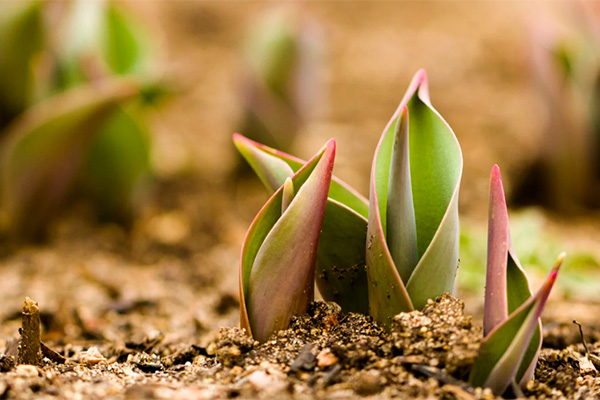
When to plant bulbs and when tulips will bloom
Planting times
-
For home cultivation of tulips, bulbs are usually planted in the fall, from September to November. This allows you to imitate the natural growth cycle, including the winter dormancy period.
-
If you want to get flowering by a certain date (for example, by March 8), calculate the planting dates taking into account that from the moment the pot is transferred to warmth until flowering, about 3-4 weeks pass.
When will tulips bloom
-
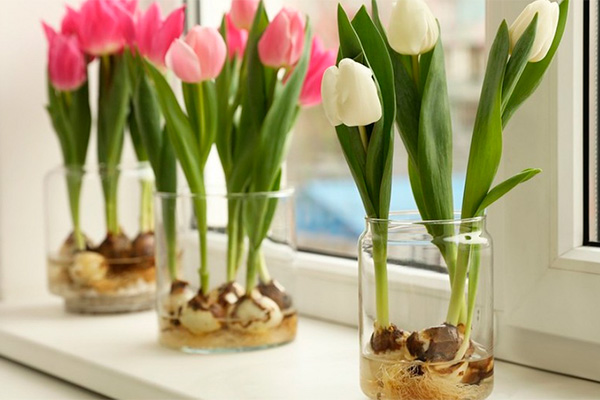
With proper planting and care, tulips bloom 2-3 months after transferring the pot to a warm and bright place.
-
Usually flowering lasts 1-2 weeks, depending on the variety and growing conditions.
How to achieve lush flowering
-
Provide the tulips with a cooling period (6-8 weeks in a dark, cool place) to stimulate growth and flowering.
-
Monitor the lighting, temperature and watering to create comfortable conditions for the plants.
-
Regularly feed the tulips, especially during the budding period.
How to extend the flowering period
-
Keep the pot in a cool place (about +15 °C) - this will slow down the opening of the buds and prolong flowering.
-
Avoid direct sunlight on the flowers.
-
Remove faded flowers so that the plant does not waste energy on the formation of seeds.
What to doafter flowering
-
Cut off the flower stalks, but leave the leaves until they turn yellow. This is necessary so that the bulbs accumulate nutrients.
-
Gradually reduce watering, and when the leaves are completely dry, dig up the bulbs.
-
Clean the bulbs from soil, dry them and store in a cool, dry place until the next planting.
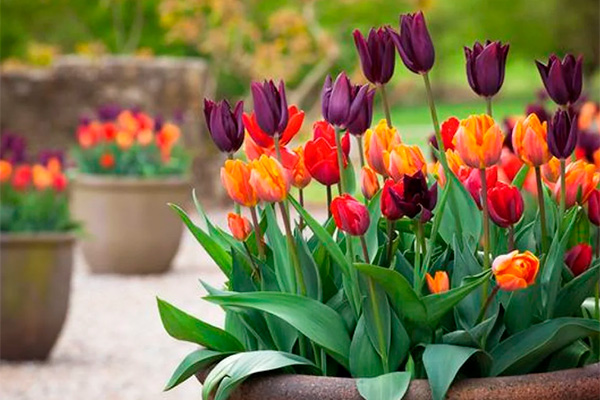
What bulbous plants besides tulips can be grown at home in a pot?
Tulips are not the only bulbous plants that can be successfully grown at home. Here are some other popular options that will add a splash of color to your home:
1. Hyacinths
-
Hyacinths are known for their dense inflorescences and pleasant aroma.
-
They adapt well to indoor conditions and bloom within 2-3 months after planting.
-
Hyacinths prefer bright light and moderate watering.
2. Daffodils
-
Daffodils are unpretentious flowers that are easy to grow in pots.
-
They bloom in early spring and delight delicate white or yellow flowers.
-
For planting, choose low-growing varieties such as "Tête-à-Tête".
3. Crocus
-
Crocus is one of the earliest bulbous plants that can be grown at home.
-
Their small but bright flowers appear just 8-10 weeks after planting.
-
Crocus prefers cool conditions and moderate watering.
4. Muscari (mouse hyacinth)
-
Muscari - miniature bulbous plants with blue or purple flowers.
-
They are ideal for small pots and create a spectacular decorative look.
-
Muscari are unpretentious and grow well even with minimal care.
5. Amaryllis and Hippeastrum
-
These plants are distinguished by large, spectacular flowers on high peduncles.
-
They bloom in winter or early spring, adding bright colors to the interior.
-
Amaryllis and Hippeastrum require abundant watering during flowering and a dormant period after him.
6. Freesia
-
Freesias are valued for their exquisite flowers and delicate aroma.
-
They grow well in pots, but require bright light and regular watering.
-
Freesias bloom 3-4 months after planting.
Tips for growing bulbs at home
-
Choose high-quality bulbs without damage or signs of disease.
-
Provide a cooling period for the plants to stimulate flowering.
-
Follow the watering and fertilizing regime to maintain health plants.
Growing tulips and other bulbous plants at home is a fascinating and rewarding process that allows you to enjoy the bright colors and aromas of flowers even in a city apartment. Following simple recommendations for planting, care and creating optimal conditions, you can achieve lush flowering and create a cozy atmosphere in your home.
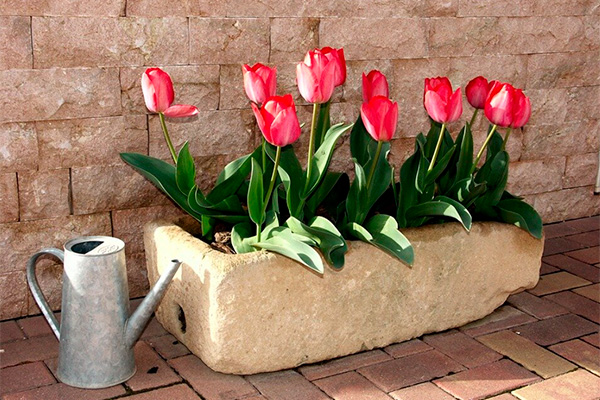
Don't be afraid to experiment with different varieties of tulips and other bulbous plants, such as hyacinths, daffodils or crocuses. Each of these plants will bring its own unique twist to your interior. And most importantly, growing flowers at home not only decorates the space, but also gives positive emotions, helping to relax and enjoy the beauty of nature.
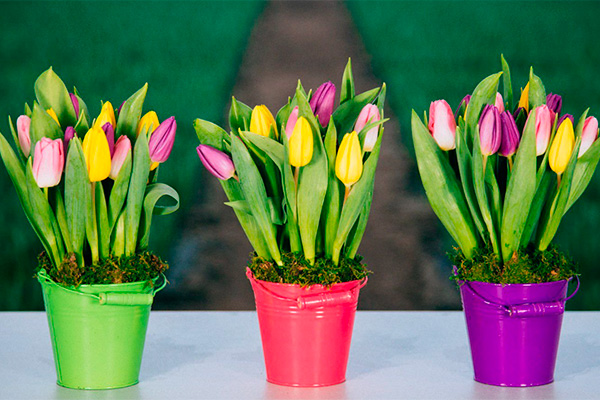
We hope that our tips will inspire you to create your own mini-garden on the windowsill. Good luck with your flower experiments!