
Growing Greens at Home on a Windowsill: Simple and Useful
Growing greens on the windowsill is becoming an increasingly popular activity among city dwellers. It is not only a convenient way to always have fresh greens on hand, but also an exciting hobby that brings joy and benefit. Growing greens at home, you can be sure of its environmental friendliness, because you control the process yourself, avoiding the use of harmful chemicals.
This activity is also great for family leisure. Children enjoy participating in the process of planting and caring for plants, learning more about nature and developing responsibility.

Growing greens on a windowsill is a simple and affordable way to add a little freshness, greenery and new impressions to your life.
What greens can be grown on a windowsill
Growing greens on a windowsill is a great way to diversify your diet with fresh and healthy products. Many types of greens feel great at home and do not require complex care. Here are some popular options that are easy to grow even for beginners:
-
Green onions: one of the most unpretentious options. They can even be grown in water, without using soil.
-
Parsley, dill, cilantro: these aromatic herbs are ideal for adding to salads, soups and main dishes. They grow quite quickly and do not require special conditions.
-
Leaf lettuce: tender lettuce leaves are rich in vitamins and minerals. Choose varieties that tolerate low light well.
-
Mint and basil: these aromatic herbs will be a great addition to tea, desserts or Italian dishes.
-
Oregano, rosemary, arugula: if you like to experiment with flavors, these herbs will add zest to your dishes.
Each of these crops has its own characteristics, but they are all great for growing at home. Choose what you like best and enjoy fresh herbs all year round!
Which greens grow the fastest
If you want to get results quickly and enjoy fresh herbs, you should pay attention to the crops that grow the fastest. Among them:
-
Green onions: just 1-2 weeks after planting the bulbs, you can cut off the first feathers. This is an ideal option for those who want to immediately see the fruits of their efforts.
-
Cress: one of the record holders for growth speed. The first shoots appear in 3-5 days, and in 2-3 weeks you can harvest.
-
Arugula: this spicy green grows very quickly - in 20-25 days after planting you can add it to salads and other dishes.
-
Leaf salad: some varieties of lettuce, such as lollo rossa or batavia, are ready to eat in 3-4 weeks.

What do you need to grow greens at home?
To successfully grow greens on the windowsill, it is important to prepare everything you need. Here are the main elements you will need:
-
Soil for greens on the windowsill
Choose light and nutritious soil intended for vegetable crops or greens. It should allow air and moisture to pass through well. If you want to make the soil looser, add some sand or vermiculite to it. -
Greens on the windowsill without soil
Some types of greens, such as green onions or watercress, can be grown without soil. Water, hydrogel, or even damp gauze will do for this. This is a great option for those who want to avoid using soil. -
What to plant greenery in on a windowsill
-
Pots or containers: choose containers with drainage holes to avoid stagnant water.
-
Seedling boxes: convenient for growing several types of greenery at the same time.
-
Plastic cups or jars: suitable for growing onions or herbs in water.
-
-
Additional materials
-
Drainage (expanded clay, pebbles or broken brick) to remove excess moisture.
-
Fertilizers for plant feeding (organic or mineral).
-
A lamp for supplementary lighting, especially in winter when there is not enough natural light.
-
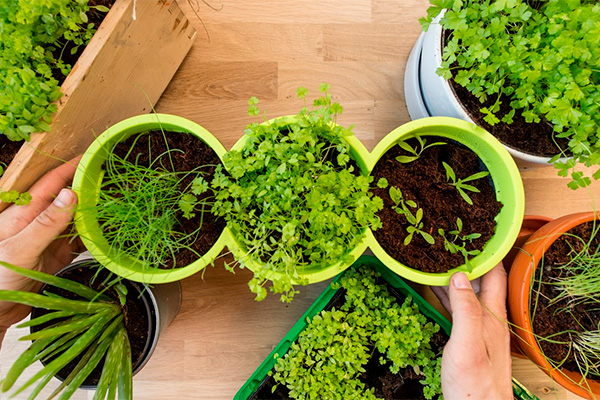
Having collected everything you need, you can create ideal conditions for growing greens and enjoy a fresh harvest all year round!
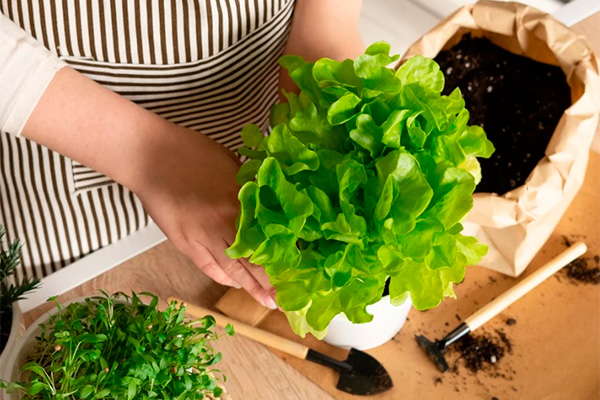
Step-by-step instructions for planting greens
Growing greens on a windowsill is a simple and fun process. Follow the step-by-step instructions to get a rich harvest:
-
Prepare containers.Choose pots, containers or boxes with drainage holes. Place a 2-3 cm layer of drainage (expanded clay, pebbles or broken brick) on the bottom.
-
Fill the containers with soil. Use light and nutritious soil for vegetable crops or greens. Fill the containers, leaving 2-3 cm to the edge, so that it is convenient to water the plants.
-
Prepare the seeds or seedlings. If you are using seeds, soak them in warm water for several hours to speed up germination. For onions or root vegetables (such as parsley), prepare the bulbs or roots by cutting off the top.
-
Plant the greens. Seeds: spread them evenly over the surface of the soil and sprinkle with a thin layer of soil (about 0.5-1 cm). Bulbs or roots: deepen them into the soil so that the top part remains on the surface.
-
Water the plantings. Gently moisten the soil using a watering can with a fine spray so as not to wash away the seeds.
-
Create a greenhouse effect. Cover the containers with film or glass to retain moisture and heat. This will speed up the germination of the seeds.
-
Place the containers in a warm place.Keep the plants in a warm place with a temperature of 20-25°C until the shoots appear.
-
Remove the film after the shoots appear.
When the first shoots appear, remove the film and move the containers to a windowsill or other well-lit place.
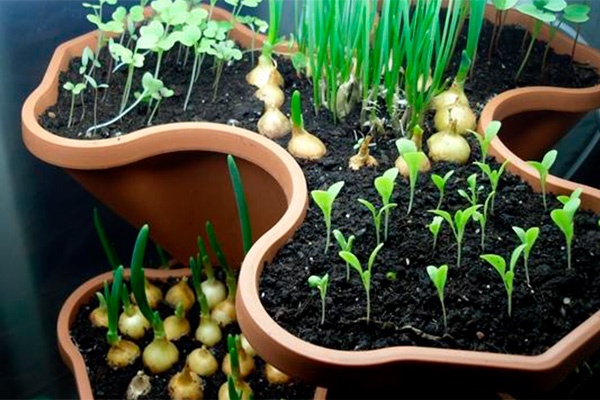
Caring for greens on the windowsill
So that the greens on the windowsill grow healthy and delight you with abundant harvest, it is important to provide it with proper care. Here are the main points to pay attention to:
-
How often to water the greenery on the windowsill
-
Watering should be regular, but moderate. Overwatering can lead to root rot, and lack of moisture can lead to drying out of plants.
-
Check the soil moisture: if the top layer of soil is dry by 1-2 cm, it's time to water.
-
Use water at room temperature to avoid damaging the roots.
-
-
What kind of lamp do you need for greenery on the windowsill
-
Greenery needs good lighting, especially in winter, when there is not enough natural light.
-
Use phytolamps or LED lamps with warm white light (2700-3000 K). They provide the necessary spectrum of light for plant growth.
-
The optimal length of daylight for greenery is 12-14 hours.
-
-
Plant feeding
-
Once every 2-3 weeks, feed the greenery with organic or mineral fertilizers. This is especially important for fast-growing crops such as lettuce or arugula.
-
Follow the instructions on the fertilizer package to avoid overdosing.
-
-
Loosen the soil
-
Regularly loosen the top layer of soil to ensure oxygen reaches the roots.
-
-
Thinning out seedlings
-
If plants are planted too densely, thin them out, leaving the strongest shoots. This will allow the greens to develop more actively.
-
-
Temperature control
-
The optimal temperature for growing greens is 18-22°C. Avoid drafts and sudden temperature changes.
-
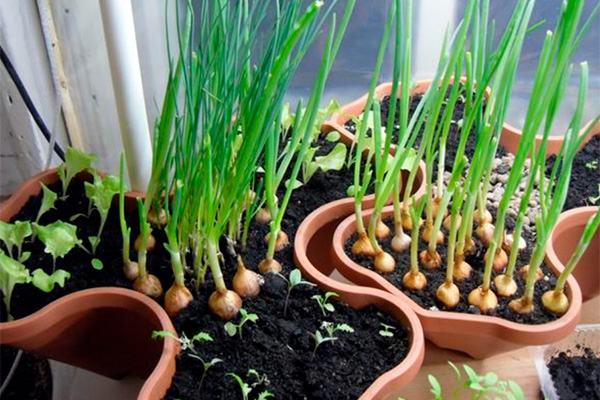
How to plant and grow onions for greens
Growing green onions on a windowsill is one of the easiest and fastest ways to get fresh greens. Onions are unpretentious, grow in almost any conditions and do not require complex care. Here are the step-by-step instructions:
-
Choosing bulbs
-
Small bulbs (2-4 cm in diameter) or already sprouted specimens are suitable for planting.
-
Choose healthy bulbs without signs of rot or damage.
-
-
Preparing the container and soil
-
Use shallow containers, pots, or even plastic cups.
-
Put a layer of drainage (expanded clay or pebbles) on the bottom, then fill the container with soil for vegetable crops.
-
-
Planting onions
-
If you are planting the bulbs in the ground, deepen them into the soil so that the top part (about a third of the bulb) remains on the surface.
-
If you are using the growing method in water, place the bulbs in a container with water so that the roots are immersed in the liquid, and the bulb itself remains dry.
-
-
Onion care
-
Watering: when growing in soil, water the onions moderately so that the soil remains slightly moist. In water, just monitor the liquid level, periodically adding it.
-
Lighting: onions love light, so place the containers on a well-lit windowsill. If there is not enough light, use a phytolamp.
-
Temperature: the optimal temperature for onion growth is 18-25°C.
-
-
Harvesting
-
The first green feathers will appear in 1-2 weeks. Cut them as needed, leaving some greens for further growth.
-
The bulbs can be reused until they become too soft.
-
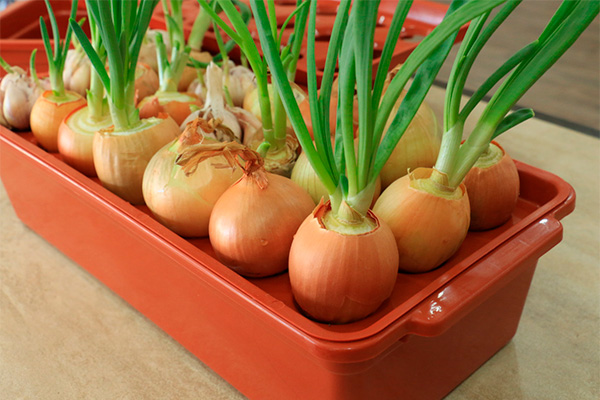
Growing green onions on a windowsill is not only easy, but also economical. You can enjoy fresh greens all year round, adding them to salads, soups and other dishes!
Typical mistakes and how to avoid them
Growing greens on a windowsill is a fun process, but even experienced gardeners can make mistakes. Here are the most common problems and how to avoid them:
-
Lack of light. Problem: Plants stretch out, become weak and pale. Solution: Use phytolamps or LED lamps for additional lighting, especially in winter. The optimal length of daylight is 12-14 hours.
-
Overwatering or underwatering. Problem: Excess water leads to root rot, and lack of water leads to drying out of plants. Solution: Water the greens moderately, checking the soil moisture. The top layer of soil should dry out slightly between waterings.
-
Wrong choice of soil.Problem: Heavy or poor soil slows down plant growth.Solution: Use light and nutritious soil for vegetable crops or greens. Add sand or vermiculite to improve drainage.
-
Crowded plantings. Problem: Plants compete for light, water, and nutrients, resulting in poor growth. Solution: Thin out seedlings, leaving enough space between plants for development.
-
Lack of drainage. Problem: Standing water in pots causes root rot. Solution: Always use containers with drainage holes and put a layer of expanded clay or pebbles on the bottom.
-
Ignoring fertilizing. Problem: plants slow down their growth, leaves become pale. Solution: regularly fertilize greens with organic or mineral fertilizers, following the instructions on the package.
-
Incorrect temperature. Problem: too high or low temperature, as well as drafts negatively affect the growth of greens. Solution: maintain the temperature within 18-25°C and avoid placing plants on cold windowsills or near open windows.
-
Using old or low-quality seeds. Problem: low germination or weak sprouts. Solution: choose fresh seeds from trusted manufacturers and soak them before planting to improve germination.