Bonsai. Bonsai styles
Bonsai literally translates as “grown in a tray.” The art of growing an exact replica of a real tree in miniature. The word “bonsai” comes from the Chinese “pen-tsai”; this art arose in 231 BC. e. in China.
Bonsai styles:
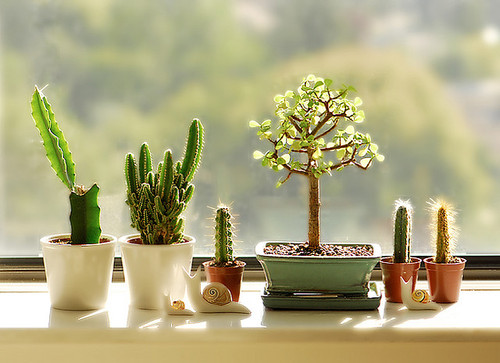 - Straight style (tekkan) - in this traditional style, the trunk remains straight, thickening at the root.
- Informal straight style (moyogi) - the branches or trunk may be slightly curved, the top of the trunk is always in a straight line extending perpendicular to the ground where the root begins.
- The next technique is sokan (“double trunk”) - a composition with the presence of two trunks, they can form one crown and be different in size.
- Syakan is an inclined style, the barrel goes slightly at an angle.
- Kengai is a cascade, an imitation of a tree near water or a cliff, the trunk goes down.
- Han-kengai - semi-cascade style. In the Han Kengai style, the rising top of the tree remains at the level of the soil of the bowl.
- Netsunagari - imitating the appearance of trees in which part of the trunk is flooded or covered with earth. A style in which the branches of a plant grow to resemble individual trees.
- “Pundit style” - characterized by a straight tree trunk, with a minimum of branches.
- Sekijoju (root on a stone) - the trunk is located directly on the stone, and the roots intricately entwine it.
- Ishizuki (growing on a stone) - the roots of a tree grow in the crevices of the stone, since there is little room for roots in this case, this style is used to illustrate the endurance of the tree.
- Hokidachi (Broom style) - trees with spreading branches, the trunk remains straight. The branches grow around the trunk about 1/3 of the tree's height, causing the leaves to form a ball-like shape.
- Yose Ue (group of trees) - more than 9 trees are grown in one composition, their number can vary, but almost never equals 4 (the word “si”, “four”, in Japanese is consonant with the word “death”).
- Ikadabuki (multi-trunk, raft-shaped style) - differs in that it imitates a tree that has fallen in a swamp, the base has the shape of a raft and is formed by a trunk lying on the ground, from which trees of different sizes grow.
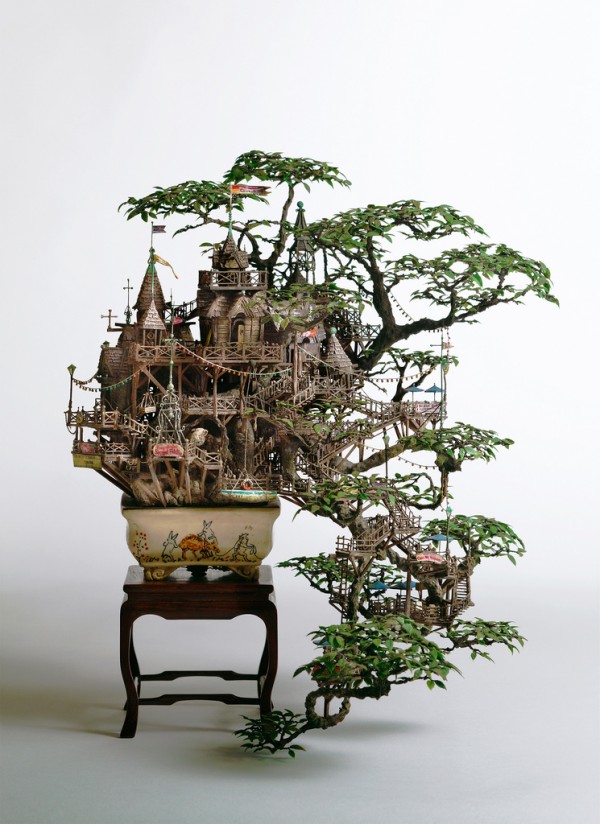

Takanori Aiba was born in 1953 in Japan, in the town of Yokohama. He studied at the University of Tokyo in the department of traditional textiles and sewing.
The first work as a freelance labyrinth illustrator in 1978, for the Japanese magazine POPYE. In 1981, he founded his own company, Graphics and Designing Inc., and later expanded his field of activity, becoming the creator of the concept and art director of the architectural space.
Among his main works were “Yokohama Chinese Noodle Museum”, “Muse Du Petit Prince De Saint Exupery A Hakone” (Muse for the Little Prince Saint Exupery Hakone), “NINJA AKASAKA“ (Ninja Akasaka).
Since 2003, Takanori has been producing three-dimensional artwork, where he combines all his knowledge.
In September 2010, his first solo exhibition “Adventures of the Eyes” took place in Tokyo.
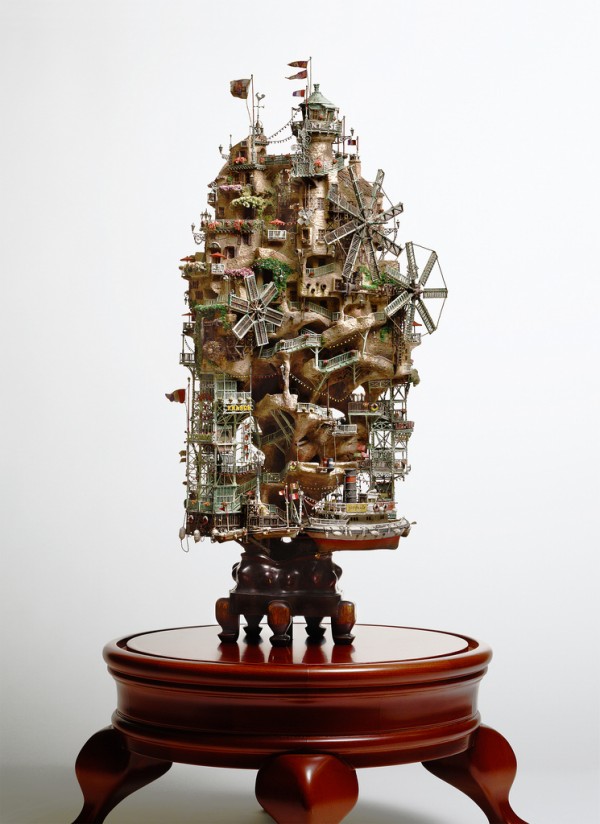
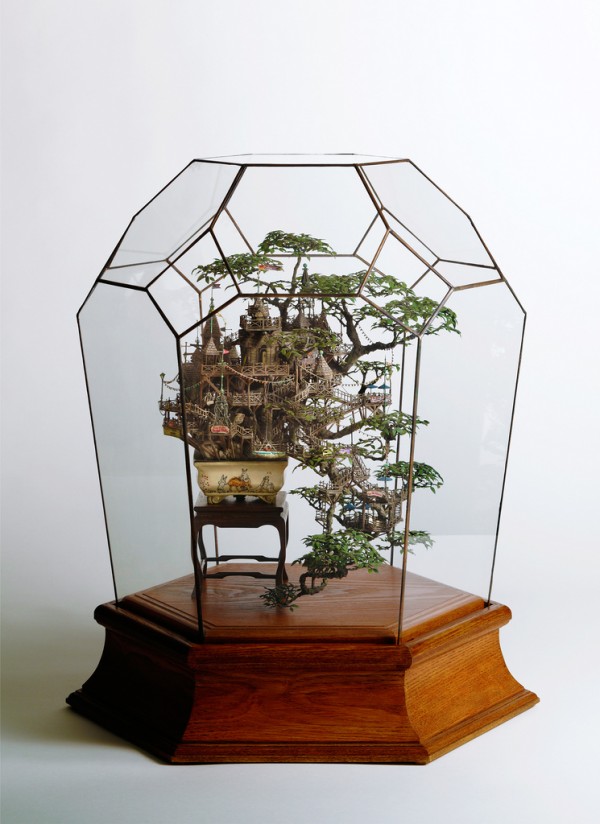
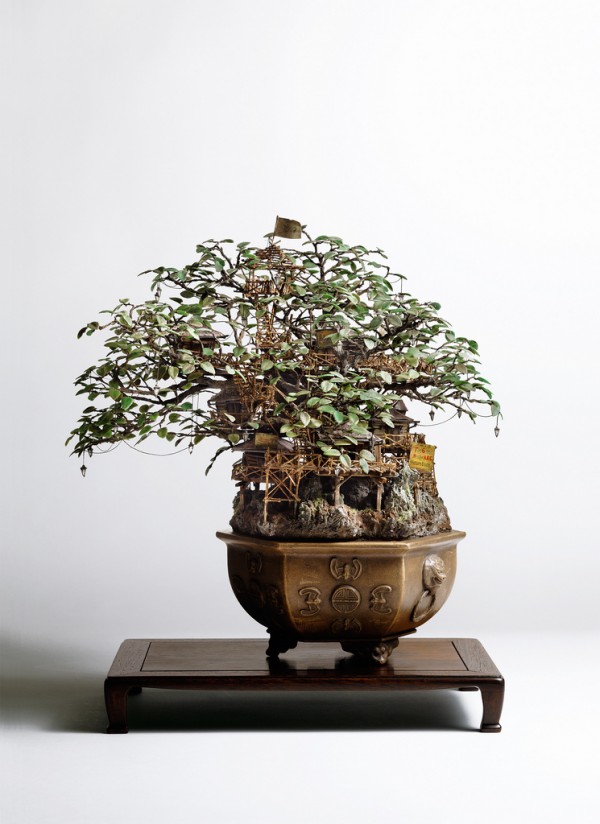
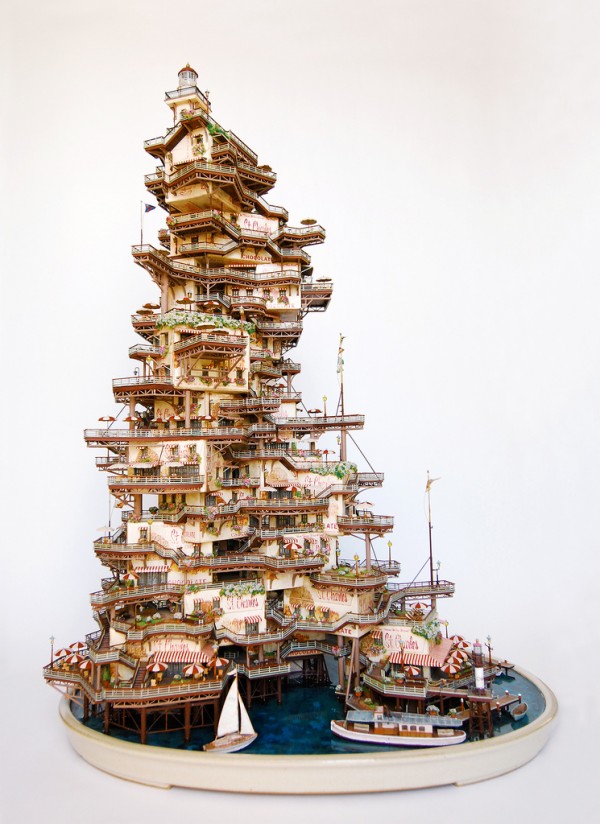
Takanori Aiba's sculptures resemble fairy-tale trees. The author is confident that it is in this form that his sculptural bonsai demonstrates the inextricable spiritual connection between the world of man and nature, between the real and the fictional.
Materials used include clay, stones, epoxy resin, copper wire and plastic.
Like sushi and origami, potted bonsai have become a fad for many. Growing bonsai, caring for it and caring for it is a real art, which can only be compared with the masterpiece created by the Japanese sculptor Takanori Aiba.