
Irrigation Valves: Types, Operating Principle, and Selection Criteria
Any automatic irrigation system — from a small country plot to a sports lawn — is built on controlling the water flow by zones. This task is performed by irrigation system valves: they open and shut off the water supply in each section according to the controller’s command.
How an Electromagnetic Valve Works
An electromagnetic (solenoid) valve consists of a body, a diaphragm, and a solenoid — an electromagnetic coil. In the resting state, the diaphragm blocks the channel. When the controller supplies 24 V voltage, the solenoid becomes magnetized, lifts the diaphragm — and water flows to the sprinklers or drip lines. A separate valve is installed for each irrigation zone: this allows the zones to be switched on one by one without overloading the pump.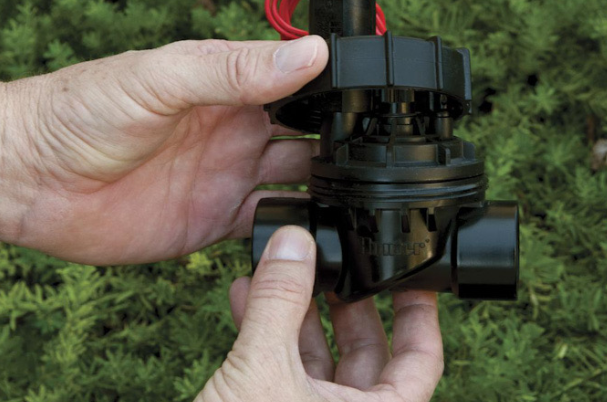
Main Types
According to the operating principle, valves are divided into two types. Direct-acting valves operate even without pressure in the pipeline, but are limited in flow capacity — suitable for small household systems. Indirect (pilot-operated) valves use water pressure to lift the diaphragm through a pilot channel. These are the devices used in most professional-class irrigation valves: they are capable of operating at pressures up to 10–15 bar and provide high flow capacity. According to the body material: plastic — lightweight, corrosion-resistant, optimal for private plots; brass — withstand higher pressure, used at commercial facilities. With or without a flow regulator. Models with a regulator allow you to manually reduce the flow or completely shut off the zone without interfering with the controller — convenient during maintenance.What to Pay Attention to When Choosing
- Connection diameter — 1" is enough for plots up to 1 hectare, while 1½" and 2" are used in larger systems.
- Operating pressure — the device must correspond to the pressure in your water supply network (usually 1–10 bar).
- Flow capacity — 45–75 l/min (1" diameter) is sufficient for most household systems.
- Solenoid voltage — the standard for garden systems is 24 V AC, which ensures compatibility of valves and controllers from different brands.
Installation and Maintenance
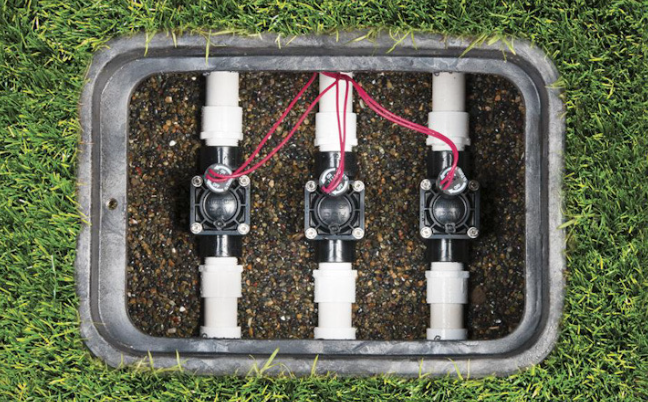
Outdoors, the valve must обязательно be placed in a valve box — it protects against ultraviolet radiation and mechanical damage. Installation is carried out strictly according to the direction of the arrow on the body. For winter, the system is blown out with a compressor, and the valve is left in the open position using the manual switch — this prevents rupture from freezing residual water. Among manufacturers, Hunter (PGV series — threaded openings 1", 1½", 2", pressure up to 10 bar) and Rain Bird (compression fittings, quick installation, flow capacity up to 350 l/min for large models) are considered the most reliable. Both brands operate on standard 24 V solenoids, which simplifies integration into any automatic irrigation system. A properly selected valve guarantees that every part of the garden will receive the required amount of moisture exactly on time — without unnecessary water costs and without your constant presence on the site.
462
11/05/2026