Plants for the bathroom
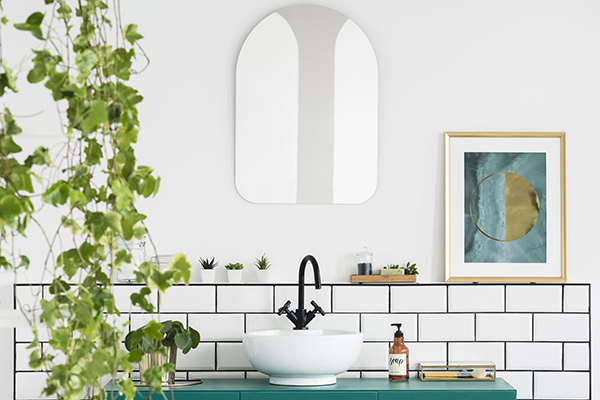
The trend to make rooms green does not leave aside such a seemingly inappropriate room as a bathroom. Why not, if the space allows? Even for small rooms, you can choose wall compositions that will not take up much space and will not interfere with the passage.
Living plants make bathrooms more pleasant places for users, improving decor and air quality. A bathroom or a shared bathroom is an excellent environment for plants. This warm, humid environment provides ideal conditions for plants, especially those that are accustomed to the warmth and high humidity of natural conditions.

Just think - if you choose the right plants for your bathroom, you can create your own home oasis and SPA salon!
Don't be upset if your bathroom can't boast of having large, bright windows on the sunny side. Many plants thrive in low to moderate light, and some plants can adapt to variable light conditions.
One tip: be careful when watering houseplants; they don't dry out as quickly as other parts of your home due to naturally rising humidity levels.
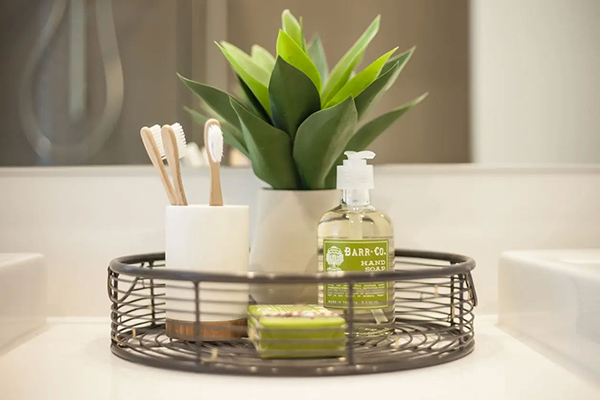
What should you consider when choosing plants for your bathroom?
- Even though there is a lot of warm and humid air during a shower, the room can become much colder if left empty for several hours, especially at night. Frequent temperature fluctuations are not suitable for some plants.
- Not all plants like high humidity. Succulents prefer drier conditions and will rot if kept constantly wet. And evergreens and some other plants can develop powdery mildew when humidity is high.
- Many bathrooms have low levels of sunlight, if they have windows at all. Don't give up if this is the case in your bathroom. Fluorescent lamps provide enough light that plants can use.
What plants are suitable for the bathroom?
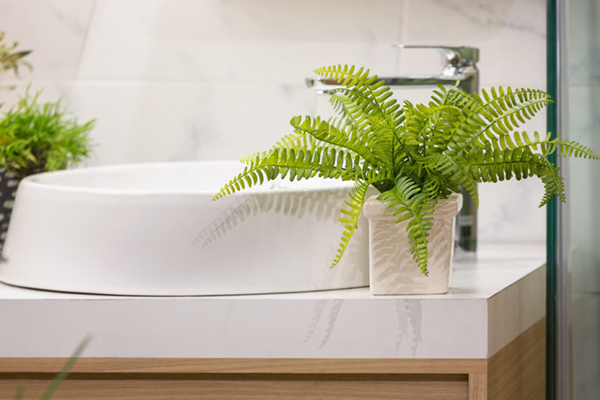
Ferns are a unique family of shade-loving plants. Ferns reproduce through spores rather than flowers or seeds. Most can handle fluctuations in bathroom temperature and enjoy humidity. Some can even be grown right in the shower stall, where they are regularly moistened. Nephrolepis and Asplenium will take root well in the bathroom.

Growing bamboo in containers is a good way to control plants that may be growing too vigorously. But even in containers, bamboo plants can get large, requiring repotting every year or so. Combined varieties will need replanting less often than others. Feed the bamboo with a diluted, high-nitrogen fertilizer weekly during the growing season, reducing to monthly in winter.
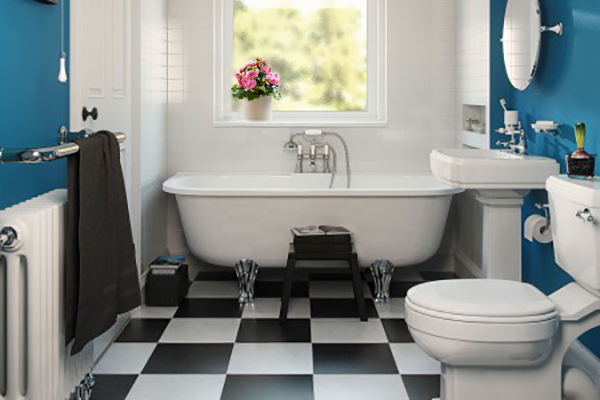
Many types of begonias grow well in containers and they enjoy the warmth and humidity of the bathroom. Begonias like moist conditions, but not waterlogged soil, which can cause root rot. Begonias, prized for their flowers, need bright light in the bathroom with some direct morning sunlight. If there is no window in the bathroom, you will have to provide lighting for it.

Bromeliads are unusual plants because they easily produce long-lasting blooms in areas where most houseplants don't bloom at all. Bromeliads produce yellow, pink, or red flowers and bloom for several weeks. Bromeliads include several different plant genera and dozens of species, many of which are epiphytic (they draw moisture from the air rather than the soil). They're ideal for basking in the humid environment of a bathroom, but they also need good air circulation, which can be provided by running a bathroom exhaust fan or setting a small portable fan to run for a few hours each day. Bromeliads are suitable fertilizers for orchids.
Guzmania or Tillandsia Cyanea will be a wonderful decoration for your bathroom.

Not many plants are as adaptable as Aglaonema. These leafy tropical perennials will thrive even if you forget to water and feed them. Although Aglaonema likes humidity, it will also tolerate dry air as long as you avoid drafts that can damage the leaves.
Croton is a decorative deciduous tropical plant. It grows slowly, but can reach 150 – 180 cm in height, so make sure there is enough space for the plant and you to coexist. Croton needs bright, but indirect light, as well as plenty of moisture, although it does not like constantly wet soil. Wait until the top layer of soil is dry before watering. Reduce watering in late fall and winter.

Dieffenbachia is an unpretentious plant that needs to be watered when the soil dries out a few centimeters. More light will be needed during the short days of winter and diffused light in summer. If the plant does not receive enough light, the leaves will lose their variegation and become uniformly green. Rotate the plant every month to ensure it grows evenly on all sides.
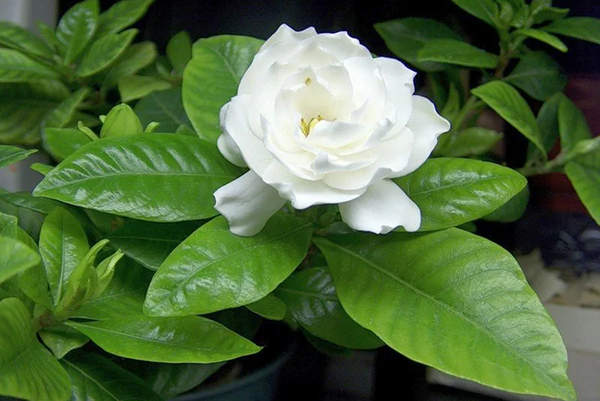
Gardenias are tropical broadleaf evergreens that are not particularly easy to grow indoors as they do not respond well to cold drafts or sudden heat shocks, but they can bloom well in the humid conditions of a bathroom if they receive bright enough light. Prefer acidic soil.
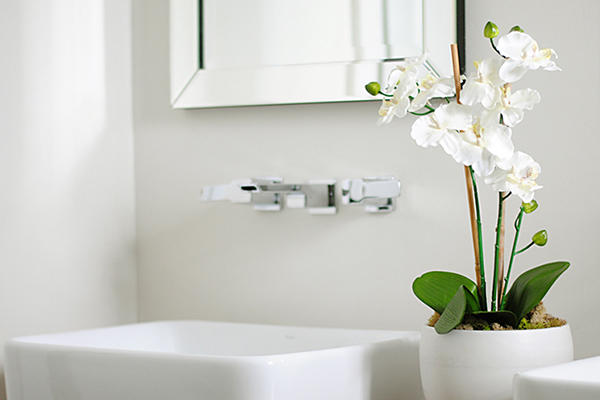
And finally, orchids. Many orchids are ideal for bathrooms where it is not too cold. Some species are planted in the soil, while others are epiphytes (air plants) that absorb moisture from the air. Orchids can bloom for weeks, and since they are mostly small, you can group several together to create an arrangement. Some orchids prefer moderate light, others need bright light.
Summary
Plants for the bathroom are often chosen to tolerate humid conditions. However, constant dampness is only really present in master or family bathrooms where the shower or bath is used frequently. A guest bathroom or powder room can, in most cases, be relatively dry as well as darker than a family bathroom. Be sure to consider the nature of the bathroom and select plants suitable for these conditions. Plants for a guest bathroom should have a good tolerance for drier, darker conditions.