Hanging garden by Fyodor Van Der Valk. Kokedama.
The world requires bold decisions, pots and vases, traditional dishes for plants, according to designer Feodor van der Valk, are a thing of the past.
The series of hanging plants he created is certainly eye-catching. To make the compositions, a three-dimensional crochet technique was used, the roots were covered with moss and grass.

The designer was inspired to create such extraordinary flying plants by a type of Japanese bonsai art called kokedama.
Kokedama, Wabikusa or moss hummock.
Kokedama (Ko Kay Da Ma) is a ball of moss covering the soil and the plant rooted in this ball.
Vabikusa (Wabi) – denial of external and flashy effect, the need for calm contemplation. Displays perfect and elegant simplicity and inner energy, also denotes moderation and rigor.
(Kusa) - grass.

Feodor van der Valk: “I once had an idea to film knitted landscapes - some kind of three-dimensional web covered with moss and grass. The idea was to create bonsai style plants. To make the landscape truly airy, I decided to work with hanging plants."

For Asians, impermanence, variability, fragility, such properties of things, are considered natural and favorable, while Europeans do not always accept them.
But still, if you are attracted to this art, flying gardens may also appear in your home, just like those created by Fyodor van der Valk, we will share the Kokedama technique with you.
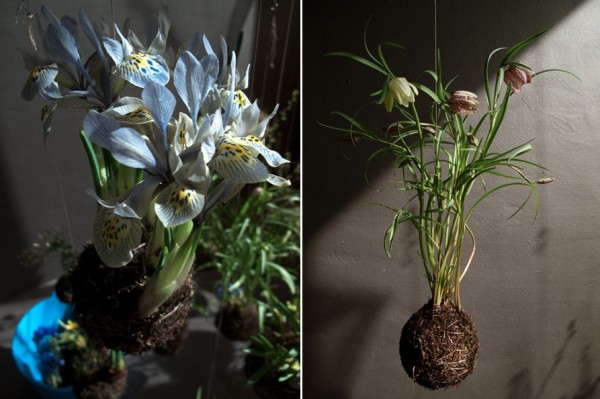
In his works, the author used a large number of different plants, bulbous, root, open ground plants, among them citrus fruits that are difficult to care for.
In greenhouse conditions, with good lighting and high air humidity, many plants undoubtedly have a chance, but what will happen to them in apartments with constant problems of dry air and drafts?
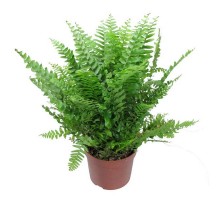
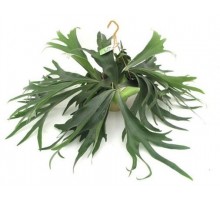
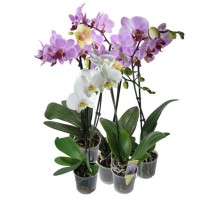
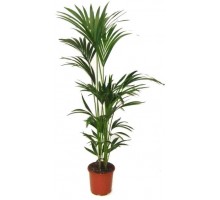
Orchid, hyacinth, howea, asplenium and other types of ferns, here is a small list of plants with which you can start learning the kokedama technique.
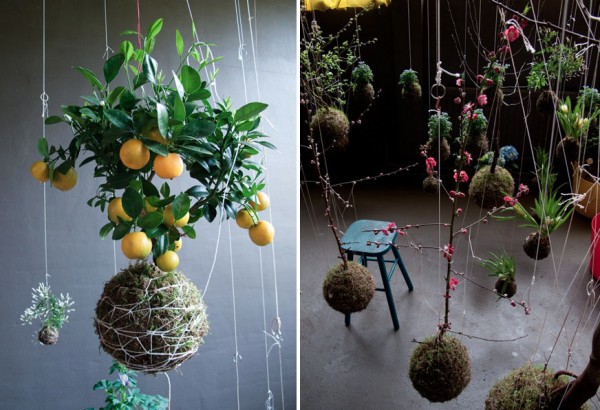
Interestingly, the plants in the kokedama can ripen seeds that can fall into the soil and in the spring you can find new shoots on your ball. This is a natural process and makes caring for your kokedama even more fun.
DIY Kokedama
To form the base of kokedama, in Japan they use moist granular soil, black peat (the “oldest” peat, black in color, which has not a fibrous, but an adhesive structure because it contains clay, it acts like plasticine and holds its shape perfectly.
We can use a mixture of ordinary clay with pieces of high-moor peat or dried sphagnum.

The process of creating kokedama itself is also not difficult; all ingredients are mixed with water and crushed dry moss in certain proportions.
Balls are formed into which the plant is planted.
The plant should be watered only when the ball becomes very light. Pour water into a container of the required size, immerse the entire ball and leave for 2-3 minutes and squeeze it out lightly.