
Tomatoes on the windowsill: how to grow tomatoes at home
Advantages of growing tomatoes at home
Growing tomatoes on the windowsill is not only fresh fruits at hand, but also an exciting hobby. Unlike in the garden, at home it is easier to control the conditions: lighting, watering and protection from pests. And it is also a great way to add greenery to the interior and even save money - one bush can give several kilograms of harvest.
Main advantages:
-
Freshness all year round - no need to wait for the season, especially if you use additional lighting in winter.
-
Environmental friendliness - you know exactly what you fed the plants.
-
Compactness - low-growing varieties will fit even on a narrow windowsill.
In addition, this is a great experiment for those who are just trying their hand at gardening. If something goes wrong, you can always adjust the care without losing the entire harvest.

How to choose a tomato variety for growing at home
Not all tomatoes grow equally well indoors. For home cultivation, it is better to choose low-growing, compact and unpretentious varieties that do not require complex care and a large volume of soil.
Selection criteria:
-
Bush height – dwarf (20-40 cm) and standard varieties that do not need to be tied up are ideal.
-
Ripening period – early ripening (80-100 days) will allow you to get a harvest faster.
-
Resistance to lack of light – especially important for growing in winter.
The best varieties for windowsill:
-
Cherry ('Balcony Miracle', 'Minibel') – small, sweet and very productive.
-
Ampelous ('Talisman', 'Citizen F1') – can be grown in hanging pots.
-
Classic dwarf ('Pinocchio', 'Florida Petit') – unpretentious and decorative.
Avoid tall and greenhouse varieties – they will be cramped and will not have enough light.
What you need to grow tomatoes
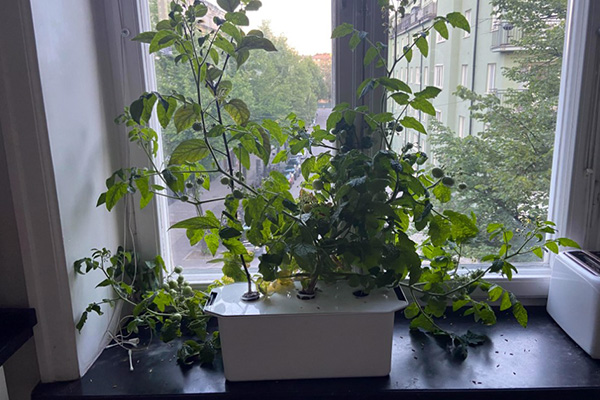
To successfully grow tomatoes on the windowsill, you will need basic materials and the right conditions. It is important to prepare everything you need right away so that the plants develop without stress.
Main components:
-
Container– 3-5 liter pots with drainage holes for each bush.
-
Soil– light and nutritious substrate for vegetables or a mixture of garden soil with peat and humus.
-
Drainage– expanded clay or fine gravel in a 2-3 cm layer on the bottom of the pot.
Conditions of maintenance:
-
Lighting– southern or western windowsill, in winter additional lighting with a phytolamp will be required for 12-14 hours a day.
-
Temperature– optimally +20-25°C during the day and not lower than +16°C at night.
-
Tools– watering can with a narrow spout, sprayer, small rake for loosening the soil.
Additionally, it is worth purchasing mineral fertilizers for tomatoes and organic pest control products for safe use in an apartment.

How plant tomatoes at home
Proper planting is the key to the health of future plants and a good harvest. At this stage, it is important to pay attention to the preparation of seeds and the creation of optimal conditions for their germination.
Preparing seeds:
-
Calibration - select large, dense seeds without damage.
-
Disinfection - soak for 20 minutes in a weak solution of potassium permanganate (1%).
-
Growth stimulation - treat with "Epin" or aloe juice for 6-8 hours.
Sowing seeds:
-
Fill the containers with moist soil, leaving 1 cm to the edge.
-
Spread the seeds at intervals of 2-3 cm, deepening them by 1 cm.
-
Cover with film and put in a warm place (+23-25°C).
The first shoots usually appear in 5-7 days. After that, remove the film and transfer the container to a light windowsill. It is important to maintain moderate soil moisture, preventing drying out or over-wetting.

Caring for tomato seedlings
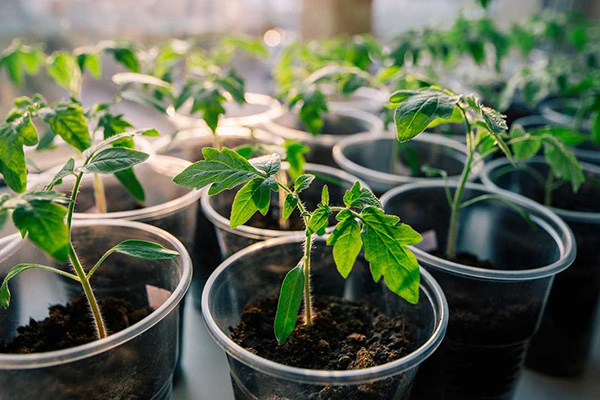
After the first shoots appear, the most important stage begins - growing strong seedlings. During this period, plants are especially vulnerable and require careful care. The main tasks are to provide sufficient lighting, proper watering and protection from stress.
Basic care rules:
-
Watering – moisten the soil as the top layer dries, using a spray bottle or a small watering can. Avoid overwatering - this leads to root rot.
-
Lighting – if there is a lack of natural light, use phytolamps so that the daylight hours are 12-14 hours. Regularly rotate the containers for uniform plant development.
Additional activities:
-
Feeding - 2 weeks after germination, apply a complex fertilizer with a predominance of nitrogen.
-
Picking - when 2-3 true leaves appear, transplant the seedlings into separate pots.
-
Hardening - a week before transplanting to a permanent place, accustom the plants to fresh air, gradually increasing the ventilation time.
Monitor the temperature regime: during the day, the optimum is +20-22 ° C, at night - +16-18 ° C. If these conditions are met, the seedlings will be strong and will not stretch out.
Caring for adult plants
When your tomatoes grow up and get stronger, they will need a special care regimen to form a crop. Adult bushes are more resilient, but now their energy is directed at flowering and fruiting, which requires adjustments in care.
Basic rules of maintenance:
-
Watering– switch to abundant but rare watering (2-3 times a week). Let the soil dry out slightly between waterings. Use only settled water at room temperature.
-
Feeding– apply potassium-phosphorus fertilizers every 10-14 days. Specialized tomato compounds or natural fertilizers (ash, banana peel) are well suited.
Bush formation:
-
Pinching off side shoots - regularly remove lateral shoots in the leaf axils.
-
Tartering - use decorative supports or twine so that the stems do not break under the weight of the fruit.
-
Pinching - limit the growth of the main stem after the formation of 4-5 fruit clusters.
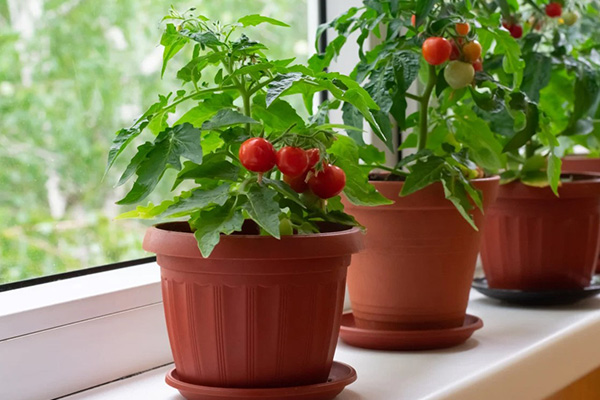
Pay special attention to the microclimate: when flowering, shake the bushes slightly for better pollination, and ventilate the room in the heat. If the leaves curl, shade the plants from direct sunlight. With this care, the first fruits will appear 1.5-2 months after flowering.
| Stage | Timing/Frequency | Actions | Important nuances |
|---|---|---|---|
| Choosing a variety | Before planting | Choose low-growing, early-ripening varieties ('Balcony Miracle', 'Pinocchio') | Avoid greenhouse and tall varieties |
| Planting seeds | February-March or year-round with additional lighting | Disinfect seeds, sow in soil to a depth of 1 cm, cover with film | Germination temperature: +23...+25°C |
| Seedling care | 5-7 days after germination | Picking at 2-3 leaves, watering without over-moistening, additional lighting for 12-14 hours | Hardening before transplanting |
| Transplanting | After 4-6 weeks | Transplant into 3-5 l pots with drainage | Use nutritious soil |
| Caring for adult plants | The entire growing season | Watering 2-3 times a week, fertilizing every 10-14 days, pinching out side-sons | Tying up stems, artificial pollination |
| Disease control | At the first signs | Spraying with serum (from late blight), potassium permanganate (against black leg) | Avoid drafts and overwatering |
| Harvesting | 80-100 days after sowing | Pick fruits at the stage of blanched ripeness | Regular harvesting stimulates new fruiting |
Diseases and pests of indoor tomatoes
Even at home, tomatoes can face diseases or pest attacks. The main reason is a violation of the conditions of maintenance: over-watering, lack of light or stagnant air. Timely detection of problems will help save the crop.
Common diseases:
-
Late blight – manifests itself as brown spots on leaves and fruits. For prevention, treat plants with whey (1:3 with water).
-
Black leg– affects seedlings when overwatered. Remove diseased plants, water the rest with a weak solution of potassium permanganate.
-
Chlorosis– yellowing of leaves indicates a lack of iron. Spraying with iron chelate will help.
Dangerous pests:
-
Whitefly– small white flies on the back of the leaves. Hang sticky traps, treat with soap solution.
-
Spider mite– leaves a thin web. Wipe the leaves with a damp sponge, increase air humidity.
-
Aphids– accumulate on young shoots. Remove mechanically or use garlic infusion (2 crushed cloves per glass of water).
For prevention, regularly inspect the plants, avoid crowding the pots and follow the watering regime. In case of severe damage, use biological preparations (Fitoverm, Bitoxybacillin), safe for home use.
Common mistakes of beginners
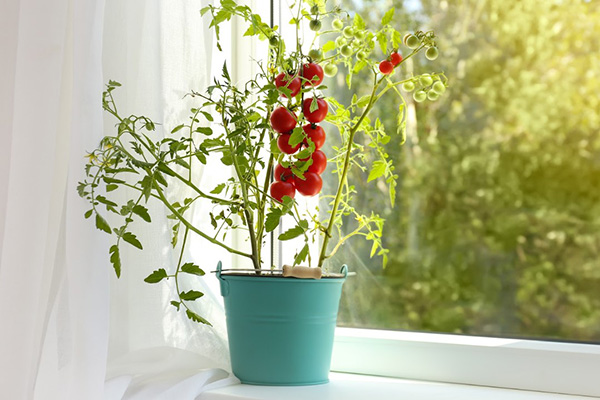
Growing tomatoes at home seems simple, but the first attempts often end in failure due to typical mistakes. Let's look at the main mistakes so that you can avoid them.
Main problems:
-
Too much watering– leads to root rot. Water only when the top layer of soil dries out by 1-2 cm.
-
Lack of light – because of this, the seedlings stretch out and weaken. In winter, be sure to use phytolamps.
-
Dense planting – if the seeds are sown too close, the plants compete for light and nutrition. Dive on time.
Other common mistakes:
-
Wrong variety – tall or greenhouse tomatoes do not grow well in pots. Choose only compact, indoor varieties.
-
Refusing to fertilize – poor soil quickly becomes depleted. Fertilize regularly, especially during flowering and fruiting.
-
Ignoring side shoots – if you do not remove the side shoots, the bush spends energy on greenery, not on fruit.
By correcting these shortcomings, you will significantly increase the chances of a rich harvest. The main thing is to observe the plants and adjust care in time.
How to improve the yield of home-grown tomatoes
Do you want your indoor tomatoes to bear fruit abundantly and for a long time? A few professional tricks will help increase the yield even on a small windowsill.
Efficient methods:
-
Artificial pollination – gently shake the flower brushes or use a soft brush to transfer pollen. Do this in the morning, when the humidity is optimal.
-
Normalization of ovaries – remove some of the flowers, leaving 4-5 of the strongest in each brush. This will make the remaining fruits larger and sweeter.
-
Root and foliar feeding – alternate watering with fertilizers (once every 10 days) and spraying with a weak solution of boric acid (1 g per 1 liter of water) during flowering.
Additional tips:
-
Mulching – cover the soil with moss or coconut fiber to retain moisture and avoid overheating the roots.
-
Additional lighting with a phytolamp – extend daylight hours to 14-16 hours during the period fruiting.
-
Temperature control– at night, reduce the temperature to +16...+18°C – this stimulates fruit setting.
As soon as the first tomatoes begin to ripen, remove them from the bush in a timely manner. This will stimulate the plant to form new fruits. With this approach, you will be able to harvest for several months in a row!