
Honest Guide: How Not to Make a Mistake When Choosing an Off-Road Motorcycle
Let’s be honest: buying your first bike for forest riding or off-road use is almost always a lottery. Beginners often focus on aggressive design or horsepower numbers in the spec sheet, and after just a few rides realize that the bike is either too heavy or simply not suitable for the conditions they actually want to ride in.
If you are seriously considering an off-road motorcycle, you should immediately forget the logic of urban bikes. Off-road riding follows completely different rules, and a mistake at the selection stage can cost you not only money, but also the enjoyment of riding.
Why Weight Is the Key Factor in Off-Road Riding
Every extra kilogram will be felt not in the showroom, but in real conditions — in a deep rut, on a slippery climb, or at the moment when you have to pull the bike out on your own. In off-road riding, weight directly affects control, fatigue, and the number of mistakes.
Gas-powered 450cc bikes look impressive on paper: lots of power, a serious sound, and a sporty image. But for beginners, this is often overkill. These motorcycles are harder to control, require good physical fitness, and exhaust you within the first 20–30 minutes of active riding.
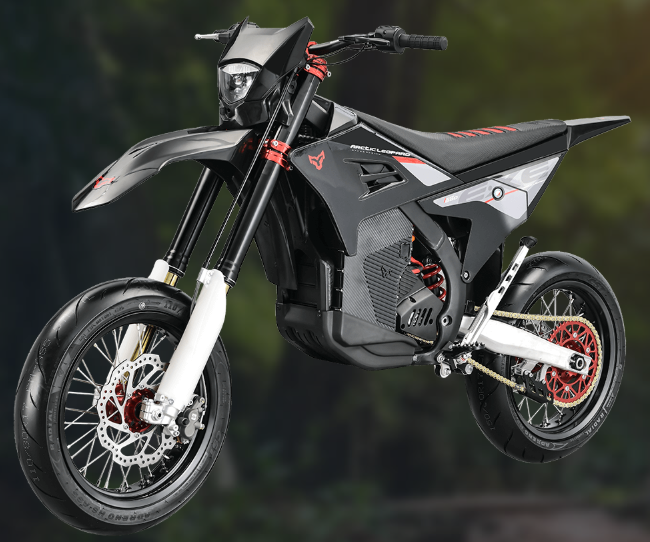
Electric enduro bikes (for example, models from the Arctic Leopard lineup) work by completely different principles. Their weight is often under 100 kg, and the center of mass is placed as low as possible. As a result, the bike is easier to “throw” into turns, simpler to control on technical sections, and much easier to lift after a fall.
What Motorcycle Dealers Usually Don’t Tell You
Torque matters more than peak power. In off-road riding, you don’t need a top speed of 150 km/h. What you really need is the ability to calmly climb a sandy hill or get out of mud without a running start or stress. On electric bikes, torque is available instantly — press the throttle and go, without constant clutch work.
Silence is not a drawback — it’s an advantage. On a gasoline enduro, you often become enemy number one for mushroom pickers, suburban residents, and landowners. An electric bike allows you to ride quietly, without attracting unnecessary attention or creating conflicts.
The real cost of a fall. Sooner or later, every off-road rider goes down. On a gasoline motorcycle, this can mean a broken gear lever, a bent radiator, or an early end to your ride. Electric motorcycles have fewer protruding components, which means a much higher chance of continuing the ride without repairs right there in the forest.
Which Off-Road Motorcycle Is Right for You
For fun after work. Compact electric models are the perfect choice. The bike easily fits into the trunk of a crossover, requires no fuel canisters or dirty filter maintenance. One hour of riding — and you’re completely “recharged.”
For hard enduro and long-distance rides. Here, it’s crucial to choose proven brands with high-quality suspension. If the suspension is too stiff or poorly tuned, your arms will get pumped long before the battery runs out or the fuel tank is empty.
Short advice. Don’t buy a motorcycle “for the future.” Choose a bike you can confidently control today. Off-road riding is about the pleasure of control, not about fighting an uncontrollable mass of metal.
Quick Pre-Purchase Checklist
Don’t be fooled by shiny plastic. Look for an off-road motorcycle with clear service options and easy access to spare parts. Off-road riding is a contact sport — everything will break sooner or later, from throttle levers to foot pegs.
My choice for those who want to simply enjoy riding instead of constantly turning wrenches is modern electric bikes. Minimum maintenance, maximum controllability. And if you’re a fan of the smell of gasoline and complex carburetor tuning, be prepared to spend half your weekends in the garage, not out in the forest.