Water and plants

Water is necessary for all living things, including plants. Water is literally responsible for all life on Earth. Even a person is 60-80% water, this is known to all.
Plants contain 90% water, it is obvious that they use much more water than other living things.
Why do plants need water?
Water transports important nutrients that a plant extracts from the soil. The pressure of the water inside the plant’s cells allows it to stand and reach for the light, without enough water the plant lowers the leaves and fades. Water carries dissolved glucose and other nutrients necessary for plant life.
Water is involved in the process of photosynthesis. Water moves along the stem of the plant to the leaves, where this most important process takes place. Water from the leaves evaporates through the stomata, and carbon dioxide takes the place of water. Plants need carbon dioxide to cook. Transpiration (exchange of water for carbon dioxide) - occurs only during the day when there is sunlight.

How to determine that it is time to water a plant?
If you see fading leaves - the plant needs watering. But you do not want your plants to reach a wilting point - this can weaken them and make them painful and frail.
Instead, develop the habit of checking your indoor plants 2-3 times a week to determine the time of watering in time.
Use a finger or a toothpick. You can feel with your finger that the soil is moist and watering can be delayed. Insert a toothpick or match 4-5 cm into the ground - if there are pieces of soil left on it - then there is no need for watering yet.
If you find that there is a visible gap between the soil and the inner edge of the pot, it means that the earthen lump is completely dry and the plant needs watering.
How to determine that you are watering your houseplants excessively?
You can use your sense of smell to find out if you have problems with overflow. A lot of moisture stimulates the growth of fungi and bacteria in the soil, which can cause unpleasant odors, especially when the roots rot. The appearance of midges also indicates overmoistening of the soil.
One of the biggest mistakes is to stick to an accurate watering schedule. Watering on the same day every week can do more harm than good. For most plants, watering is necessary when the soil has dried out 3-5 cm from the surface.
Different plants need different amounts of water. Think about the natural environment of your plants: rainy and tropical or hot and dry? These simple questions will help you determine how much water your plant needs.
Water-loving plants
Many popular indoor plants, such as philodendron, come from tropical regions of the world where it rains regularly. These species usually have large leaves that consume a lot of water. Plants like these will need more water than desert inhabitants, such as cacti and succulents, who feel better when the soil dries between watering.
Ferns (nephrolepis), begonias, asparagus, syngonium are very fond of moisture. These representatives of indoor plants very poorly tolerate the drying of an earthen coma, prefer not only abundant watering, but also spraying.
Plants calmly tolerating moderate watering
Desert locals such as cacti and succulents love to stay dry and should receive less water. Make sure that the earthen lump is completely dry - wait a few weeks (even months) before watering again. The most popular non-love plants are Crassula, Kalanchoe, Sansevieria, Aloe.
It is also worth remembering that:
- Plants in large pots dry more slowly than plants in small pots.
- Plants in bright daylight dry faster than plants in low light.
- Humid air retains soil moisture longer than dry air.
- Large plants “drink” more water than small ones
Watering and seasons
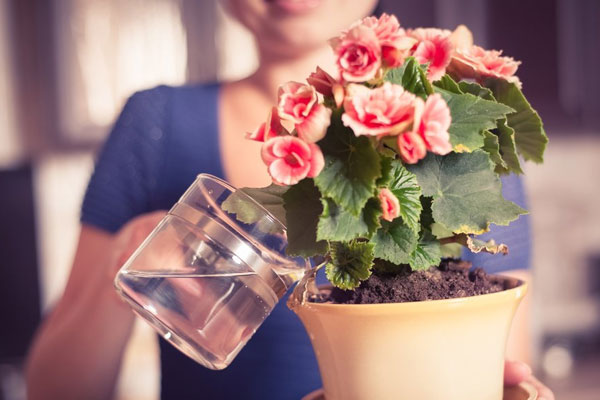
In summer, when the sun is more intense and the air is drier, plants are watered more often. In spring, during the period of active growth, indoor flowers also need more intensive watering than in winter, during dormancy.
However, the climatic conditions of the apartment depend not only on the season, but also on heating appliances, air conditioners, the presence (or absence) of air humidifiers - keep this in mind.
What water is needed for indoor plants
Do not use tap water! Water should settle for at least 12 hours.
Water temperature should not be too low or high - optimally room temperature. Immediately after watering, fill your watering can with water - so the water settles until the next watering and gets the optimum temperature.
When is it better to water?
Watering in the morning is preferable than in the evening. Thus, the drops on the leaves will dry out and evaporate during the day, when the temperature is usually higher. The longer the moisture remains on the leaves of the plants, the higher the risk of diseases.
Types of irrigation
Watering from above
The most popular type of watering, suitable for most indoor flowers, especially for those whosome respond positively to moisture on the leaves. Water is poured directly into the pot as needed. Make sure that the substrate is also saturated, otherwise you risk watering the leaves without getting moisture on the roots.
Watering from below.
Although watering from the top is still the usual way of watering plants, watering from below is more uniform, reduces the risk of waterlogging, and does not wash out nutrients. In addition, you can be sure that the water really reaches the roots. This type of watering is especially preferred for plants that do not like moisture on leaves or flowers (senpolia). Pour prepared water into a pan under a pot with drainage holes and leave for several hours. The water that will remain after that is superfluous, it must be drained to prevent root rot.
Air irrigation
Some plants absorb moisture through their leaves and aerial roots, such as orchids and areca palms. Regularly moisturize leaves and roots, and water the substrate to keep them healthy and beautiful. Orchids are watered by immersing the orchids in a container of water.
Autowatering
Self-watering pots are the perfect solution for the forgetful or for those who often leave home for a long time. Provide automatic watering of the plant for a period of up to 2 months - you just need to replenish the water tank.

Seven Golden Rules for Watering
- Keep potted plants with drainage holes to prevent waterlogging.
- Water most plants every 2–4 days (or as needed) in spring and summer so that the compost remains moist (not swampy).
- Water cacti and succulents less often (only when the substrate is completely dry).
- Reduce the frequency of watering in winter when plant growth is slower and the temperature is lower.
- Remove excess water from pallets to avoid excessive wetting of the soil.
- Avoid getting water on the leaves and stems of plants with soft, fluffy foliage or on succulents and cacti.
- Remember that your plant prefers rainwater or standing water, rather than directly from the tap.
Summary
Watering indoor plants - sounds easy. But in fact, there are many variables that can make it difficult to accurately determine when to water, how often, and how much each particular plant needs.
We hope our recommendations will help you determine the optimal watering regime for the indoor garden, and your green pets will be flowering and healthy.