
Aloe: all about growing, care and useful properties
Aloe is one of the most popular and useful indoor plants that can be found in many homes. This unpretentious plant not only decorates the interior, but also has many useful properties, which is why it is often called the "home doctor".

Brief description of the aloe plant
Aloe is a succulent herbaceous plant that belongs to the genus Aloe (Aloe) subfamily Asphodeloideae of the Lily family (Asphodelaceae). It is easily recognized by its fleshy, juicy leaves with serrated edges, which contain gel-like pulp rich in nutrients. Aloe vera (Áloë véra) is the most famous species, which is widely used in medicine and cosmetology.
Types of aloe: which varieties are suitable for home use
There are more than 500 types of aloe, but the following are most often chosen for home cultivation:
-
Aloe vera (Aloe vera)— is valued for its medicinal properties.
-
Aloe arborescens, also known as "century plant".
-
Aloe variegata (Aloe variegata)— has a beautiful pattern on leaves.
-
Aloe aristata— a compact plant with white specks on the leaves.
These species adapt well to indoor conditions and do not require complex care.
Why is this houseplant so popular
Aloe has won the love of gardeners due to its unpretentiousness and versatility. It easily tolerates drought, does not require frequent watering and can be grown even by novice gardeners. In addition, aloe has many useful properties: its juice is used to treat burns, wounds, inflammations, and in cosmetology for skin and hair care.

What else is aloe called
Aloe vera is often called "century plant", associating this with the belief that the plant blooms once every hundred years. In fact, with proper care, aloe can bloom much more often, although this rarely happens at home. The Latin name of the plant is Áloë véra, which translates as "true aloe".
What group of plants does aloe belong to?
Aloe belongs to the group of succulents - plants that are able to accumulate moisture in their leaves and stems. This allows them to survive in dry conditions. Due to this feature, aloe easily tolerates a lack of water and is ideal for those who cannot devote much time to caring for plants.
Aloe is not just a beautiful and unpretentious plant, but also a real assistant in everyday life and a home medicine cabinet. In the following sections, we will tell you in detail how to properly plant, grow and use this unique plant.
Planting aloe
Correct planting of aloe is the key to its health and active growth. This plant is unpretentious, but for successful cultivation it is important to choose the right pot, soil and follow the basic planting rules. Let's consider all the stages in detail.
Choosing a pot and soil
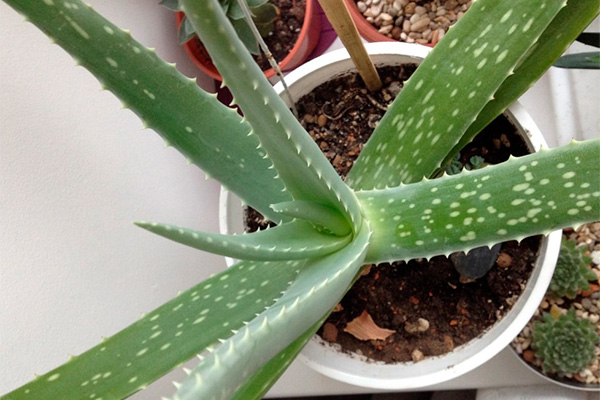
Aloe prefers light, well-drained soil, since stagnant moisture can lead to root rot. The ideal option would be special soil for succulents and cacti, which can be purchased at the store. If this is not possible, you can prepare the mixture yourself by mixing:
-
2 parts of turf soil;
-
1 part of coarse sand;
-
1 part of leaf soil;
-
a little charcoal (for disinfection).
The pot for aloe should be wide, but not too deep, since the root system of the plant develops in the upper layer of soil. It is necessary to have drainage holes at the bottom of the pot so that excess water can drain freely. The pot can be made of any material - both plastic and ceramics will do.
Step-by-step planting instructions
-
Preparing the pot. Place a 2-3 cm thick drainage layer (expanded clay, small pebbles or broken brick) on the bottom of the pot. This will help prevent water stagnation.
-
Filling with soil. Pour the prepared soil mixture over the drainage, filling the pot about two-thirds.
-
Planting the plant. Carefully place the aloe in the center of the pot, straightening the roots. If you are planting a cutting (pup), make sure it has its own roots.
-
Adding soil. Add soil around the plant, compacting it lightly. Make sure the root collar (the place where the stem meets the roots) is levelsoil, do not bury it.
-
Watering. After planting, water the plant lightly so that the soil settles. Do not overdo it - aloe does not like excess moisture.
When is the best time to plant aloe
The best time to plant aloe is spring or early summer. During this period, the plant is actively growing and adapts to new conditions more easily. If you purchased aloe at another time of year, let it acclimatize in your home for a while (about 1-2 weeks), and then transplant it into a suitable pot.
Properly planted aloe will quickly take root and begin to delight you with its healthy appearance. In the next section, we will tell you how to care for this unpretentious, but such a useful plant.
Caring for aloe at home
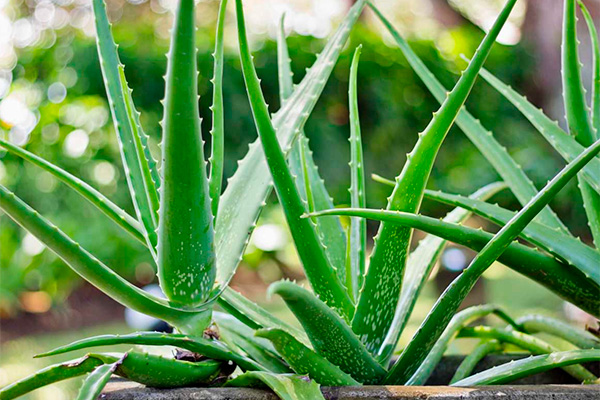
Aloe is one of the most unpretentious plants, but for its health and active growth, it is important to follow the basic rules of care. Let's consider how to properly water, replant, maintain the temperature regime and provide sufficient lighting for this succulent.
How often to water aloe
Aloe is a drought-resistant plant, so it tolerates a lack of moisture better than its excess. Watering should be moderate:
-
In summer: water the aloe 1-2 times a week, waiting until the top layer of soil dries out completely.
-
In winter: reduce watering to 1 time in 2-3 weeks, since the plant is dormant during the cold season.
Use water at room temperature, avoiding moisture getting into the rosette of leaves to prevent rotting.
How often to replant aloe
Young aloe plants grow quite quickly, so it is recommended to replant them every year. Mature specimens (over 5 years old) need to be replanted every 2-3 years. Signs that it is time to repot the aloe include roots protruding from the drainage holes or slower growth.
It is best to repot in the spring, using a slightly larger pot and fresh soil for succulents.
Temperature
Aloe adapts well to room temperature, but prefers moderate heat:
-
In summer: the optimum temperature is +22–26 °C. The plant can be taken out onto the balcony or into the garden, protecting it from direct sunlight and rain.
-
In winter: aloe feels comfortable at a temperature of +12–15 °C. This helps the plant go into a dormant state and gain strength for the new season.
Avoid sudden changes in temperature and drafts.
What kind of lighting is needed
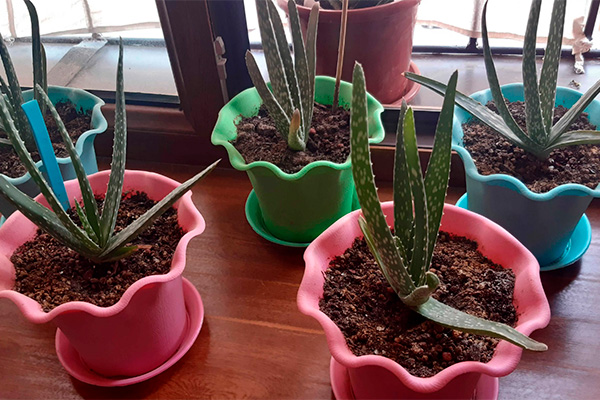
Aloe loves bright but diffused light. The ideal place for it is a windowsill on the east or west side. On a south window, the plant needs to be shaded on especially hot days to avoid leaf burns. In winter, when daylight hours are short, you can use a phytolamp for additional illumination.
Air humidity
Aloe is not demanding on air humidity and feels great in an ordinary apartment. You don't need to spray the plant, but you can periodically wipe the leaves with a damp cloth to remove dust.
Aloe bloom
Aloe bloom is a rare and impressive phenomenon, especially at home. Many gardeners don't even suspect that their "century plant" can bloom, since this happens extremely rarely in apartments. However, with proper care and creating suitable conditions, you can achieve the appearance of beautiful flowers. Let's consider how to do this.
Does aloe bloom at home?
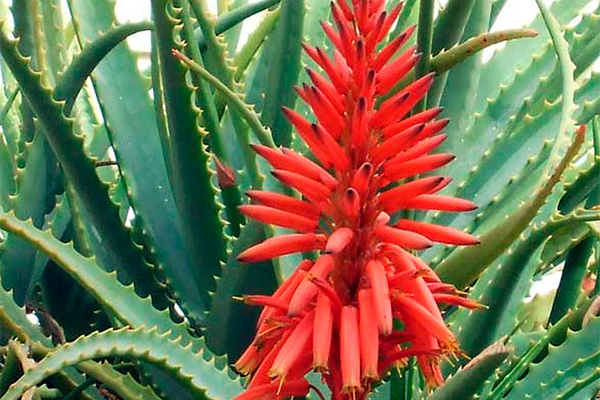
Yes, aloe can bloom at home, but this does not happen often. In nature, aloe blooms annually, releasing a long peduncle with bright inflorescences. In apartments, flowering is possible only under ideal conditions and is more often observed in mature plants (over 5 years old).
How to stimulate flowering: tips and recommendations
For aloe to bloom, it is important to create conditions as close as possible to its natural habitat:
-
Provide a dormant period. In winter, the plant should rest. To do this, reduce watering to a minimum (once every 3-4 weeks) and place the aloe in a cool room with a temperature of +12–15 °C.
-
Provide bright lighting. Aloe needs a lot of light, especially during the period of active growth. In winter, use a phytolamp to compensate for the lack of natural light.
-
Feed the plant. InDuring the period of active growth (spring and summer), feed the aloe with fertilizers for succulents once a month. This will help the plant gain strength for flowering.
-
Do not replant too often. Frequent replanting can disrupt the natural cycle of the plant. Replant aloe only as needed.
What does an aloe flower look like: description and photo
The aloe flower stalk can reach a height of 60–90 cm. At its top, an inflorescence is formed in the form of a spike or brush, consisting of many tubular flowers. Flowers can be yellow, orange, red or pink, depending on the type of aloe. For example, aloe vera flowers are usually yellow, while aloe arborescens flowers are orange or red.
Flowering lasts for several weeks, after which the flower stalk dries up and can be carefully removed.
Although aloe flowering at home is an exception rather than a rule, proper care and patience can help you achieve this amazing phenomenon. In the next section, we will tell you how to deal with problems that may arise when growing aloe.
Problems with the plant and how to solve them
Despite its unpretentiousness, aloe can face a number of problems associated with improper care, diseases or pests. It is important to notice signs of ill health in time and take measures to save the plant. Let's look at the most common problems and how to solve them.
Why do leaves turn yellow or dry out?
-
Overwatering.Signs: leaves become soft, turn yellow, and may rot at the base.Solution: reduce watering, let the soil dry out completely. If the roots have started to rot, carefully remove the plant from the pot, remove damaged parts of the roots and replant in fresh soil.
-
Lack of moisture.Signs: leaves become thin, dry and wrinkled.Solution: increase the frequency of watering, but do not overdo it. Aloe tolerates drought better than overwatering.
-
Lack of light.Signs: leaves turn pale, the plant stretches out, loses its compact shape.Solution: move the aloe to a more illuminated place or use a phytolamp for additional illumination.
-
The pot is too small.Signs: leaves become smaller, plant growth slows down, roots come out of the drainage holes.Solution: replant the aloe into a larger pot with fresh soil.
Pests aloe
-
Spider mite.Signs: small white dots and thin webbing appear on the leaves. Solution: treat the plant with an insecticide or soap solution. Increase the humidity, as mites prefer dry conditions.
-
Scale insect.Signs: brown plaques appear on the leaves, the leaves turn yellow and dry out.Solution: remove the pests manually with a cotton pad soaked in alcohol and treat the plant with an insecticide.
-
Mealybug.Signs: white fluffy lumps that look like cotton wool appear on the leaves and in the axils.Solution: remove the pests manually and treat the plant with an insecticide or a solution of household soap.
Aloe diseases
-
Root rot. Signs: leaves become soft, turn yellow, roots turn black and rot. Solution: remove the plant from the pot, remove damaged roots and replant in fresh soil. Reduce watering.
-
Dry rot. Signs: the plant gradually dries out, starting from the top, while external signs of the disease may not be noticeable. Solution: unfortunately, dry rot often leads to the death of the plant. As a preventative measure, treat aloe with fungicides and monitor the growing conditions.
Problem prevention
-
Observe the watering regime, avoiding over-wetting or over-drying of the soil.
-
Provide the plant with sufficient lighting and a comfortable temperature.
-
Regularly inspect the aloe for pests and diseases.
-
Replant the plant as needed, using high-quality soil.
Beneficial properties of aloe
Aloe is not just a beautiful and unpretentious plant, but also a real storehouse of useful substances. Its medicinal and cosmetic properties have been known since ancient times, andToday, aloe is actively used in medicine, cosmetology and home care. Let's consider what makes this plant so valuable.
What makes aloe useful
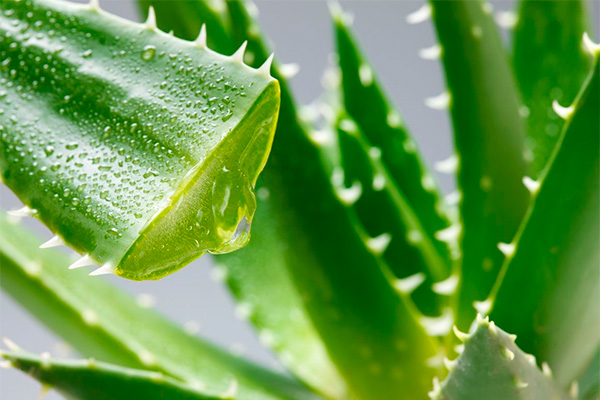
Aloe contains more than 200 biologically active substances, including vitamins (A, C, E, group B), minerals (calcium, magnesium, zinc, selenium), amino acids, enzymes and antioxidants. Of particular value is the gel that is inside the leaves. It has anti-inflammatory, antibacterial, moisturizing and healing properties.
Medicinal properties of aloe
-
Healing of wounds and burns.
Aloe gel accelerates tissue regeneration, relieves inflammation and reduces pain. It can be applied to cuts, burns, abrasions and even sunburn. -
Strengthening the immune system.
Aloe juice stimulates the body's defenses, helping to fight infections and viruses. -
Improving digestion.
Aloe normalizes the gastrointestinal tract, helps with constipation and improves appetite. However, it should be used internally with caution and only after consulting a doctor. -
Lowering blood sugar.
Some studies suggest that aloe may help control glucose levels in people with type 2 diabetes.
Cosmetological properties of aloe
-
Moisturizing the skin.
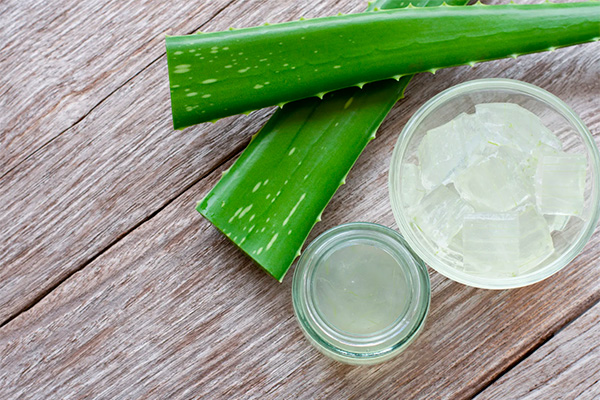
Aloe gel penetrates deeply into the skin, moisturizing it and preventing moisture loss. It is ideal for dry and sensitive skin. -
Fighting acne.
Aloe has antibacterial properties that help reduce inflammation and prevent acne. -
Skin rejuvenation.
Antioxidants in aloe fight free radicals, slowing down the aging process and smoothing out fine wrinkles. -
Hair care.
Masks with aloe juice strengthen hair, stimulate its growth and prevent hair loss.
How long does fresh aloe juice last in the refrigerator?
Fresh aloe juice can be stored in the refrigerator in a glass container with a tight lid for no more than 7-10 days. To extend the shelf life, you can mix the juice with honey or alcohol in a 1:1 ratio.
How long can you store a cut leaf
A cut aloe leaf retains its beneficial properties in the refrigerator for up to 2-3 weeks if you wrap it in cling film or foil. However, it is better to use the leaf immediately after cutting to get the maximum benefit.
Aloe is a versatile plant that can become your reliable assistant in your home medicine cabinet and cosmetic bag. In the next section, we will tell you how to use aloe in everyday life and folk medicine, as well as precautions.
Aloe in everyday life and folk medicine
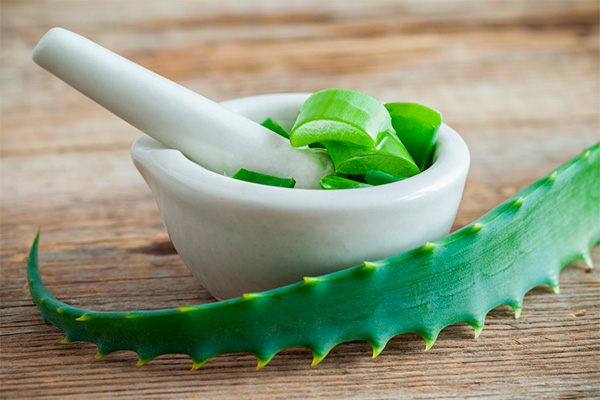
Aloe is not only a beautiful houseplant, but also a real helper in everyday life and folk medicine. Its unique properties make it indispensable for solving many everyday problems. However, when using aloe, it is important to remember the precautions so as not to harm yourself or your loved ones.
Using aloe in everyday life
-
Air purification. Aloe, like many other indoor plants, helps to purify the air from harmful substances and saturate it with oxygen. This is especially useful in city apartments.
-
Healing minor wounds. If you cut yourself while cooking or get a small scratch, simply apply aloe gel to the damaged area. It will disinfect the wound and speed up healing.
-
Skin care after shaving. Aloe gel soothes the skin, relieves irritation and prevents ingrown hairs. Apply it after shaving for instant relief.
Using aloe in folk medicine
-
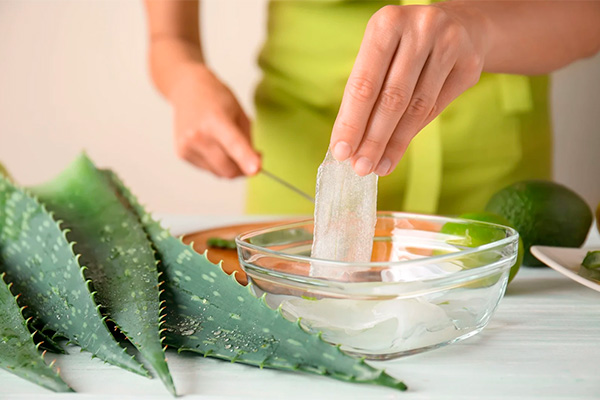
Treating colds. Aloe juice with honey is a well-known folk remedy for strengthening the immune system and fighting colds. Mix aloe juice and honey in a 1:1 ratio and take 1 teaspoon 2-3 times a day.
-
Relief of gastritis symptoms. For gastritis with low acidity, you can take aloe juice (1 teaspoon 30 minutes before meals). However, consult a doctor before use.
-
Treatment of a runny nose. Aloe juice diluted with waterin a 1:2 ratio, can be instilled into the nose for a runny nose. This remedy helps relieve swelling and reduce inflammation.
-
Oral care. Aloe gel can be used to treat gum inflammation and small wounds in the mouth. Apply it to the affected area and leave for a few minutes.
Precautions
-
Allergic reactions. Before using aloe, perform an allergy test: apply a small amount of gel to the skin and wait 24 hours. If irritation occurs, discontinue use.
-
Caution when taking internally. Do not take aloe internally without consulting a doctor, especially if you have chronic diseases or are pregnant.
-
Quality of raw materials. Use only fresh aloe leaves grown in environmentally friendly conditions. Do not use leaves with yellow or brown spots.
-
Dosage. When taking internally, strictly follow the dosage, as excess aloe can cause stomach upset or other side effects.
Aloe is a real gift of nature, which can become your reliable assistant in everyday life and home medicine. In the final section, we will summarize and tell you why this plant should be in every home.

Why aloe should be in every home
Aloe is a unique plant that combines beauty, unpretentiousness and many useful properties. It not only decorates the interior, but also becomes a real assistant in everyday life. Here are some reasons why aloe should be in every home:
-
Easy to care for. Aloe does not require complex care, which makes it an ideal choice for beginner gardeners and those who have little time to care for plants.
-
Health benefits. Aloe juice and gel have powerful healing properties, helping to heal wounds, strengthen the immune system and improve skin condition.
-
Cosmetological effect. Aloe is a natural skin and hair care product that helps fight acne, moisturizes and rejuvenates the skin, and strengthens hair.
-
Environmentally friendly. Aloe purifies the air in the room, saturating it with oxygen and creating a favorable microclimate.
-
Availability. Aloe is easy to propagate, so you can always share the shoots with friends and family.
-
Versatility. This plant is used not only in medicine and cosmetology, but also in everyday life, helping to solve many everyday problems.