
Flower "Christmas Star" or poinsettia or Euphorbia pulcherrima
Description and features of poinsettia
Poinsettia, also known as the "Christmas Star", is one of the most popular plants that symbolize the winter holidays. Its bright bracts, which are often mistaken for flowers, create an atmosphere of coziness and celebration. The poinsettia flowers themselves are small and inconspicuous, but the surrounding bracts can be red, white, pink or even two-colored.
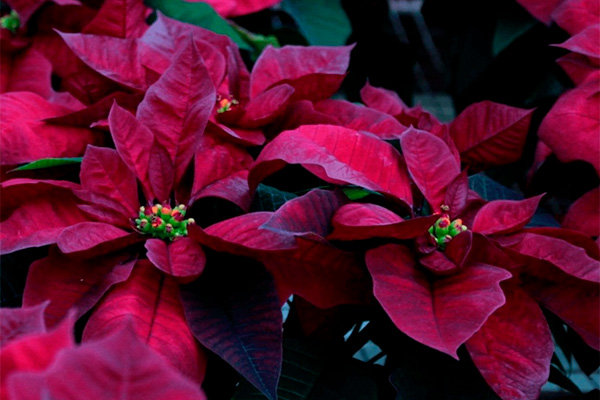
Correct name.The scientific name of poinsettia is Euphorbia pulcherrima, which translates as "the most beautiful milkweed". This plant belongs to the Euphorbiaceae family. Other names that can be used are: euphorbia; spurge beautiful; Christmas star
Which country is poinsettia from? The homeland of poinsettia is considered to be Mexico and Central America. There it grows as a bush and can reach a height of up to 4 meters. The plant was brought to Europe in the 19th century, and since then it has become an integral attribute of Christmas.
What does the poinsettia flower bring to the house? Poinsettia not only decorates the interior, but also, according to beliefs, brings well-being and harmony to the house. Its bright colors lift your spirits, and caring for the plant helps create a cozy atmosphere.
What to look for when buying a plant.When choosing a poinsettia, pay attention to the condition of the bracts: they should be bright and undamaged. The leaves should be green and firm, without yellowing or spots. Also check that the soil in the pot is not over-watered or over-dried.
What to do with a poinsettia after buying it in a store?After buying, the poinsettia needs to be acclimatized. Place it in a bright place, but avoid direct sunlight and drafts. Do not replant the plant for the first few days, let it get used to the new conditions. Water moderately to keep the soil slightly moist.
How the Christmas Star Blooms
Poinsettia blooms are truly a spectacular sight, making them one of the most popular plants in the winter. However, what many people mistake for flowers are actually brightly colored bracts - modified leaves surrounding the real flowers.
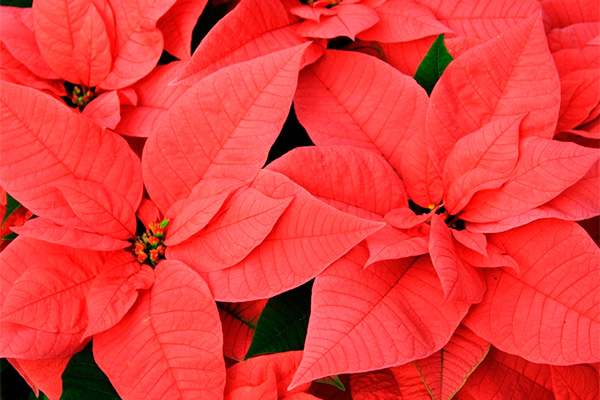
Bracts. The main decoration of the poinsettia is its bracts, which can be red, white, pink, cream or even two-colored. They are located at the tops of the shoots and form a beautiful "star", due to which the plant received its second name - "Christmas star".
Real flowers.The poinsettia flowers themselves are very small and inconspicuous. They are collected in small yellow-green inflorescences located in the center of the bracts. These inflorescences resemble tiny balls and almost do not attract attention against the background of bright bracts.
How long does the Christmas flower bloom
Poinsettia pleases with its bright appearance for several months, usually from December to February. The flowering period depends on the conditions of maintenance: with proper care, the plant can retain its decorative effect for up to 4-6 months. However, it is important to remember that the poinsettia flowers themselves are small and inconspicuous, and all the beauty is created by the bracts - the leaves surrounding the inflorescences.
Possible reasons why the plant does not bloom
If the poinsettia does not bloom, this may be due to several factors:
Lack of light. The plant needs bright, but diffused lighting. With a lack of light, the poinsettia does not form bright bracts.
Incorrect temperature conditions. Poinsettia does not like sudden changes in temperature and drafts. The optimum temperature for flowering is 18–22°C.
Breaking the dormant period. After flowering, the poinsettia needs a dormant period (usually 6–8 weeks), during which the plant gains strength for the new season. If this stage is skipped, flowering may not occur.
Lack or excess of moisture. Overdrying or overwatering of the soil can lead to leaf drop and lack of flowering.
Lack of stimulation. For poinsettia to bloom, it needs a short daylight period (about 10 hours of light per day) for 6-8 weeks before flowering begins.
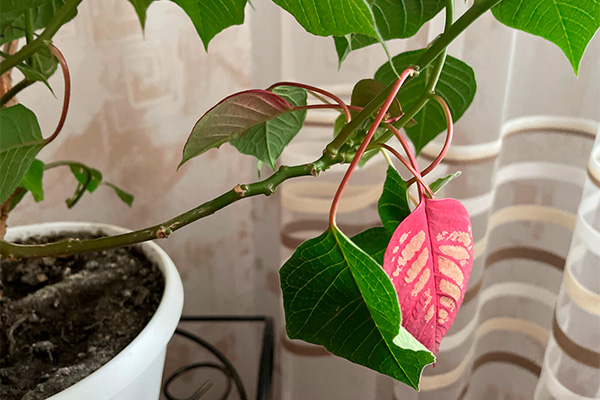
To stimulate flowering, you can artificiallysignificantly reduce daylight hours: cover the plant with a dark bag or box for 14 hours a day, and return it to the light in the morning. This technique will help the poinsettia form bright bracts by Christmas.
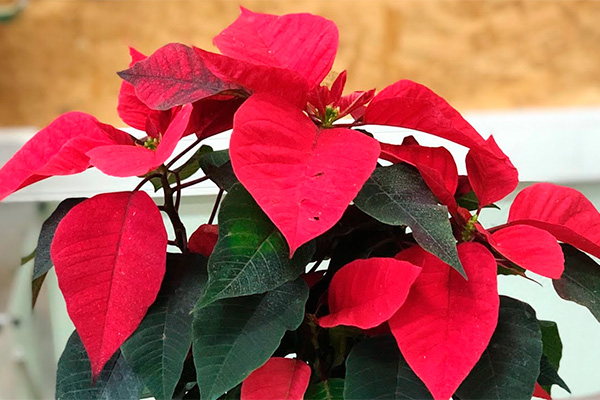
How to care for a Christmas flower
How often to water. Poinsettia likes moderate watering. The soil should be slightly moist, but not waterlogged. Water the plant when the top layer of soil dries out by 1–2 cm. In summer, watering can be more frequent, and in winter — rare, especially during the dormant period. Use settled water at room temperature. Avoid stagnant water in the tray to prevent root rot.
What to feed.Poinsettia needs to be fed during the period of active growth and flowering - from spring to autumn. Use complex fertilizers for indoor plants containing potassium, phosphorus and nitrogen. The frequency of feeding is once every 2 weeks. During the dormant period (after flowering), stop feeding.
What kind of lighting is needed.Poinsettia prefers bright but diffused light. Direct sunlight can cause burns on the leaves, so it is better to place the plant on the eastern or western windows. If there is not enough light, the leaves may begin to turn yellow and fall off. In winter, you can use phytolamps for additional lighting.
Temperature conditions. The optimal temperature for poinsettia is 18–22°C. The plant does not like sudden temperature changes and drafts. In winter, it is important to ensure that the temperature does not drop below 15°C, otherwise the poinsettia may shed its leaves. In summer, it can be taken out onto the balcony or into the garden, but protected from direct sunlight and wind.
Air humidity. Poinsettia prefers high air humidity. Regularly spray the leaves with water at room temperature, especially during the heating season, when the air in the room becomes dry. You can also place the pot with the plant on a tray with wet expanded clay or pebbles.
What to do after flowering.After the poinsettia has finished flowering, its bracts will begin to lose their brightness. During this period, reduce watering and stop fertilizing. Cut the stems at a height of 10-15 cm from the ground and place the plant in a cool place (15-16 ° C) for the rest period. Water moderately so that the soil does not dry out completely.
How to transplant a poinsettia indoor flower
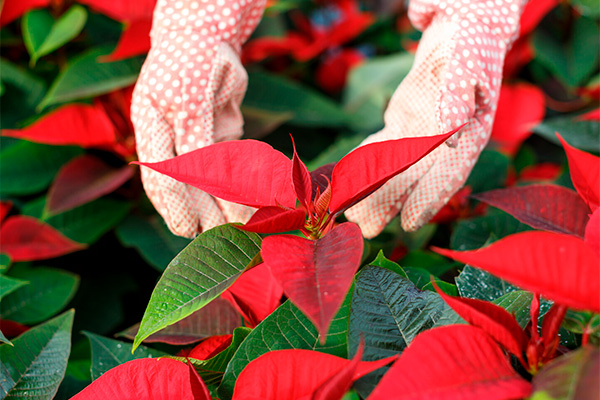
What kind of soil is needed.Poinsettia prefers light, nutritious and well-drained soil. A mixture of leaf soil, peat, sand and humus in a ratio of 2:1:1:1 is ideal. You can also use a ready-made substrate for decorative foliage plants or euphorbias. The main thing is that the soil is breathable and does not retain excess moisture.
When to replant.Poinsettia is replanted in the spring, usually in April-May, when the plant comes out of dormancy. Young plants are replanted annually, and adults - once every 2-3 years, as needed. If the roots begin to crawl out of the drainage holes, this is a signal for replanting.
What kind of pot do you need.Choose a pot 2-3 cm wider and deeper than the previous one. It should have drainage holes to drain excess water. The pot can be any material - plastic, ceramics or clay. The main thing is that it is stable and corresponds to the size of the plant.
Step-by-step instructions for transplanting
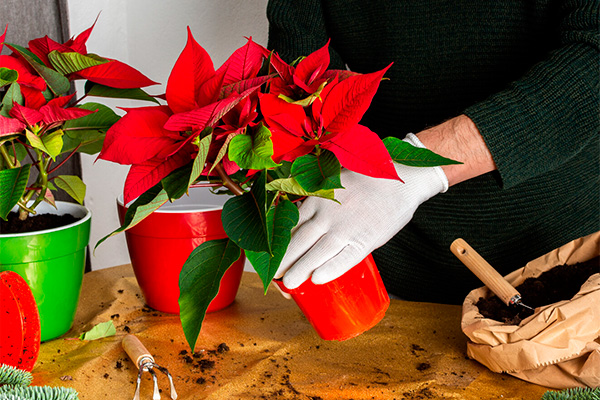
Prepare a new pot, soil and drainage (expanded clay or small gravel).
Carefully remove the poinsettia from the old pot, trying not to damage the roots.
Inspect the root system. If there are rotten or dry roots, trim them with a sharp knife.
Pour a layer of drainage (2-3 cm) into the bottom of the new pot, then add some soil.
Place the plant in the pot, straighten the roots and fill with soil, lightly tamping it down.
Leave 1-2 cm to the edge of the pot for easy watering.
Water the plant and place it in a bright place, protected from direct sunlight.
How to propagate poinsettia
Poinsettia can be propagated by cuttings. To do this:
In spring or early summer, cut apical cuttings 10-15 cm long.
Rinse the cuts with warm water to remove the milky juice.
Dry the cuttings for 2-3 hours, then treat the cuts with a rooting stimulator.
ByPlant the cuttings in a mixture of peat and sand, cover with film or glass to create a greenhouse effect.
Place in a warm place (20–25°C) with diffused light.
Moisten the soil regularly and ventilate the greenhouse. In 3–4 weeks, the cuttings will take root.
Pruning and shaping the bush
Why pruning is necessary. Pruning poinsettia is an important stage of care that helps to maintain the decorative appearance of the plant, stimulate the growth of new shoots and prepare it for the next flowering. Without pruning, poinsettia can stretch out, become untidy and lose its lush shape.
When to prune.The main pruning is carried out after flowering ends, usually in February-March, when the plant begins to go into a dormant period. At this time, the poinsettia sheds some of its leaves, and its stems can be shortened to form a compact bush. In the summer, as it grows, you can carry out light corrective pruning to maintain the shape.
How to properly prune a poinsettia
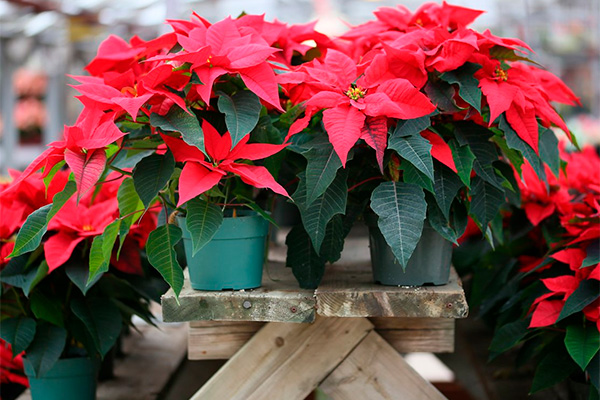
Prepare a sharp pruner or scissors. The tool must be clean to avoid plant contamination.
Shorten all stems to a height of 10-15 cm from the ground level. Each shoot should have 4-5 buds, from which new branches will appear later.
Remove weak, dry or damaged shoots.
After pruning, place the plant in a warm, bright place and reduce watering to a minimum.
Shaping the bush
In order for the poinsettia to look lush and symmetrical, it is important to properly shape its crown. To do this:
Regularly turn the pot with different sides facing the light so that the shoots grow evenly.
In summer, you can pinch the tops of young shoots to stimulate branching.
If the plant has stretched too much, prune it again in early summer, but no later than mid-August, so as not to disrupt the process of laying flower buds.
After pruning, the poinsettia needs a period of rest. Place it in a cool place (15–16°C) with moderate lighting and reduce watering. After 1-2 months, when new shoots appear, you can resume normal care and start feeding.
Interesting facts about poinsettia
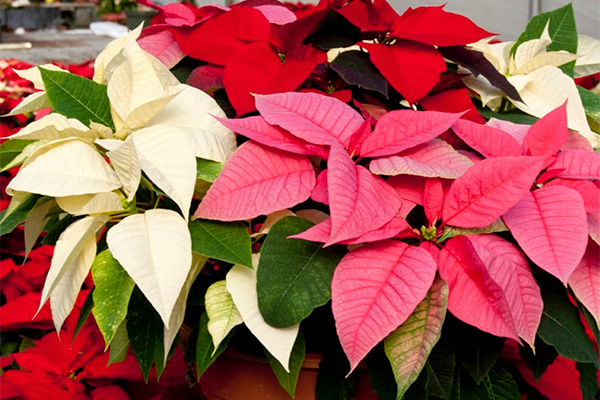
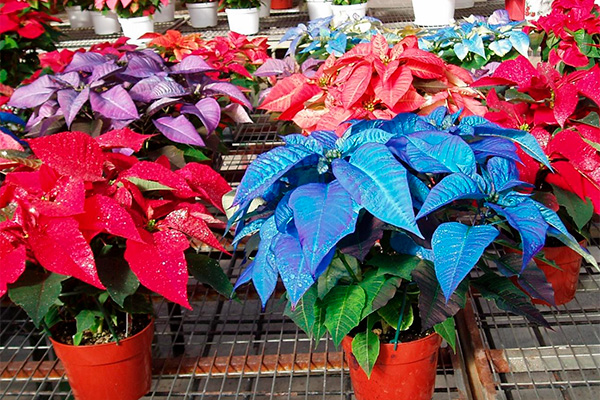
Unusual varieties and colors. Poinsettia is known for its bright red bracts, but breeders have bred many other varieties with a variety of shades. Today you can find poinsettias with white, cream, pink, burgundy and even two-colored bracts. Some varieties have double or corrugated leaves, which makes them even more decorative.
History of the name. Poinsettia got its name in honor of Joel Roberts Poinsett, an American diplomat and botanist who first brought this plant from Mexico to the United States in the 1820s. Poinsett was so impressed by the beauty of the flower that he began to actively cultivate and popularize it.
A symbol of Christmas.The poinsettia has become a symbol of Christmas due to its shape and flowering time. Its bright bracts, reminiscent of stars, are associated with the Star of Bethlehem, and the flowering period falls on the winter holidays. In Mexico, the plant's homeland, it is called "Flor de Nochebuena" - "Flower of the Holy Night".
Legends and traditions.There are many legends associated with the poinsettia. One of them tells of a poor Mexican girl who wanted to give something beautiful for Christmas, but she had no money. She collected a modest bouquet of weeds, and the moment she laid it at the altar, the weeds turned into bright poinsettia flowers.
Poinsettia in Culture. December 12 is National Poinsettia Day in the United States. This holiday was established in memory of Joel Poinsett, who died on this day in 1851. On this day, it is customary to decorate homes and offices with poinsettias, and give them to friends and family.
Milky Juice. Like all members of the Euphorbiaceae family, poinsettia secretes milky juice, which can irritate the skin and mucous membranes. Therefore, when pruning or replanting the plant, it is recommended to use gloves and avoid contact of the juice with the eyes or mouth.
A long-liver among indoor plants.With proper care, poinsettia can live for many years, delighting with its flowering every winter. Some specimens at home reach the age of 10-15 years or more.
Why poinsettia is the perfect choice for your home
Poinsettia is not just a beautiful plant, but a real symbol of celebration, comfort and warmth. Its bright bracts create an atmosphere of winter magic, and the variety of varieties allows you to choose a plant for every taste. But beauty is not the only advantage of poinsettia.
This flower is relatively unpretentious in care, which makes it an excellent choice even for novice gardeners. If you follow simple rules - moderate watering, proper lighting and timely pruning - poinsettia will delight you with its flowering year after year.
In addition, poinsettia has a deep symbolic meaning. It reminds of family traditions, a festive mood and the importance of caring for loved ones. And its ability to bring harmony and well-being to the home makes it a welcome guest in any interior.
When choosing poinsettia, you get not just a houseplant, but a real source of joy and inspiration. It will be a wonderful gift for Christmas or New Year, as well as a stylish decoration for your home. Give yourself and your loved ones a piece of the holiday with poinsettia - a Christmas star that illuminates winter days with its bright light!