
How to Grow Mint at Home: A Complete Guide for Beginners
Is it possible to grow mint at home?
Yes, mint is easy to grow at home, even for beginners. This unpretentious plant feels great in a pot on a windowsill. The main thing is to provide it with enough light, regular watering and suitable soil.
Mint grows quickly, and its aromatic leaves can be used for tea, desserts or to decorate dishes. Growing at home allows you to have fresh herbs all year round, regardless of the season.

Which varieties of mint are suitable for growing at home?
For home cultivation, it is better to choose compact and unpretentious varieties of mint. Peppermint is the most popular - it has a bright aroma and grows quickly. Melissa (lemon mint) with its citrus notes and delicate curly mint, which is less aggressive in growth, also feel good in pots.
If you want something unusual, try chocolate mint with a light caramel shade or pineapple mint with a fruity aroma. These varieties require a little more attention to lighting, but their unique taste is worth the effort. For beginners, it is better to start with classic peppermint - it will forgive minor mistakes in care.
How to propagate mint
Mint is one of the easiest plants to propagate, which even a beginner can handle. There are three proven methods, each of which has its own advantages.
Propagation from a twig
-
Cut a healthy shoot 8-10 cm long
-
Remove the lower leaves
-
Put in water for 5-7 days until roots appear
-
Transplant into soil when the roots are 2-3 cm long
Growing from seeds
-
Prepare a wide, shallow container
-
Use loose, nutritious soil
-
Spread the seeds evenly over surfaces
-
Moisten with a spray bottle
-
Cover with film until shoots appear
Transplanting from open ground
-
Dig up a young bush with a lump of earth
-
Prepare a pot with drainage
-
Transplant, maintaining the depth level
-
Water generously
-
Keep in partial shade for the first few days
The fastest results are achieved by propagation by cuttings - in 2-3 weeks you will have a full-fledged plant. The seed method will take more time (about 2 months), but will allow you to grow many bushes at once. When transplanting from the garden, choose only healthy plants without signs of disease.

When to plant mint?
Mint can be planted at any time of the year, but it takes root best in the spring (March-April) or early autumn (September). Spring planting gives the plant time to get stronger before winter, and autumn planting allows you to get an early harvest next spring.
If you grow mint on a windowsill, the planting timing is not so important - the main thing is to provide sufficient lighting. In winter, additional lighting with a phytolamp may be required. The optimal temperature for seed germination is 18-22°C, so it is better to avoid summer heat. Cuttings take root well all year round.

Step-by-step instructions on how to properly plant mint with seeds
Growing mint from seeds requires patience, but allows you to get many plants at once. The main thing is to follow the planting technology and create optimal conditions for germination.
Choosing a container
Take a wide, shallow container (5-7 cm high) with drainage holes. Plastic seedling boxes or food containers are ideal. Be sure to add 1-2 cm of expanded clay to the bottom to drain excess moisture.
Preparing the soil
-
Use light, loose soil (a mixture of garden soil, peat and sand 2:1:1)
-
Disinfect the soil - pour boiling water or a solution of potassium permanganate
-
Let the soil dry to a moderately damp state
Planting seeds
-
Evenly distribute the seeds over the surface (do not bury them!)
-
Press lightly with your palm to contact soil
-
Moisten with a spray bottle
-
Cover with film or glass
-
Put in a warm place (20-23°C)
The first shoots will appear in 14-20 days. At this time, it is important to maintainhumidity and air the mini-greenhouse daily. After 2-4 true leaves appear, you can transplant the seedlings into separate pots.

Caring for mint at home
Mint does not require complex care, but to get lush greenery, you need to follow several important rules. The plant will actively grow with proper watering, sufficient lighting and periodic fertilizing.
Basic care rules:
-
Watering: keep the soil constantly moist, but do not allow water to stagnate. In summer, water every other day, in winter - 2-3 times a week. Use settled water at room temperature.
-
Lighting:6-8 hours of diffused light per day is optimal. On southern windows, shade from direct sun, on northern ones - add a phytolamp.
-
Temperature:the ideal range is 18-25°C. Avoid drafts and sudden changes in temperature.
Additional care:
-
Feeding: apply complex fertilizer for greens every 3-4 weeks (half the dose indicated on the package)
-
Pruning: regularly pinch off the tops for better tillering
-
Hygiene: wipe the leaves from dust, remove dry twigs
-
Prevention: once a month, treat with a soap solution to protect against pests
In winter, reduce watering and fertilizing, but increase daylight hours with lamps. If the mint begins to stretch, cut it by a third to stimulate the growth of new shoots. With proper care, one plant can live and bear fruit for 3-5 years.
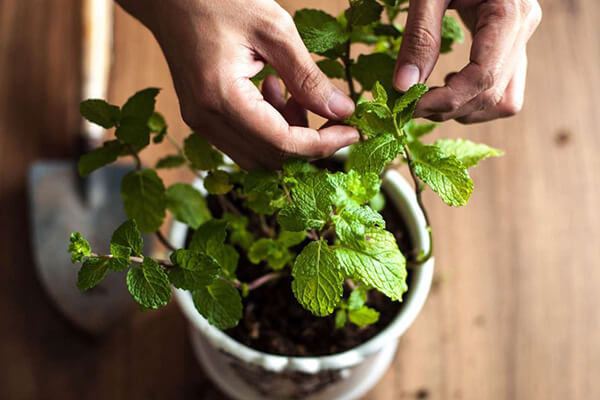
When can you harvest mint from the windowsill
The first harvest of fresh mint can be collected 2-3 months after planting or 4-6 weeks after the cuttings have rooted. The best time to collect is in the morning, when the leaves contain the maximum amount of essential oils.
Signs of readiness for collection:
-
The plant has reached a height of 15-20 cm
-
At least 5-6 pairs of true leaves have formed
-
Side branches have appeared on the shoots
Cut off the upper 5-7 cm of shoots with 2-3 pairs of leaves, leaving the lower part of the stem for further growth. Regular collection (once every 2-3 weeks) stimulates tillering and increases yield. During the season, you can get 4-5 full harvests of aromatic greenery from one bush.
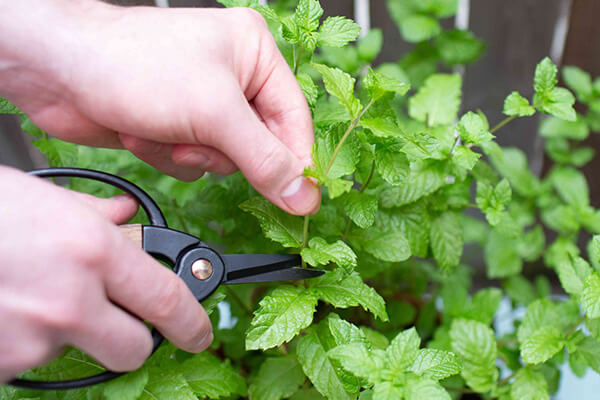
For a constant supply of fresh mint, practice conveyor growing - plant new plants every 1.5-2 months. This is especially important in winter, when growth slows down. Remember that the leaves have the greatest aroma before flowering - if you notice buds, it is better to remove them.
Common mistakes of beginners and how to avoid them
Growing mint is usually not difficult, but novice gardeners sometimes make typical mistakes. Most problems can be easily prevented by knowing the basic rules of agricultural technology.
Main mistakes and solutions:
-
Overwatering leads to root rot. Check the soil moisture with your finger before watering - the top layer should dry out slightly.
-
Lack of light causes stems to stretch. In winter, be sure to use phytolamps, providing 12-14 hours of daylight.
-
Dense planting of seeds interferes with plant development. When sowing, keep a distance of 2-3 cm between seeds or thin out the seedlings.
Other common problems:
-
Using a pot that is too big— mint prefers moderately tight containers with a diameter of 15-20 cm
-
Lack of drainage— be sure to put a layer of expanded clay on the bottom of 2-3 cm
-
Overfeeding with fertilizers— leads to rapid growth at the expense of aroma, it is enough to feed once a month
-
Ignoring pests— regularly inspect plants for aphids and spider mites

Mint tolerates mild drought better than overwatering. At the first signs of wilting, just water the plant - it will quickly recoversya. If the bush has become less fragrant, do a radical pruning and reduce fertilizing - this will return the leaves a rich taste and smell.
| Aspect of cultivation | Recommendations | Common mistakes |
|---|---|---|
| Choosing a variety | Peppermint, lemon mint, curly mint, chocolate mint | Choosing capricious varieties for beginners |
| Methods of propagation | Cuttings (faster), seeds, dividing the bush | Deepening seeds when planting |
| When to plant | All year round (spring/autumn is better) | Planting in hot weather without additional lighting |
| Soil and pot | Loose soil, drainage, 15-20 cm pot | Using heavy soil or too large pot |
| Watering | Moderate, without stagnation water | Overwatering or complete drying out of the soil |
| Lighting | 6-8 hours of light, in winter - additional lighting | Placement in deep shade |
| Feeding | Once a month (half the dose of fertilizers) | Frequent feeding, reducing the aroma |
| Harvesting | After 2-3 months, cut off the tops | Collecting all the leaves at once, disrupting growth |
Growing mint at home is not only easy, but also incredibly enjoyable. Just a few weeks after planting, you will be able to enjoy the aromatic leaves, adding them to tea, desserts or refreshing drinks. The main thing is to provide the plant with enough light, moderate watering and periodic pruning so that the bush remains lush and healthy.
Don't be afraid to experiment with different varieties: peppermint, lemon mint or chocolate mint - each will bring its own unique aroma to your home. And if something goes wrong, just return to our advice, adjust the care, and the plant will definitely thank you with fresh greenery.
Let your windowsill always delight you with bright and fragrant mint - grow with pleasure!