
How to Grow a Peach from a Seed at Home: A Step-by-Step Guide for Beginners
Is it possible to grow a peach from a seed at home in a pot?
Yes, it is possible, but it requires patience and following the rules. A peach from a seed will sprout and may even bear fruit, but the result greatly depends on the variety, conditions and care. A house tree rarely reaches the size of a garden tree, but with good lighting and proper pruning it will become a beautiful green pet.

What is important to consider:
-
Not all seeds germinate - it is better to plant several pieces.
-
Store peaches often turn out to be hybrids, their seeds may not sprout or produce a weak plant.
-
You will have to wait several years for fruiting, and without grafting the fruits may be small.
If you want to experiment - try it! But if you need a guaranteed harvest, it is better to buy a seedling of a proven variety.
How to choose a peach for growing at home
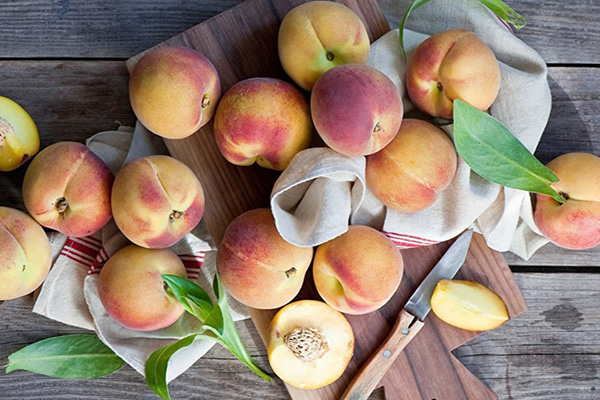
Choosing the right fruit is the first step to successfully growing a peach tree. It is important to remember that not every seed can produce a healthy sprout. Let's figure out what to pay attention to.
Which varieties are suitable for growing at home:
-
Dwarf and early ripening varieties (for example, "Early Rivers", "Amsden")
-
Varieties adapted to your climate - they are more viable
-
Self-pollinating varieties - do not require cross-pollination
Why store-bought peaches may not germinate:
-
They are often picked unripe - the pit does not have time to fully form
-
Many industrial varieties are hybrids whose seeds do not retain the properties of the parent plants
-
Fruits can be treated with chemicals that inhibit germination
For best results, look for fully ripe peaches at local markets or in private gardens.
Methods for sprouting peaches at home
In order for a peach pit to sprout, you need to create conditions as close to natural as possible. There are three main methods of sprouting, each with its own characteristics.
1. Stratification (cold method)
Imitates the winter period necessary for seed awakening.
-
Wrap the seeds in damp moss or sand
-
Place in a container and store in the refrigerator at +1...+5°C for 2-3 months
-
Check for mold regularly, ventilate
How to avoid problems:
- Maintain moderate humidity
- Use disinfected substrate
- If mold appears, treat with hydrogen peroxide
2. Fast germination (warm method)
An alternative for those who do not want to wait months.
-
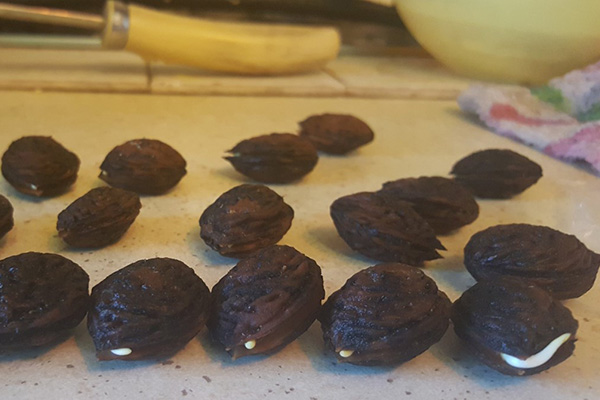
Soak the seeds for 2-3 days in warm water
-
Carefully open the hard shell (do not damage the kernel!)
-
Treat with a growth stimulator (Epin, Zircon)
3. Planting directly into the ground
The simplest, but least reliable option.
- Pros: minimal effort, natural process
- Cons: low germination, risk of rotting
The choice of method depends on your patience and willingness to control the process. Cold stratification gives the most stable results.
How to plant a sprouted peach pit at home
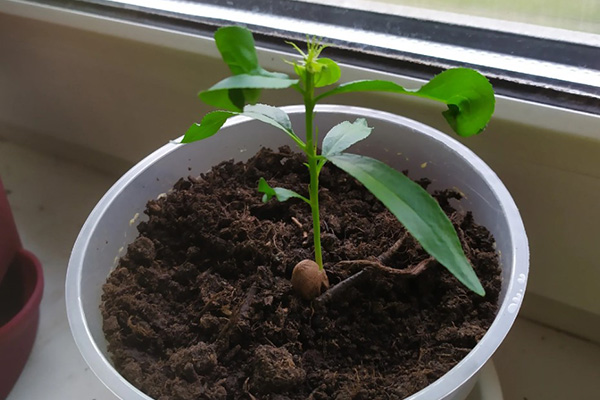
When your pit has finally sprouted, it is important to plant it correctly so that the seedling develops healthy and strong. At this stage, the future of your peach tree is decided.
Choosing soil and a pot
Peach needs light, breathable soil with neutral acidity. Ideal option:
- A mixture of garden soil (50%)
- Humus or compost (30%)
- River sand or perlite (20%)
Choose a pot with drainage holes, 2-3 cm wider than the seed. Be sure to put 2-3 cm of expanded clay on the bottom.
Pot placement
Peach is extremely demanding to the conditions of maintenance:
- Lighting- at least 6 hours of direct sun (southern window)
- Temperature- +20-25°C in summer, +5-10°C in winter (rest period)
- Humidity- 50-60%, protect from dry air from batteries in winter
After planting:
-
Water with warm, settled water
-
Cover with a bag for 3-5 days to create a greenhouse effect
-
Gradually accustom the sprout to indoor conditions
A sharp change in environment can ruin a tender sprout! The first 2 weeks are especially critical.
The main mistakes when growing a peach from a stone
Even experienced gardeners can face difficulties when sprouting a peach. Knowing the typical mistakes, you will save time and nerves.
1. Incorrect choice of planting material
- Using seeds from unripe or hybrid fruits
- Planting a single seed (germination rate rarely exceeds 30%)
2. Germination errors
- Planting too deep (optimally 3-4 cm)
- Over-watering leading to rotting
- Sudden transfer from cold to warm without adaptation
3. Unsuitable conditions
- Lack of light (needs additional lighting in winter)
- Keeping in a hot room in winter (needs a rest period)
- Drafts and sudden changes in temperature
How to avoid problems:
- Always germinate several seeds at the same time
- Control the soil moisture with your finger before watering
- Prepare the plant for winter gradually
Peach forgives mistakes only in the early stages. An adult plant is more difficult to revive.
How to care for a peach at home
Growing a peach from a seed is only half the success. In order for the tree to be healthy and beautiful, and possibly bear fruit in the future, it is important to provide it with proper care.
Watering and humidity. Peach likes moderate humidity:
- In summer, water 2-3 times a week when the top layer of soil dries out
- In winter, reduce watering to once every 7-10 days
- Use only settled water at room temperature
- Spray the foliage on hot days or when the heating is on
Feeding/ Fertilize the plant from March to October:
- Young seedlings (1-2 years) - complex fertilizers for seedlings once a month
- Adult plants - alternate organic matter (biohumus) and mineral compositions for fruit trees 2 times a month
- During the dormant period (November-February), exclude fertilizing
Lighting and temperature
- Daylight - at least 6 hours of direct sun (southern window)
- In summer, take it out to the balcony, protecting it from drafts
- In winter, ensure coolness (+5…+10°C) - this is the key to future flowering
Will the home-grown peach?
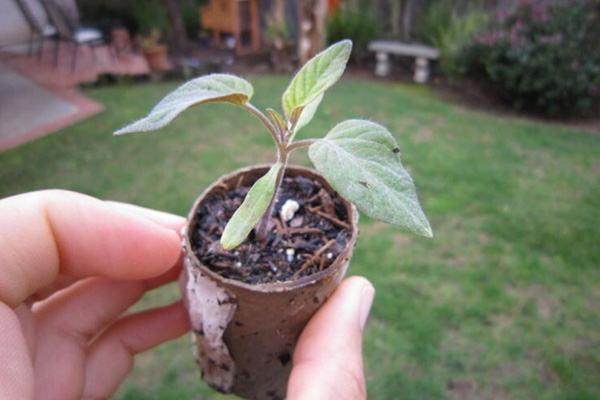
Growing a peach tree from a seed is exciting, but the question of fruiting worries all gardeners. Yes, your peach can bear fruit, but you need to understand the nuances of this process.
Expectation period for harvest
Under ideal conditions, the first fruits appear:
-
In the 3rd-4th year - if the plant received proper care
-
In the 5th-6th year - with a lack of light or a violation of the dormant period
-
Never - if the pit from a hybrid store-bought fruit was used
How to speed up fruiting
-
Provide a cold wintering (+2...+6°C) - this stimulates the formation of flower buds
-
Regularly feed potassium-phosphorus fertilizers during the growing season
-
Do formative pruning — fruits are formed on the side shoots of the previous year
-
Consider grafting —a cutting from a fruit-bearing tree will shorten the waiting period
Important to know:
- Home peaches are usually smaller than garden peaches (3-5 cm in diameter)
- For guaranteed fruiting, it is better to grow self-pollinating varieties
- It is better to limit the first flowering to 2-3 ovaries, so as not to exhaust the plant
Even without fruit, the peach tree looks impressive. And if you are lucky enough to get a harvest, it will be a real victory!
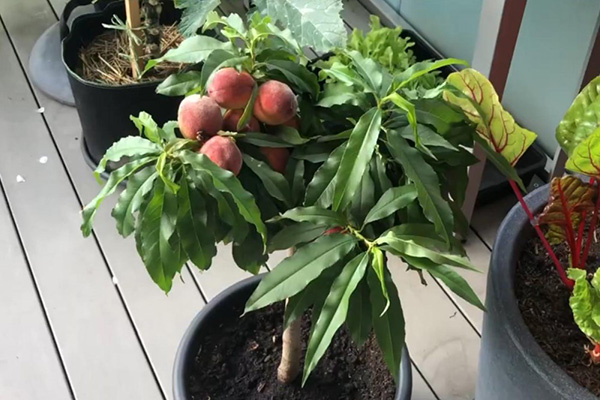
Pruning and crown shaping
-
In the first year, pinch the main shoot at a height of 30-40 cm
-
Shorten the branches by 1/3 every spring
-
Remove weak and inward-growing shoots
-
For dwarf forms, use the bonsai technique
The main secret is consistency. Peach does not like sudden changes in care. Watch the plant: opuswollen leaves indicate overwatering, and curled leaves indicate a lack of moisture.
Problems with growing peaches and their solutions
Even with careful care, a peach tree may encounter difficulties. Let's look at common problems and how to eliminate them.
1. Pests
- Aphids– appear on young shoots. Treat with soapy water or insecticide.
- Spider mites– occur in dry air. Increase humidity, use acaricides.
- Scale insects– brown plaques on leaves. Remove manually and treat with "Aktara".
2. Diseases
- Powdery mildew (white coating) – treat with a fungicide ("Topaz"), reduce watering.
- Leaf curl – typical for peaches. Remove affected leaves, spray with a copper-containing preparation.
- Root rot – when overwatered. Replant the plant, cutting off damaged roots.
3. Physiological problems
- Leaf fall – can be caused by a draft, a sudden change in temperature or overdrying of the soil. Lack of growth – often associated with poor soil or lack of light. Replant and provide additional light with a phytolamp.
- Does not bloom – perhaps there was no dormant period or the tree is still too young.
Prevention:
- Inspect the plant regularly
- Maintain stable conditions
- Do not overwater the soil, but do not dry it out either
Most problems can be solved at early stages – the main thing is to notice them in time!
If the plant has suffered greatly, try to root a cutting from a healthy branch – this will save your peach.
Table: Growing a peach from a seed – main stages and recommendations
| Stage | What to do? | Important nuances |
|---|---|---|
| Selecting a seed | Use seeds from ripe local varieties | Store hybrids often do not germinate |
| Germination | Stratification (2-3 months in the cold) or warm method (soaking + opening) | The cold method is more reliable, but longer |
| Planting | Soil: a mixture of garden soil, humus and sand (50/30/20%) | A pot with drainage, planting depth - 3-4 cm |
| Care | Moderate watering, fertilizing from March to October, wintering at +5 ... + 10 ° C | A dormant period in winter is required! |
| Problems | Aphids, spider mites, leaf curl, root rot | Regular inspection, treatment with soap solution/fungicides at the first signs |
| Fruiting | Possibly in the 3rd-5th year with proper care | The fruits are smaller than garden ones, to be sure it is better to graft a cutting from a fruiting tree |
Is it worth growing a peach at home: pros and cons
Deciding to experiment with a peach pit is like buying a lottery ticket: the result is unpredictable, but the process itself is exciting. Let's figure out what bonuses and difficulties await you.
Arguments "FOR"
- Fascinating process – watching a tree develop from a seed is incredibly interesting
- Decorative – an adult peach with glossy foliage will decorate the interior
- Possibility of fruiting – a chance to get home-grown peaches, albeit small
- Experience for a gardener – all the acquired skills will be useful for other plants
Arguments "AGAINST"
- Long wait – it can take up to 4-5 years
- Dimensions – even dwarf varieties require space
- Capriciousness – mistakes in care often lead to the death of the plant
- Unpredictability – a wild plant can grow from a store seed
Who is this activity suitable for?
- Patient experimenters, ready to wait for years
- Experienced gardeners, who like complex tasks
- Parents with children – an excellent educational project
If you want a guaranteed result, buy a seedling of a dwarf variety. If you value the process itself, mixgerminate the seed! Even without fruits, you will get a beautiful plant and invaluable experience.
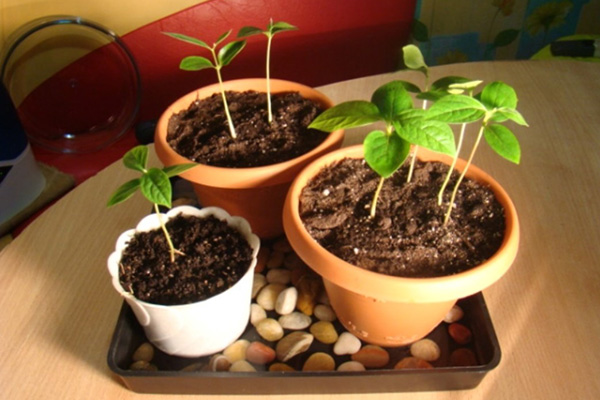
Start with 3-5 seeds at a time - this will significantly increase the chances of success.