
How to Grow a Rose at Home: A Detailed Guide
Introduction: Is it possible to grow a rose at home?
Growing a rose at home is more difficult than in the garden, but it is possible even for beginners. The main thing is to choose the right rooting method, provide proper care and avoid common mistakes.
Why do roses often die in beginners? Main reasons:
-
Weak cuttings– not all shoots or bouquet roses are able to produce roots.
-
Incorrect conditions– lack of light, overwatering or dry air are destructive.
-
Impatience– rooting can take from 2 weeks to several months.
But if you follow the instructions, even a cut rose from a bouquet can turn into a lush bush. Let's start with choosing a method!

How to grow a rose at home: 4 proven methods
Roses can be propagated using different methods - each is suitable for certain conditions. For example, you can grow a new bush from a bouquet, and from a shoot on a stem you can quickly get a strong plant. Let's consider all the options.
Methods for growing roses at home:
-
From a cutting is the most reliable method. Take a semi-woody shoot with 2-3 buds and root it in water, soil or potatoes.
-
From a bouquet– if the rose is fresh and not treated with chemicals, you can try to take cuttings. The sooner you start rooting, the higher the chances.
-
From a cut branch– suitable if the rose has a “heel” (a piece of old bark). Such material takes root better.
-
From a shoot on a stem– if a young shoot has appeared on an adult rose, it can be carefully separated and planted in the ground.
Which method should I choose?
-
For beginners– rooting in water or potatoes (easier to control the process).
-
For quick results– planting a shoot with part of the mother plant.
-
For experimenters– method in polyethylene or banana (requires more attention).

Comparison of methods for growing roses
| Method | Suitable for | Complexity | Rooting period | Pros | Cons |
|---|---|---|---|---|---|
| From cuttings | Semi-woody shoots | Average | 3-6 weeks | Reliable method, high survival rate | Requires humidity and temperature control |
| From a bouquet | Fresh cut roses | High | 2-8 weeks | You can give a second life to flowers | Low probability of success (30-50%) |
| From a cut branch | Shoots with a "heel" | Low | 2-4 weeks | Fast rooting | Need access to an adult plant |
| From a shoot on the stem | Young lateral shoots | Low | 1-3 weeks | Maximum survival rate | Suitable only for existing bushes |
Methods for rooting roses: choosing the best method
The success of growing roses largely depends on proper rooting. Let's consider five proven methods, each of which has its own characteristics.
- Rooting in potatoes. An unusual but effective method. Potatoes provide the cutting with moisture and nutrients. Make a hole in the tuber, insert the cutting, and bury it in the soil. Pros: high survival rate. Cons: requires humidity control.
- Rooting in water. The easiest option for beginners. Place the cutting in settled water, change it every 3-4 days. Pros: easy to observe the process. Cons: risk of rotting.
- Rooting in a banana. An exotic method with natural fertilizer. The cutting is stuck into a banana, then buried in the ground. Pros: potassium stimulates root growth. Cons: mold may appear.
- Rooting in polyethylene. The cutting is wrapped in damp moss and film, creating a greenhouse effect. Pros: ideal humidity. Cons: requires regular ventilation.
- Rooting in a pot. Classic method using soil. The cutting is planted at an angle in a light substrate. Pros: stable conditions. Cons: more difficult to control the process.
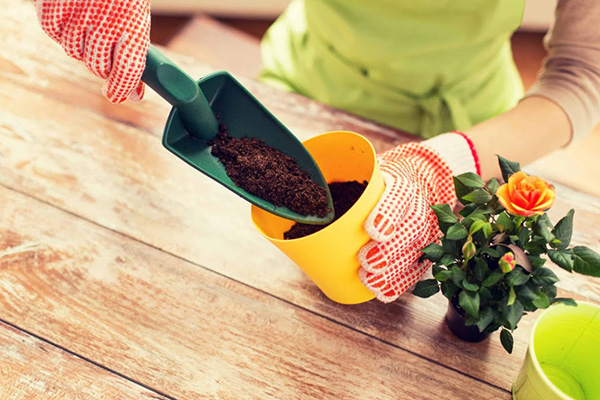
Which method should you choose?First, try water or potatoes - they are the most predictable. Experienced gardeners can experiment with banana or polyethylene. The main thing is to maintain humidity and avoid temperature changes.
Which roses are best to grow at home: choosing suitable varieties
Not all roses feel equally good in indoor conditions. For successful cultivation in an apartment, it is better to choose compact varieties that are resistant to dry air and lack of light.
The best types of roses for home growing:
-
Miniature roses(height 15-30 cm)
-
Ideal for windowsills
-
Bloom profusely and for a long time
-
Popular varieties: "Hummingbird", "Baby Masquerade"
-
-
Patio Roses(height 30-50 cm)
-
Larger flowers than miniature
-
Tolerate indoor conditions well
-
Varieties: "Patio Hit", "Corrina"
-
-
Hybrid Tea roses
-
Classic large-flowered varieties
-
Require more space and care
-
It is better to choose low-growing options for the home
-
-
Ground cover roses
-
Form lush bushes
-
Adapt well to pot conditions
-
Varieties: "Fairy", "Snow Carpet"
-
Which roses should not be grown at home?
-
Climbing and standard roses - require a lot of space
-
Garden hybrids - do not adapt well to indoor conditions
-
Varieties with low resistance to diseases

Advice:When buying, pay attention to the mark "indoor" or "potted" rose. Such plants are already adapted to growing at home. It is better to buy young bushes in specialized stores - they take root easier than adult plants.
How to care for a home rose: creating ideal conditions
Growing a rose in a pot is only half the battle. In order for it to delight with lush flowering, it is important to provide proper care. Let's consider all the key aspects of maintaining an indoor rose.

1. Lighting
The rose needs at least 6 hours of bright diffused light per day.
-
The best place is eastern or western windows
-
Southern windows will require shading at midday
-
In winter, additional lighting with a phytolamp is desirable (12-14 hours)
2. Temperature and humidity
Ideal conditions:
-
Temperature:18-25°Cin summer,10-15°Cin winter (rest period)
-
Humidity:60-70%(spray leaves if air is dry)
-
Avoid drafts and sudden temperature changes
3. Watering and fertilizing
Watering:
-
In summer — abundant, 2-3 times a week
-
In winter — moderate, once every 7-10 days
-
Use only settled water at room temperature
Fertilizing:
-
From March to October — every 2 weeks
-
Alternate mineral fertilizers and organic matter
-
No need for fertilizing in winter
4. Transplanting and pruning
-
Replant young roses annually, mature ones — every 2-3 years
-
Use soil for roses or a mixture of leaf soil, peat and sand (2:1:1)
-
Pruning in spring: remove weak shoots, shorten long branches
5. Dormant period
From November to February, the rose needs a rest:
-
Move to a cool place (10-15°C)
-
Reduce watering
-
Stop feeding
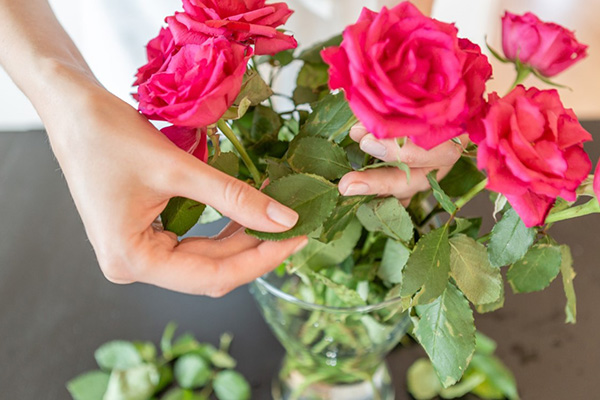
Important!After purchasing, give the rose 2 weeks to adapt, only then replant. It is better to remove the first buds - this will help the plant to strengthen.
Common problems and their solutions
Even with careful care, indoor roses can face difficulties. Let's look at typical situations and ways to fix them.
The problem with rooting cuttingsmost often occurs due to the wrong choice of shoots or violation of technology. Cuttings rot with excess moisture or dry out with insufficient watering. Use only healthy semi-lignified shoots and strictly adhere to the moisture regime. To increase success, use root formation stimulants.
Lack of floweringis usually associated with a lack of light or improper wintering. Roses require bright light for at least 6 hours a day and a mandatory rest period in a cool place. If the plant produces only leaves, try moving it to a brighter place and adjusting the feeding schedule, focusing on phosphorus-potassium fertilizers during the budding period.
Yellowing of leavesmay have several causes. Chlorosis develops from a lack of iron, overwatering leads to root rot, and dry air causes massive leaf fall. In each case, it is important to accurately determine the source of the problem. At the first signs of yellowing, check the condition of the soil, adjust watering and consider adding iron chelate.
Pests(spider mites, aphids, mealybugs) are especially active in dry air. Regularly inspect the plant; if parasites are found, immediately treat them with a soap solution or special preparations. For prevention, maintain optimal humidity and periodically give the rose a warm shower.
Bud dropis usually caused by stress from rearrangement, drafts or sudden temperature changes. During the flowering period, try not to turn the pot and protect the plant from cold air currents. If the buds are formed but do not open, the rose may not have enough nutrients - add a complex fertilizer for flowering plants.
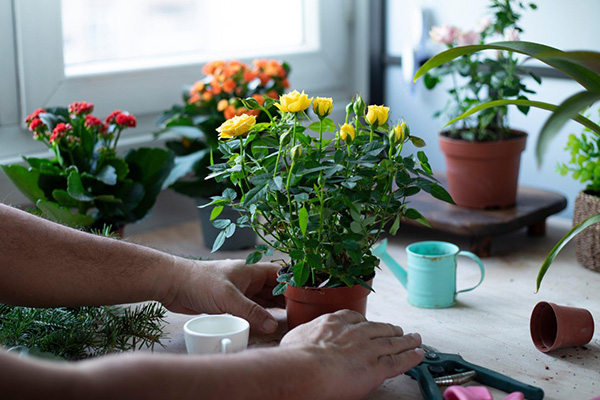
Enjoy the beauty of domestic roses
Growing roses at home is a fascinating process that brings joy and a sense of pride. Yes, these plants require attention and care, but their luxurious flowering more than pays off all the effort. Remember: even experienced gardeners once started with the first cutting, which may not have taken root right away.
The main secret of success is your patience and observation. Each rose is unique, and over time you will learn to understand your plant. Do not be upset if something went wrong the first time - this is valuable experience. Try different rooting methods, experiment with varieties, find the best care for your conditions.
When your home rose first opens its buds, you will understand that it was worth all the effort. And then - more! Over time, you will be able to create a whole rose garden on the windowsill, share cuttings with friends and even breed your own hybrids. There is no limit to perfection in the world of indoor floriculture.
Start today - and very soon your apartment will be filled with exquisite beauty and the subtle aroma of the queen of flowers. After all, growing a rose at home is not just a dream, but an achievable reality for anyone who is ready to give the plant a little love and care.
FAQ: answers to frequently asked questions about growing roses at home
Is it possible to root a rose in winter?
Yes, but the process will be slower. The optimal temperature for rooting is 18-25°C. If the room is cooler, use a mini greenhouse and additional lighting. The best time for cuttings is spring and early summer, when the plant is actively growing.
Do I need to remove the buds of a young rose?
It is indeed better to remove the first 2-3 buds. This will allow the plant to focus its energy on developing roots and shoots. All buds of adult indoor roses can be left, but only if they are regularly fertilized.
Why do leaves turn yellow and fall off?
The main reasons are: overwatering or lack of moisture, poor soil, pests, lack of light. Inspect the plant, check the condition of the soil. If there are no signs of disease, try moving the rose to a more illuminated place and adjusting the watering.
Does the rose need a dormant period?
Yes, in winter it is advisable to provide the plant with a rest at a temperature of 10-15 ° C. This is the key to abundant flowering next season. If it is not possible to create cool conditions, continue care as usual, but reduce watering and stop fertilizing.
How often does an indoor rose bloom?
With good care, modern varieties can bloom in wavesand from spring to autumn. Some miniature roses bloom almost continuously. The duration of flowering of one bud is 10-15 days, the whole bush - 3-6 weeks, after which there is a short break.
How to propagate a variety you especially like?
The best way is by cuttings. Take a semi-woody shoot with 3-4 buds, treat it with a rooting stimulator and root it in water or a light substrate. Cuttings are carried out in spring or early summer. In 4-6 weeks you will have an exact copy of your favorite plant.