
How to Grow a Banana at Home: Tropics on the Windowsill
Growing a banana palm at home is not an easy task, but it is quite possible. To achieve a beautiful plant, and ideally, a harvest, you need to consider many factors: from the right choice of variety to creating a suitable microclimate.
This is not a classic houseplant. Banana requires warmth, light, humidity and regular care. But with the right approach, it will not only decorate the interior, but also become a real exotic on your windowsill.
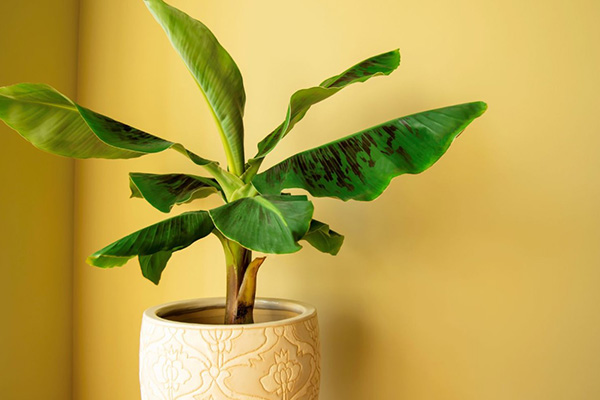
Choosing a banana variety for growing at home
The right choice of variety determines whether you will be able to grow a banana in your apartment. Not all banana trees are suitable for indoor conditions - it is important to consider the size of the plant, its decorativeness and ability to bear fruit in a pot.

There are two main types of bananas that are grown at home:
1. Dwarf varieties
These plants grow up to 1.5-2 meters in height and are ideal for limited space. The most popular dwarf varieties:
-
Musa Dwarf Cavendish — bears fruit, feels good on a windowsill;
-
Musa Super Dwarf — compact, grows quickly, but requires a lot of light.
2. Ornamental and fruit varieties
Some varieties are grown for beauty, others for the harvest.
-
Musa Velutina is an ornamental banana with pink miniature fruits, unpretentious, well suited for beginners;
-
Musa Acuminata is an ornamental species with large leaves, does not always bear fruit at home, but looks impressive.
Choose a variety depending on what you expect: ornamentality, harvest or miniatureness.

| Variety | Plant height | Type | Bears fruit indoors | Features |
|---|---|---|---|---|
| Musa Dwarf Cavendish | 1.5–2 m | Dwarf, fruit-bearing | Yes | Compact, disease-resistant, requires a lot of light |
| Musa Super Dwarf | Up to 1.5 m | Dwarf | Possible harvest | Very compact, grows quickly |
| Musa Velutina | 1.2–1.5 m | Ornamental fruit | Yes | Pink mini fruits, suitable for beginners |
| Musa Acuminata | Up to 2 m | Ornamental | Rare | Spectacular large leaves, loves warmth and humidity |

Planting a banana
Planting a banana at home requires accuracy and compliance with several important steps. Regardless of the chosen method - from seeds or from a sprouted cutting - the basis for success lies in proper soil preparation, drainage and maintaining heat and humidity.
Banana loves light, nutritious and breathable soil. A mixture of garden soil, peat, humus and sand in equal proportions is suitable. A drainage layer is required - expanded clay or small stones.
Step-by-step instructions for planting a banana:
-
Choose a pot of at least 3-5 liters with drainage holes.
-
Put 3-4 cm of drainage on the bottom.
-
Pour in the prepared soil, leaving 3 cm from the edge.
-
Place the seedling or seed at a depth of 1-2 cm.
-
Water with warm water and cover with film or glass to create a greenhouse.
-
Place in a warm, bright place (temperature - not lower than 25°C).
Tips:
-
It is advisable to soak the seeds in warm water for 2-3 days before planting.
-
If you are planting a sprout, make sure that the root system is not damaged.
-
The first sprouts from the seeds may appear in 2-6 weeks, depending on the variety.
After planting, a stable temperature and moderate watering are especially important - do not flood, but do not let the soil dry out completely.

Caring for a banana tree at home
In order for the banana to grow healthy and perhaps please you with fruits, it is important to provide it with conditions as close as possible to the tropics. This heat-loving and moisture-loving plant requires stable care all year round.
Banana loves bright diffused light, high humidity and warmth. The ideal temperature is from +22 to +28°C. Sudden changes and drafts are detrimental to the plant.
Basic care rules:
1. Watering
-
Water regularly, as soon as the top layer of soil dries out.
-
In summer - 2-3 times a week, in winter - reduce to 1 time.
-
Use warm, settled water.
2. Top dressing
-
In spring and summer, feed once every 10-14 days with complex fertilizers.
-
In autumn and winter, reduce or stop feeding.
-
Fertilizers with a high content of potassium and nitrogen are well suited.
3. Lighting
-
Banana needs 10-12 hours of light per day.
-
In winter, it is advisable to use phytolamps.
-
It is better to place the plant near southern or southeastern windows.
4. Transplantation
-
Young plants are transplanted every year in the spring.
-
Choose a pot slightly larger than the previous one, be sure to have good drainage.
-
Adult specimens are transplanted less often - once every 2-3 years.
Creating a stable microclimate and paying close attention to the needs of the banana is the key to active growth and possible fruiting.
Flowering and fruiting
A domestic banana can bloom and bear fruit, but this requires time, stable care and suitable conditions. Flowering usually occurs 2-3 years after planting, if the plant feels comfortable.
A banana blooms once in a lifetime. From the center of the rosette of leaves, a large inflorescence with a purple bract emerges, from which small ovaries then form. Flowering can last for several weeks.

Conditions for fruiting:
-
Regular watering and feeding during the period of active growth;
-
High humidity (60–80%) and temperature not lower than +24°C;
-
Sufficient light, especially in winter (use phytolamps);
-
A spacious pot and rich nutritious soil.
Fruits ripen within a few months. They may be smaller than store-bought ones, but are often sweeter and more aromatic. After fruiting, the rosette dies, and a new one grows nearby - it can be separated and replanted.
Common mistakes of beginners
Growing a banana at home is not only an exciting, but also quite a demanding process. Even experienced gardeners sometimes face problems. Here are some typical mistakes that beginners often make.
1. Incorrect watering
Banana does not like either over-dried or stagnant water. Beginners often use too cold water for watering or too intensive watering, which can lead to root rot. To avoid this mistake, water the plant only with warm, settled water and monitor the condition of the soil.
2. Lack of light
Banana requires a lot of light for normal growth. By placing it in a dark place or in a corner where the sun's rays do not reach, you risk not only not getting fruits, but also inhibiting the growth of the plant. It is ideal to place the banana near a window where there is a lot of diffused light, or use phytolamps in the winter.
3. Low humidity
As a tropical plant, banana needs high air humidity. The mistake of many beginners is ignoring this requirement. If the air in the room is too dry, banana leaves may begin to dry out, and growth will slow down. Regular spraying or using a humidifier will help maintain the desired humidity level.
4. Fertilizing errors
Incorrect fertilization can greatly affect the health of the plant. Some novice gardeners feed the plant too often or, conversely, too rarely, which can lead to a lack of nutrients or their excess. It is better to use balanced fertilizers and follow the recommended feeding times.
5. Transplanting too late or too often
Transplanting is stressful for the plant, and it is important to correctly determine the moment when the banana is ready for transplanting. Transplanting too early can lead to damage to the roots, and too late - to stagnation of growth and a lack of space for the root system.
Try and everything will work out
Growing a banana at home is an exciting and useful activity that requires patience, attention and care. Despite its exotic nature, banana can become a good friend on your windowsill, and with proper care, even give you sweet fruits.
Don't forget that the key to success is stable conditions: proper lighting, watering, feeding and maintaining the necessarytemperature and humidity. Don't be alarmed if the plant grows slowly or doesn't bloom right away - it may take several years for the banana to please you with fruits.
The main thing is to remember to take care of the plant, and it will respond to you with the beauty of its leaves and, perhaps, fragrant bananas. Your patience and care will definitely pay off!
FAQ: Frequently asked questions about growing bananas at home
When does a banana bear fruit at home?
A banana can bear fruit 2-3 years after planting, if all the necessary conditions are created: warmth, plenty of light and regular care. It is important to remember that in order to bear fruit, a banana must feel comfortable and stable, and not be subject to stress.
Why is the pink Musa Velutina variety the best choice for beginners?
The Musa Velutina variety is popular among beginners due to its unpretentiousness and compact size. Pink miniature fruits make this plant not only decorative, but also an interesting object for growing at home. In addition, this variety adapts to home conditions more easily.
Why do banana leaves turn yellow?
If banana leaves turn yellow, this may be due to several factors:
-
Lack of light. Banana needs bright, but diffused light.
-
Over-moistening of the soil. Watch the watering, avoid stagnant water.
-
Lack of nutrition. It may be time to feed the plant with fertilizer.
Do I need to replant a banana every year?
Young bananas should be replanted annually, as they grow quickly and need more space for the roots. Mature plants can be replanted less often - once every 2-3 years. It is important to do this in the spring, when the plant is actively growing.