
How to grow asparagus at home: a detailed guide
Why is asparagus rarely grown at home?
Asparagus is a healthy and tasty vegetable, but it is rarely grown at home. The main reason is that the plant requires patience: when grown from seeds, the first harvest can only be obtained in the 3rd-4th year. In addition, asparagus needs a lot of space to develop a strong root system, as well as good lighting and the right temperature.

Many gardeners believe that it is easier to buy ready-made shoots in the store. However, home cultivation has advantages: you control the environmental friendliness of the product and can get a decorative bush with delicate greenery. Let's figure out how to succeed in this difficult but exciting business.
Options for growing asparagus at home
There are three ways to grow asparagus at home, and each has its own characteristics. The choice of method depends on how quickly you want to get results and how much effort you are willing to put in.
-
From seedsis the longest but most economical option. The first shoots will appear in 3-4 weeks, and the harvest can only be collected in 2-3 years. But this is an interesting process that allows you to observe the development of the plant from the very beginning.
-
From rhizomes (divisions)is a method for those who want to speed up the process. Rhizomes adapt faster and produce shoots in the first year. However, finding quality planting material is more difficult than seeds.
-
From store-bought asparagus– an experimental method. Theoretically, shoots can be rooted, but the chances of success are small. Most often, store-bought asparagus is treated with substances that inhibit germination.
Whichever method you choose, it is important to provide the plant with suitable conditions – then the chances of success will increase significantly.
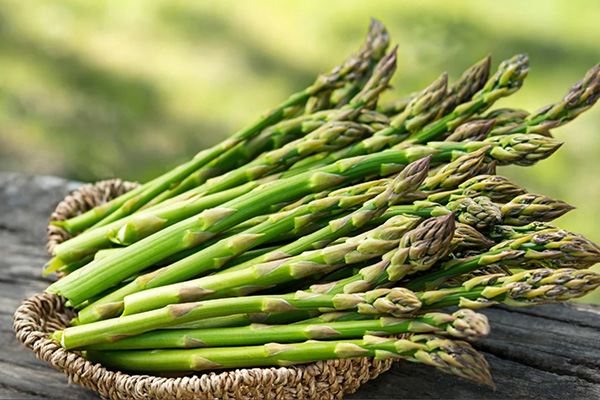
Methods for sprouting and planting asparagus
The success of growing asparagus largely depends on the right start. Let's consider the features of each planting method so that you can choose the best option for your conditions.
Seed germinationis a process that requires patience. First, the seeds are soaked for 3-4 days in warm water, changing it daily. Then stratification is carried out - they are kept in wet sand or a napkin at a temperature of +1 ... +5 ° C for about 4-6 weeks. For sowing, it is better to use peat tablets or a light substrate, deepening the seeds by 1-1.5 cm. The first shoots appear in 20-30 days.
Planting rhizomesgives a faster result. Important points:
-
Planting depth - 15-20 cm
-
Growth buds should be directed upwards
-
The soil should be loose, with the addition of sand and compost
-
The distance between plants is at least 30 cm
When choosing a container, consider:
-
Pots are suitable for 1-2 plants (minimum volume - 5 liters)
-
Balcony boxes allow you to grow several bushes, but require reliable fasteners
-
A drainage layer of 3-4 cm and holes for water drainage are required
Remember that asparagus is a perennial, and its development in the coming years will depend on the selected container. For balcony cultivation, deep containers with a volume of 10 liters are preferable.

Choosing an asparagus variety for home cultivation
Not all asparagus varieties are equally well suited for growing in limited space. For home conditions, it is better to choose compact and less demanding varieties that can bear fruit in containers.
The best varieties for container growing:
-
'Mary Washington' - a proven variety with good productivity, relatively compact
-
'Argentel Early' - has more delicate shoots and early ripening
-
'Snow Head' - a decorative variety with white shoot tips
-
'Urozhaynaya 6' - adapted to various conditions cultivation
Decorative vs. edible varieties:
-
Edible varieties require more nutritious soil and regular fertilizing
-
Decorative species (for example, asparagus officinalis) are less demanding in terms of care
-
All speciesasparagus needs good lighting, but decorative ones tolerate partial shade better
-
The dormant period of decorative varieties may be less pronounced
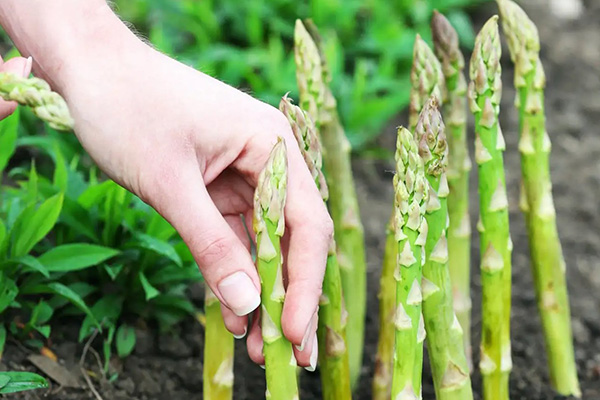
When choosing, keep in mind that edible varieties yield a harvest only in the 3-4th year, while decorative ones begin to delight with their delicate greenery already in the first season. For beginners, we can recommend universal varieties that combine food and decorative qualities.
Conditions for successful growth of asparagus at home
Asparagus is demanding of maintenance conditions, but with the right approach it adapts well to the home environment. The main thing is to recreate conditions as close as possible to the natural habitat of this perennial.

Lighting and temperature conditions.Asparagus needs at least 6-8 hours of bright diffused light daily. On northern windows, additional lighting with phytolamps is required (12-14 hours a day). Optimum temperature: during the day + 20-25 ° C, at night + 15-18 ° C. In summer, the plant can be taken out onto the balcony, protecting it from drafts.
Soil and watering.The ideal soil consists of:
-
Leaf soil (2 parts)
-
Humus (1 part)
-
Coarse sand (1 part)
-
Wood ash (1 glass per 5 liters of mixture)
Watering should be regular, but moderate:
-
In spring/summer - 2-3 times a week
-
In autumn - 1 time per week
-
In winter - once every 10-14 days
It is important to maintain light humidity without stagnant water.
Feeding and care. During the period of active growth (April-September), apply fertilizers every 2 weeks:
-
Organic: biohumus, herbal infusion
-
Mineral: complex fertilizers with potassium and phosphorus
Formative pruning is not required, but remove dry stems. Replant once every 2-3 years in a pot 5-7 cm wider than the previous one. In winter, provide rest at +10-12°C.
Common problems and their solutions
Even with proper care, asparagus can face difficulties. Let's look at the main problems and how to eliminate them.
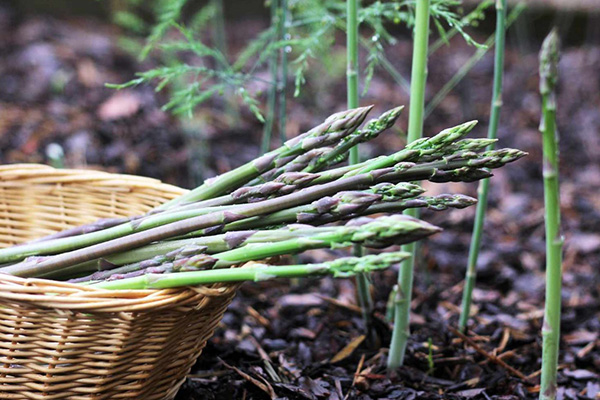
Problems with germination and development
-
Seeds do not germinate – often due to insufficient stratification or too deep planting. Review the preparation stage: the seeds should be kept in the cold (+1...+5°C) for 4-6 weeks and planted at a depth of no more than 1.5 cm.
-
Slow growth– usually caused by a lack of light or poor soil. Add supplementary lighting with a phytolamp and apply nitrogen-phosphorus fertilizers.
Yellowing and drying of shoots
-
Lack of nutrition– asparagus is sensitive to a deficiency of potassium and nitrogen. Try feeding it with an ash solution (1 tbsp. of ash per 1 liter of water) or complex fertilizer.
-
Pests– spider mites and aphids can attack the plant. At the first signs, treat the shoots with a soap solution or bioinsecticides (for example, Fitoverm).
Typical mistakes of beginners
- Overwatering– leads to root rot. Water only after the top layer of soil dries out.
- Lack of space– the root system of asparagus is powerful, and in a cramped pot the plant withers. Choose deep containers from 5-7 liters.
- No dormant period– in winter, asparagus needs coolness (+10...+12°C), otherwise it becomes depleted.
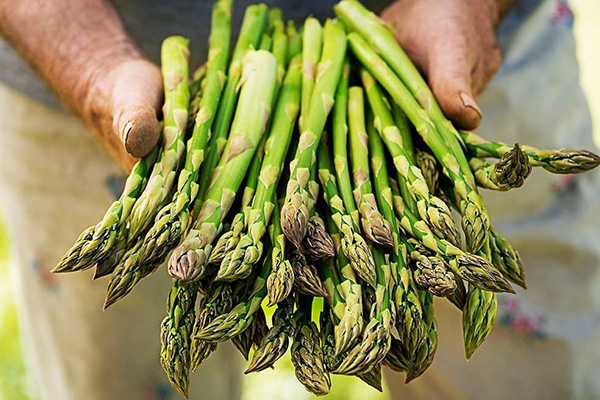
If you follow these recommendations, the plant will develop healthy and will delight you with a harvest over time.
Is it worth growing asparagus at home?
Growing asparagus at home is an activity for patient but grateful plant growers. Yes, you will have to wait several years for the first harvest, and the plant will need attention. But imagine how nice it is to cut the first tender shoots grown with your own hands!
5 reasons to try:
-
Absolutely organic product– you control the entire process from seed to plate
-
Saving– store-bought asparagus is expensive, and your "garden"will bear fruit for 15-20 years
-
Decorative – openwork bushes will decorate the interior
-
Fascinating process – watching the development of asparagus is really interesting
-
Pride - not many can boast of home asparagus!
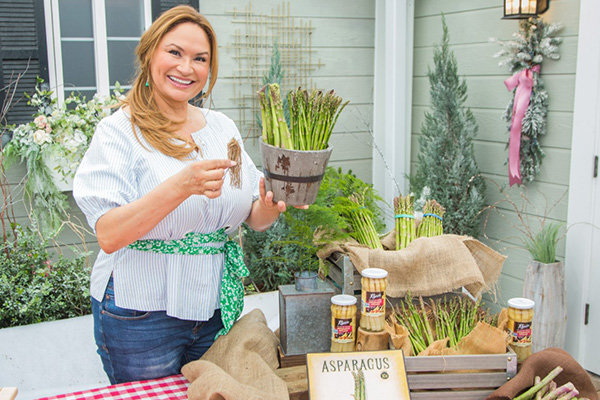
Start small – try growing 2-3 bushes. Use our recommendations, be patient, and in a few years you will become the happy owner of an environmentally friendly, tasty and healthy delicacy. Remember - the best shoots are obtained by those who put their soul into plants!
FAQ: answers to frequently asked questions
1. Is it possible to grow asparagus in an apartment?
Yes, if you provide sufficient lighting (southern windows or additional lighting) and a spacious deep pot (from 5 liters). It is better to choose compact varieties such as 'Argentel early'.
2. How long does it take for asparagus to grow from seeds?
It takes 3-4 years from sowing to the first harvest:
-
1 year: development of the root system
-
2 year: mass growth
-
3-4 years: first edible shoots
3. What month is best for planting?
Optimal timing:
-
Seeds: February-March (for seedlings)
-
Rhizomes: April or September
-
Indoors, you can plant all year round, but spring plantings develop more actively.
4. How many years does indoor asparagus bear fruit?
With proper care - 15-20 years. Peak yield from 5 to 10-12 years. To extend productivity, divide the rhizomes every 3-4 years and renew the soil.
5. Why do the branches turn yellow?
Main reasons:
-
Natural process before the dormant period
-
Lack of nitrogen (feed with organic matter)
-
Air is too dry (spray)
-
Spider mite (treat with acaricide)
6. Is it possible to get white shoots at home?
Yes, if 2 weeks before harvesting you completely exclude light (cover the pot with a cap or move it to a dark place). But this method weakens the plant - do not overuse it.