
How to Grow Mushrooms at Home: A Beginner's Guide
Growing mushrooms at home is a fascinating process that can bring not only a harvest, but also real pleasure from watching them grow. Although it seems complicated at first, in fact, it all comes down to following simple rules: the right substrate, humidity and temperature. But in just a few weeks you will be able to collect your first mushrooms - fresh, environmentally friendly and much more aromatic than store-bought ones.

This hobby is suitable even for urban conditions: oyster mushrooms or champignons can be grown on a balcony or in a pantry. The main thing is - start with proven methods, and in this article we will analyze them step by step.
What mushrooms can be grown at home?
Growing mushrooms at home opens up wide possibilities, but it is better for beginners to start with the most unpretentious species. Different mushrooms require different conditions, so it is important to choose the right option for your level of training and available resources. Let's look at the best species for home cultivation.
The most popular mushrooms for home cultivation:
-
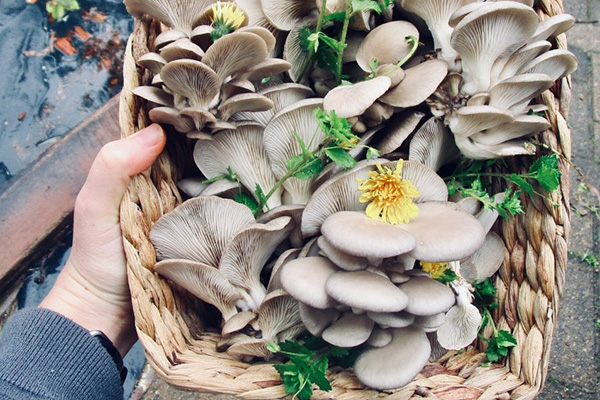
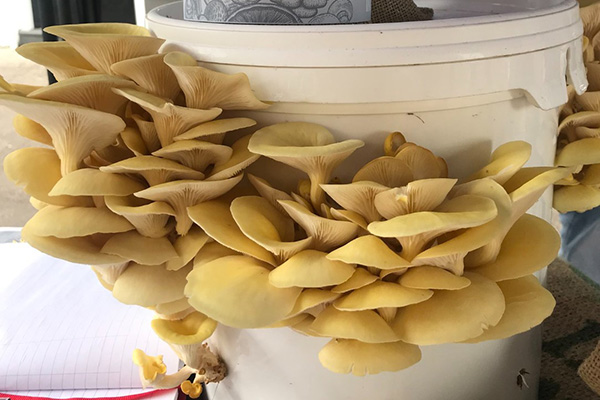
Oyster mushrooms- an ideal choice for beginners. They grow quickly, do not require complex care and produce an abundant harvest. They develop well on various substrates.
-
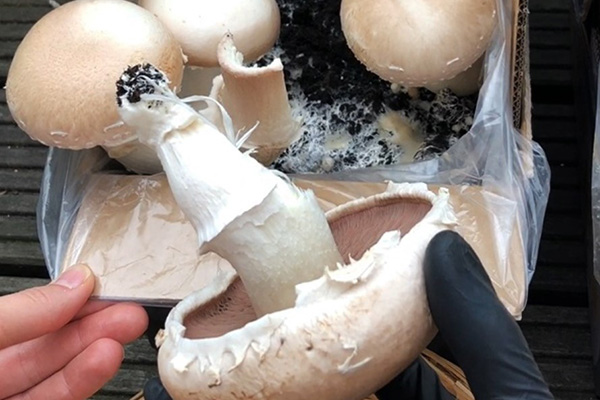
Champignons- are more capricious, need special compost, but are in constant demand. Suitable for those who are ready to pay more attention to the process.
-
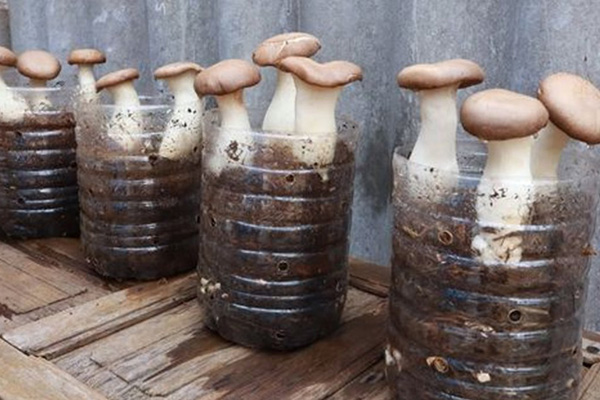
Shiitake- are valued for their excellent taste and medicinal properties. They require special conditions of humidity and temperature, so they are recommended for experienced mushroom growers.
-
Honey mushrooms- grow well on wood or sawdust. An interesting option for those who want to try something unusual.
When choosing, consider your goals: if you want a quick result, choose oyster mushrooms, if you are ready to experiment, try shiitake or honey mushrooms. The main thing is to start with small volumes to gain experience without unnecessary costs.
What mushrooms can be grown at home?
Growing mushrooms at home is a fascinating activity that even beginners can do. Different types of mushrooms require different conditions and levels of care. The table below presents the best options for home cultivation with their main characteristics:
| Mushroom | Difficulty of cultivation | Optimal substrate | Time of harvest | Features of care |
|---|---|---|---|---|
| Oyster mushrooms | ★☆☆ (Low) | Straw, sawdust, coffee grounds | 3-4 weeks | Do not require lighting, high yield |
| Champignons | ★★☆ (Medium) | Special compost | 8-10 weeks | Require stable temperature and humidity |
| Shiitake | ★★★ (High) | Wood shavings, logs | 6-8 months | Require precise control of conditions |
| Honey mushrooms | ★★☆ (Medium) | Stumps, wood waste | 2-3 months | Grows best outdoors air |
Tips for choosing:
- Oyster mushrooms are ideal for the first experience - they are the most unpretentious and fast-growing.
- Champignons require more attention, but give a tasty and familiar harvest.
- Shiitake and honey mushrooms - the choice for those who are ready for a long process and experiments.
Remember that success in growing mushrooms depends on compliance with the conditions for a particular species. Start small and you will definitely achieve excellent results!
Methods for growing mushrooms at home
You can grow mushrooms at home using different methods - from simple “lazy” to more complex but interesting ones. The choice of method depends on the type of mushroom, your experience and available materials.
Basic growing methods:
-
On a ready-made substrate (mushroom blocks)
The easiest option for beginners. You can buy a ready-made block with mycelium, which you only need to activate according to the instructions. Suitable for oyster mushrooms and shiitake. -
On coffee grounds
An economical and environmentally friendly method for oyster mushrooms. Used coffee grounds contain nutrients and are already partially sterilized by cooking. -
On wood (logs, sawdust)
Simulates natural conditions for mushroom growth. Suitable for shiitake, honey mushrooms, oyster mushrooms. Requires preliminary preparation of wood and a longer wait for the harvest. -
In jars or containers
Convenient for champignons and other species that require a special substrate. Allows you to control the conditions and compactly place the mycelium even in a small apartment.

How to choose a method?If you want a quick result - take ready-made blocks or coffee grounds. If you are ready to experiment - try growing on wood. The main thing - maintain sterility and maintain the necessary conditions for the chosen method.
Step-by-step instructions: growing oyster mushrooms on a substrate
Growing oyster mushrooms on a substrate is one of the most popular and reliable methods for beginners. This method does not require complex equipment and allows you to get a harvest in 3-4 weeks.
Step-by-step process:
-
Preparing the substrate
Straw, sawdust of deciduous trees or sunflower husks can serve as a base. The substrate should be crushed to a fraction of 2-5 cm for better development of the mycelium. -
Sterilization
A mandatory step to destroy competitive microorganisms:-
Steaming: pour boiling water over the substrate for 1-2 hours
-
Calcination: keep in the oven at +110 ... +120°C for 1.5-2 hours
-
-
Sowing mycelium
Mix the substrate cooled to +25°C with mycelium (5-7% of the substrate weight). It is important to work in clean conditions – treat hands and surfaces with alcohol. -
Formation of blocks
Place the mixture in:-
Transparent bags with perforations (holes 1-2 cm every 10-15 cm)
-
Plastic containers with a lid and ventilation holes
-
-
Incubation period (20-25 days)
Store at a temperature of +18...+22°C in a dark place. During this period:-
Do not open the package
-
Monitor uniform fouling (white fluffy coating)
-
If mold appears, remove the affected area
-
Advice: For the first time, it is better to use a ready-made sterilized substrate - this will reduce the risk of infection and simplify the process.

After complete fouling, the block is transferred to fruiting conditions (see the next section). This method gives up to 3 waves of harvest from one block!
Fruiting and harvesting
When the mycelium has completely mastered the substrate (usually after 3-4 weeks), the most important and interesting stage begins - fruiting. During this period, mushrooms need to create special conditions for the formation of fruiting bodies.
How to stimulate fruiting:
-
Changing the temperature regime
-
Optimum temperature: +14...+18°C
-
A difference of 2-3°C day/night temperatures accelerates the formation of rudiments
-
-
Increasing humidity
-
Maintain 85-90% humidity
-
Use a humidifier or spray the blocks 2-3 times a day
-
You can cover the block with damp gauze
-
-
Lighting
-
Diffused light is needed 8-10 hours a day
-
Fluorescent or LED lamps (500-1000 lux) are suitable
-
Avoid direct sunlight
-
-
Ventilation
-
Ventilate the room 2-3 times a day
-
Or organize a constant weak air exchange
-
Excess CO₂ causes mushroom deformation
-
Fruiting body development stages:
-
Appearance of white tubercles (primordia) - 3-5 days
-
Formation of stems and caps - 5-7 days
-
Ripening (the edge of the cap begins to straighten) - 1-2 days
Harvesting tips:
-
Cut the entire bunch at the base when the caps reach 3-5 cm
-
Do not leave any leftovers - they can rot
-
After harvesting, let the block "rest" for 7-10 days, then repeat the cycle
-
Expect 2-3 waves of fruiting with an interval of 10-14 days

Remember: the firste mushrooms may be smaller than the following ones. The quality and quantity of the harvest will improve with each new wave with proper care.
Optimal conditions for mushroom growth
To get a bountiful harvest, you need to create and maintain the right microclimate. Each type of mushroom has its own preferences, but there are general parameters that are important to follow.
Key factors for successful cultivation:
-
Humidity (80-95%)
-
Use a household humidifier or regular spraying
-
To control, buy a hygrometer
-
With a lack of moisture, mushrooms dry out, with an excess - they become covered with mucus
-
-
Temperature conditions
-
Oyster mushrooms: +14...+18°C at fruiting
-
Champignons: +22...+25°C during mycelium growth, +15...+17°C for fruiting
-
Shiitake: requires temperature shock (change from +25°C to +15°C)
-
-
Lighting
-
Soft diffused light is required 8-10 hours a day
-
Eastern or northern windows are ideal
-
Use lamps with artificial lighting 5000-6500K
-
-
Air exchange
-
Ventilate the room 3-4 times a day
-
Or install a weak fan for 5-10 minutes every hour
-
A sign of oxygen deficiency - elongated mushroom stems
-
Additional recommendations:
-
Keep the room clean
-
Use only clean water for spraying
-
Regularly inspect the mushroom blocks for mold
-
Keep a diary of observations with recording of parameters
If these conditions are met, you will get dense, beautiful mushrooms with a rich taste. Remember - the stability of the parameters is more important than their absolute values. Sharp fluctuations in temperature or humidity can stop the growth of fruiting bodies.
Common problems and their solutions
Even experienced mushroom growers sometimes have difficulties when growing. Let's consider typical problems and effective ways to eliminate them.
1. Mold on the substrate
-
Causes: insufficient sterilization, poor mycelium, high temperature
-
Solution:
-
Carefully remove the affected area with a margin of 2-3 cm
-
Treat the cut with 3% hydrogen peroxide
-
Increase ventilation and reduce the temperature to +18°C
-
In case of severe infestation, dispose of the entire block
-
2. Mushrooms do not grow
-
Possible reasons:
-
Insufficient humidity (less than 80%)
-
Too low or high temperature
-
Expired or poor quality mycelium
-
-
What to do:
-
Check the microclimate parameters with a hygrometer and thermometer
-
Increase the frequency of spraying
-
If there is no growth for more than 3 weeks, replace mycelium
-
3. Deformation of fruiting bodies
-
Signs:
-
Long thin stems and small caps
-
Crooked or fused mushrooms
-
Uneven development
-
-
Elimination measures:
-
Improve ventilation (a sign of excess CO₂)
-
Provide sufficient lighting (8-10 hours a day)
-
Normalize humidity (85-90%)
-
4. Small yield
-
Why it occurs:
-
Substrate depletion
-
Too frequent fruiting waves
-
Lack of nutrients
-
-
How to fix:
-
Take breaks between waves of 10-14 days
-
Add 1% malt extract solution to spray water
-
Replace the substrate after 3-4 waves
-
5. Slime on mushrooms
-
Reason: excess humidity (more than 95%)
-
Solution:
-
Reduce the frequency of spraying
-
Increase ventilation
-
Harvesting on time, do not overexpose
-
Preventive measures:
-
Strictly maintain sterility at all stages
-
Useuse only high-quality mycelium from trusted suppliers
-
Regularly monitor the microclimate parameters
-
Remove the remains of mushrooms promptly after harvesting

Remember: most problems can be avoided if you carefully monitor the development of mushrooms and promptly adjust the conditions of detention. If difficulties arise, do not despair - each unsuccessful experience makes you a more experienced mushroom grower!
Try and success will come to you
Growing mushrooms at home — This is a fascinating process that, if approached correctly, can become not only a hobby, but also a source of fresh, environmentally friendly products. As we have seen, even beginners can achieve excellent results if they follow several important principles:
The main secrets of success:
-
Start with simple species (oyster mushrooms, champignons)
-
Carefully follow the technology of substrate preparation
-
Control the main parameters: humidity, temperature and ventilation
-
Be patient - mushrooms develop on their own schedule
Don't be upset if your first attempts are not ideal. Each experience is a valuable lesson in the art of mushroom growing. Over time, you will learn to feel the needs of your mushroom crops and will be able to experiment with different types and methods of cultivation.
Try starting with a small batch, and very soon you will be able to please yourself and your loved ones with delicious homemade mushrooms grown with your own hands. And when you master the basic techniques, a whole world of interesting mushroom crops for home cultivation will open up to you!
Frequently asked questions (FAQ)
1. What mushrooms are easiest for beginners to grow?
The best choice for the first experience is oyster mushrooms. They are unpretentious, grow quickly (3-4 weeks before the first harvest) and give a bountiful harvest even with minor mistakes in care. Champignons require more attention, but are also suitable for beginners.
2. Is it possible to grow mushrooms in an ordinary apartment?
Yes! A balcony, pantry or even a kitchen cabinet are suitable for this. Oyster mushrooms and champignons do not require much space - an area of 0.5-1 m2 is enough. The main thing is to provide the right conditions (humidity, temperature, ventilation).
3. Is it necessary to buy mycelium or can I use spores from store-bought mushrooms?
For a guaranteed result, it is better to use high-quality mycelium from trusted manufacturers. Attempts to grow mushrooms from spores often end in failure due to low germination and a high probability of infection.
4. What is the most profitable mushroom for home cultivation?
Oyster mushrooms and shiitake mushrooms are in the lead in terms of difficulty/profitability. Oyster mushrooms yield faster, and shiitake mushrooms are more expensive. Champignons require more costs for compost preparation.
5. How to understand that mushrooms have gone bad?
Alarming signs: unpleasant odor (sour or musty), slimy surface, appearance of dark spots or mold. High-quality mushrooms should be elastic, with a pleasant forest aroma.
6. Why do mushrooms grow small?
The main reasons: lack of fresh air, low humidity, poor substrate or too high temperature. Try to improve ventilation and increase spraying.
7. Can one substrate be used for several harvests?
Yes, but not more than 3-4 waves of fruiting. After that, the substrate is depleted and it is better to replace it. The used substrate is excellent as fertilizer for plants.
8. How to store the harvested crop?
Store fresh mushrooms in a paper bag in the refrigerator for 5-7 days. For long-term storage, it is better to freeze (after blanching) or dry.