Phytolamps for plants and seedlings: advantages, selection and correct use
What are phytolamps and why are they needed?
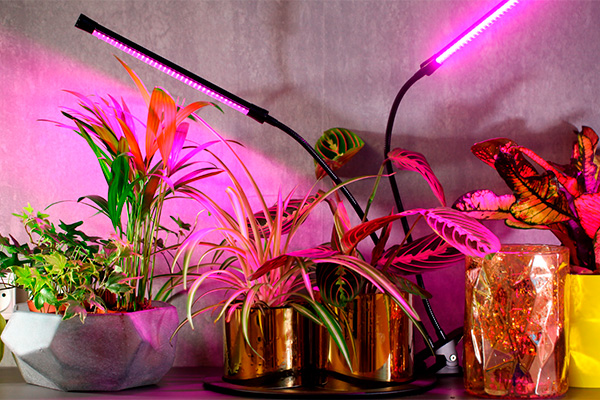
Phytolamps are special light sources designed to support the growth and development of plants. Unlike conventional lamps, they emit light in certain spectra that are most favorable for photosynthesis and other physiological processes of plants.
The main purpose of phytolamps
Phytolamps are used to provide plants with additional light, especially in conditions of insufficient natural light. This is especially important in winter, when growing seedlings or in rooms with few windows.
Why do plants need additional light
Light is one of the key factors for plant growth. It is necessary for photosynthesis, the process by which plants convert light energy into chemical energy, providing themselves with nutrients. When there is a lack of light, plants begin to stretch out, become weak and less resistant to diseases.
How does a phytolamp affect plants
Phytolamps stimulate plant growth, improve their general condition and accelerate development processes. They help:
-
Increase the speed of photosynthesis;
-
Strengthen the root system;
-
Improve flowering and fruiting;
-
Reduce the risk of diseases associated with lack of light.
Phytolamps are becoming an indispensable tool for gardeners, vegetable growers and indoor plant lovers, especially in conditions of limited natural light.
Advantages and disadvantages of phytolamps
Phytolamps have become a popular solution for growing plants in conditions of insufficient natural light. However, like any device, they have their pros and cons. Let's take a closer look at them.
Advantages of phytolamps
-
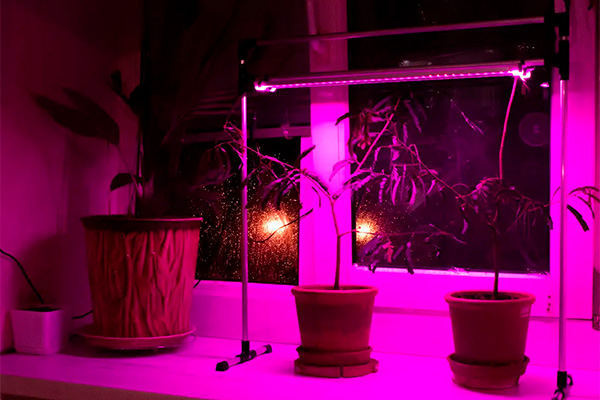
Optimal light spectrum.Phytolamps emit light in the spectra that are most effective for photosynthesis (mainly blue and red). This allows plants to grow and develop faster.
-
Energy efficiency. Modern phytolamps, especially LED ones, consume less electricity compared to traditional incandescent lamps, which makes them cost-effective.
-
Durability. LED phytolamps have a long service life - up to 50,000 hours or more, which reduces the need for frequent replacement.
-
Safety for plants. Phytolamps do not overheat plants, as they emit a minimal amount of heat. This allows you to place them close to the leaves without the risk of burns.
-
Versatility. Phytolamps are suitable for various types of plants: from seedlings and indoor flowers to greenhouse crops.
-
Compactness. Many models of phytolamps are small in size, which allows them to be used even in limited spaces.
Disadvantages of phytolamps
-
High cost. High-quality phytolamps, especially LED ones, can cost more than conventional lamps. However, their durability and energy efficiency compensate for the initial costs.
-
The need for the right choice of spectrum. Not all phytolamps are suitable for all stages of plant growth. For example, seedlings need one spectrum, and flowering - another. This requires a careful approach to choosing a device.
-
Possible impact on vision. Some phytolamps, especially those with a predominance of the blue or violet spectrum, can cause eye discomfort with prolonged exposure. It is recommended to avoid looking directly at such lamps.
-
Limited lighting area. One phytolamp can effectively illuminate only a small area. For larger rooms or greenhouses, you will need several devices, which increases costs.
-
Dependence on electricity.Phytolamps require a constant source of electricity, which can be a problem in conditions of power outages.
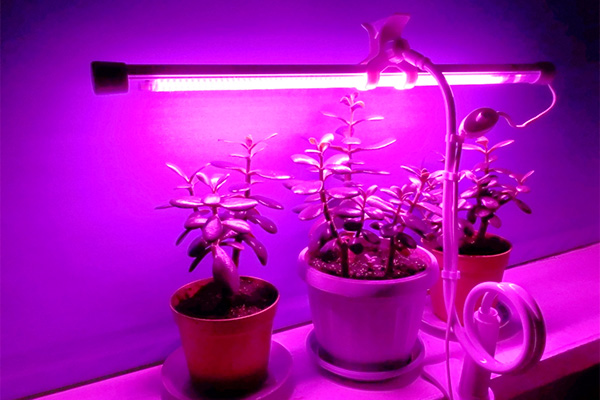
Phytolamps are an effective solution for maintaining the health and growth of plants, especially in conditions of insufficient natural light. However, before purchasing, it is important to consider their features in order to choose the right model and avoid possible disadvantages.
How are phytolamps different from regular LED lamps?
Phytolamps and regular LED lamps may look similar, but they haveFundamental differences that make phytolamps more suitable for growing plants. Let's look at the main differences.
1. Light spectrum
-
Phytolamps: emit light in specific spectra that are most beneficial for plants. The main spectra are blue (430–450 nm) and red (640–660 nm). Blue light stimulates the growth of leaves and stems, and red light stimulates flowering and fruiting. Some models also include violet or full spectrum, making them universal for all stages of growth.
-
Regular LED lamps: designed for indoor lighting and emit light that is comfortable for the human eye. Their spectrum is close to natural daylight, but it is not optimized for photosynthesis and plant growth.
2. Light intensity
-
Phytolamps: provide high light intensity in the necessary spectra, which allows plants to efficiently absorb energy for photosynthesis.
-
Regular LED lamps: their light intensity is lower in the spectra that are important for plants, which makes them less efficient for growing.
3. Energy consumption
-
Grow lamps: modern LED grow lamps are energy efficient, but their main task is to provide plants with the necessary light, not to save electricity.
-
Regular LED lamps: designed with an emphasis on energy saving, so they consume less energy, but do not provide enough light for plants.
4. Heat emission
-
Phytolamps: emit a minimal amount of heat, which allows them to be placed close to plants without the risk of burns.
-
Ordinary LED lamps: also emit little heat, but their spectrum and light intensity are not suitable for full-fledged plant growth.
5. Intended use
-
Phytolamps: created specifically for growing plants, be it seedlings, indoor flowers or greenhouse crops. They take into account the biological needs of plants.
-
Ordinary LED lamps: designed for general lighting of rooms and do not take into account the specifics of photosynthesis and plant growth.
6. Cost
-
Phytolamps: usually more expensive than regular LED lamps due to the use of specialized spectra and technologies.
-
Regular LED lamps: more affordable, but their use for plants may be ineffective.
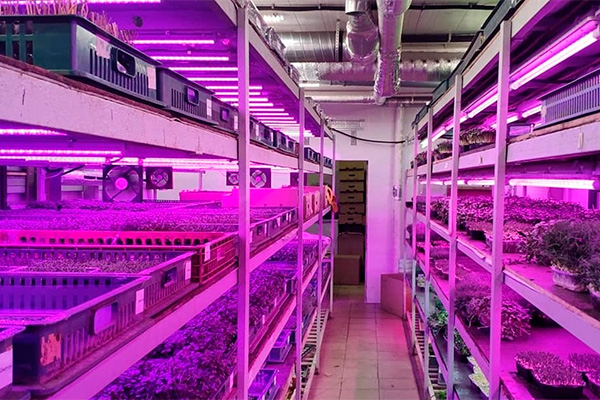
Phytolamps and regular LED lamps have different purposes and characteristics. If regular lamps are suitable for lighting rooms, then phytolamps are designed specifically to maintain the health and growth of plants. Their unique spectrum of light, intensity and safety make them indispensable for gardeners and indoor plant lovers.
Types of phytolamps
Phytolamps are available in various types, each of which has its own characteristics, advantages and disadvantages. The choice of the type of phytolamp depends on the purpose of use, type of plants and budget. Let's consider the main types of phytolamps.
1. Sodium phytolamps (DNaT and DNaZ)
-
Principle of operation: sodium lamps emit light due to a gas discharge in sodium vapor. They give a bright orange-yellow light, which is close to sunlight.
-
Advantages: High light output, which makes them effective for large areas (for example, greenhouses). Long service life (up to 24,000 hours). Suitable for the flowering and fruiting stages of plants.
-
Disadvantages: Strong heating, which requires caution when placing near plants. High energy consumption. Not suitable for the vegetative growth stage (lack of blue spectrum).
-
Application: greenhouses, large farms.
2. Fluorescent phytolamps
-
Operating principle: fluorescent lamps emit light due to the glow of the phosphor under the influence of ultraviolet light.
-
Advantages: Low cost. Heat up less compared to sodium lamps. Suitable for seedlings and small plants.
-
Disadvantages: Low light intensity, which requires close proximity to plants. Shorter service life (about 10,000 hours). Lack of red spectrum, which makes them less effective for flowering.
-
Application: home use, seedlings.
3. Induction phytolamps
-
Operating principle: inductionThe lamps operate by electromagnetic induction, which allows them to emit light without the use of electrodes.
-
Advantages: Very long service life (up to 100,000 hours). Stable light output throughout the entire service life. Minimal heating.
-
Disadvantages:
-
High cost. Less widespread on the market.
-
-
Application: professional use, greenhouses.
4. LED phytolamps (LED)
-
Operating principle: LED lamps emit light due to semiconductor elements. They can be tuned to specific light spectra.
-
Advantages: High energy efficiency. Long service life (up to 50,000 hours or more). Spectrum selection (blue, red, full spectrum). Minimal heat generation. Compact and versatile.
-
Disadvantages:
-
High cost of quality models. The need for the correct selection of spectrum for different stages of plant growth.
-
-
Application: home use, greenhouses, professional plant cultivation.
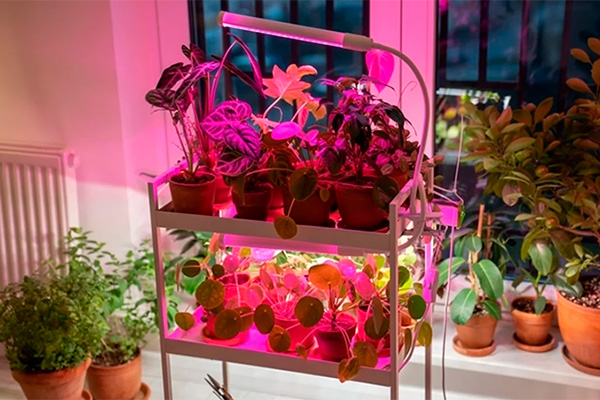
Sodium lamps are ideal for greenhouses and flowering, fluorescent lamps are for seedlings and small plants, induction lamps are for long-term use, and LED lamps are for universal use taking into account the spectral needs of plants.
Phytolamp spectra
The light spectrum is one of the key parameters that determines the efficiency of a phytolamp for plants. Different light spectra affect different stages of plant growth and development. Let's consider the main spectra used in phytolamps and their role.
1. Red spectrum (640–660 nm)
-
Effect on plants. Red light plays an important role in the process of photosynthesis and stimulates flowering and fruiting of plants. It also promotes the production of hormones responsible for growth and development.
-
When to use. The red spectrum is especially useful at the stage of flowering and fruit formation. It helps plants accumulate more energy and accelerates ripening.
-
Example of application. For tomatoes, peppers, flowering indoor plants.
2. Blue spectrum (430–450 nm)
-
Effect on plants. Blue light is necessary for vegetative growth of plants. It stimulates the development of leaves, stems and the root system, and regulates photosynthesis processes.
-
When to use. The blue spectrum is ideal for seedlings and young plants, as well as for maintaining healthy foliage at all stages of growth.
-
Example of application. For seedlings, greens (parsley, dill), decorative foliage plants.
3. Violet spectrum (400–430 nm)
-
Effect on plants. Violet light is on the border of the visible and ultraviolet spectrum. It promotes the production of antioxidants and improves plant resistance to stress and diseases.
-
When to use. The violet spectrum is useful for strengthening plant immunity and improving their overall condition.
-
Example of application. For plants grown in difficult conditions (for example, with a lack of natural light).
4. Full Spectrum
-
Effect on plants.Full spectrum imitates natural sunlight and includes all the ranges necessary for plants: red, blue, violet, as well as green and yellow. This is a universal solution for all stages of growth.
-
When to use. The full spectrum is suitable for any plants and stages of their development, from seedlings to flowering and fruiting.
-
Example of application. For universal use at home, greenhouses and professional cultivation.
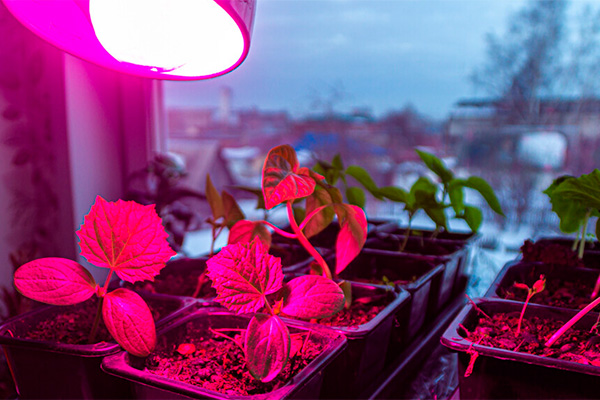
For seedlings and vegetative growth: choose phytolamps with a predominance of the blue spectrum.
For flowering and fruiting: use lamps with an emphasis on the red spectrum.
For universal use: opt for full-spectrum phytolamps.
How to use phytolamps correctly?
Using phytolamps requires following certain rules to ensure maximum benefit to plants and avoid possible problems. Let's consider the main pRecommendations for using phytolamps.
1. Optimal distance to plants
-
For LED phytolamps: the distance should be 20–40 cm from the upper leaves of plants. This ensures sufficient light intensity without the risk of burns.
-
For sodium lamps: due to strong heating, the distance should be greater — 50–60 cm.
-
For fluorescent lamps: the distance can be less — 10–15 cm, since they emit less heat.
It is important to check the distance regularly, especially if the plants are growing quickly.
2. Daylight hours for seedlings
-
Seedlings: require 12-16 hours of light per day. Too much light can cause plants to become overtired, while too little light can slow down their growth.
-
Adult plants: 10-12 hours of light is usually enough, but it depends on the type of plant and its needs.
-
Night period: plants need a period of darkness to rest and recover. Do not leave phytolamps on 24 hours a day.
3. How much electricity does a lamp for seedlings consume?
-
LED phytolamps: consume the least energy - from 10 to 50 watts, depending on the model and the lighting area.
-
Fluorescent lamps: consume more - from 18 to 60 watts.
-
Sodium lamps: the most energy-intensive - from 70 to 600 watts.
To calculate energy consumption, multiply the lamp power (in kilowatts) by the number of hours of operation per day. For example, a 30 W (0.03 kW) lamp operating 12 hours a day consumes 0.36 kW h per day.
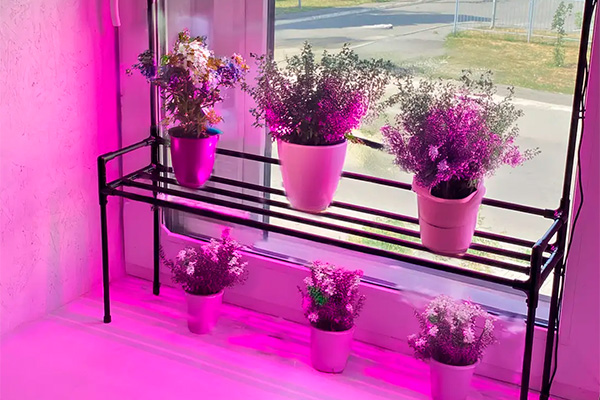
4. How does a phytolamp affect the eyes
-
Blue and violet spectra: can cause discomfort to the eyes with prolonged exposure. It is recommended to avoid looking directly at such lamps.
-
Red spectrum: safer for eyesight, but you should also avoid looking directly at the lamp.
-
Recommendations: use protective screens or place the lamps so that the light is directed only at the plants. If you spend a lot of time near phytolamps, wear special glasses with protection from blue light.
5. Additional tips
-
Check the plants regularly: if the leaves begin to turn yellow or stretch, they may not have enough light or, conversely, too much.
-
Use timers: to automate the switching on and off of the lamps, set a timer. This is especially convenient if you cannot control the lighting manually.
-
Monitor the temperature: although phytolamps emit little heat, it is important to ensure good ventilation, especially in small spaces.
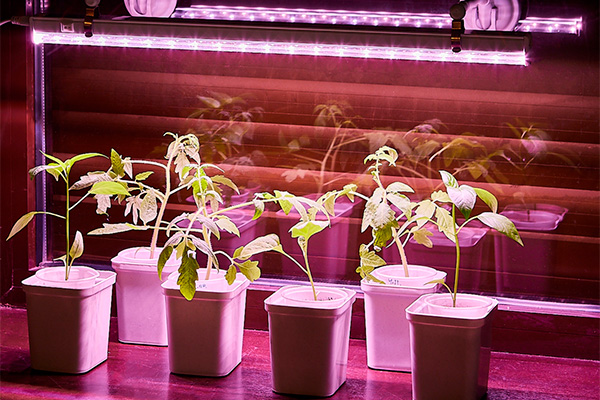
Phytolamps are a modern and effective solution for those who want to grow healthy and strong plants in conditions of insufficient natural light. They have become an indispensable tool for gardeners, vegetable growers and indoor plant lovers, allowing them to achieve impressive results even in the most difficult conditions.
Conclusions
-
Phytolamps provide plants with the necessary light for photosynthesis and growth, especially in winter or in rooms with insufficient natural light.
-
Different light spectra (blue, red, violet, full spectrum) affect various stages of plant growth, from vegetation to flowering and fruiting.
-
There are several types of phytolamps(sodium, fluorescent, induction, LED), each of which has its own advantages and disadvantages. The choice depends on your goals, type of plants and budget.
-
Correct use of phytolampsis the key to success. It is important to maintain the optimal distance to the plants, the length of daylight and take into account energy consumption.
Recommendations
-
For beginners: start with inexpensive fluorescent or LED phytolamps with a full spectrum. They are versatile and suitable for most plants.
-
For professionals: consider using specialized LED or induction lamps with spectrum settings for different growth stages.
-
For energy savings: choose LED grow lights that consumeless energy and have a long service life.